
Choosing a winter cycling jersey is less about finding the thickest garment and more about matching insulation to your effort, route and weather. A jersey that feels comfortable on a steady road ride may be too warm on a hard climb, while a commuter can finish cold in the same garment because they spend more time exposed to wind and moving slowly.
Winter jerseys here mean insulating mid-layers or outer layers for cool, dry conditions – not waterproof jackets or extreme cold-weather systems. For most riders, a breathable midweight jersey that works with a base layer and packable shell is the safest starting point.
What a winter cycling jersey is for
A winter jersey sits between a standard summer jersey and a winter jacket. It is usually made from a warmer, more substantial fabric, often with a brushed inner face that traps a little more air next to your skin. It may be comfortable over a base layer on a dry day, but it is not automatically windproof or waterproof.
That distinction matters. A jersey can keep you warm through insulation while still allowing wind to pass through. It can also have a water-repellent finish that sheds light drizzle without replacing a rain shell. Marketing departments enjoy blurring those boundaries; your wet back will not.
Temperature numbers on labels are only approximate. Your effort, wind exposure, humidity and personal tolerance make a large difference. A rider working hard on a sheltered climb needs less insulation than a commuter travelling steadily through exposed streets. Descents create another problem: the layer that felt too warm uphill can suddenly seem inadequate when the wind arrives.
For changeable conditions, choose a breathable jersey that works with a suitable base layer, vest or shell. Buying the thickest jersey available is rarely the most versatile option.
Warmth, fabrics and wind protection
Most winter jerseys use one of two broad fabric approaches. A lighter thermal knit provides some insulation while remaining relatively breathable and quick to dry. A brushed-back polyester or fleece-backed fabric feels warmer because its raised inner surface traps more air. It is often better for steady riding in colder conditions, but can become uncomfortable during high-output efforts.
Insulation and wind blocking are separate properties. A dense front panel or windproof membrane can reduce the chilling effect of headwinds and descents. That is useful on exposed roads, but the same panel may restrict moisture vapour from escaping when you are climbing. A jersey that blocks everything can leave you damp from the inside.
Wind-blocking hybrids make the most sense when your routes are consistently breezy or when you ride at moderate intensity. If you regularly push hard, a more breathable jersey plus a removable wind vest is usually easier to regulate.
Water resistance is another matter. A durable water-repellent finish may shed brief drizzle, but it will not cope with sustained rain indefinitely. Unless a garment uses genuinely waterproof fabric with protected or taped seams, treat it as water-resistant rather than waterproof. A lightweight waterproof shell remains the proper tool for serious rain.
Also check stretch, drying speed and fabric weight. Stretch helps the jersey follow your riding position without restricting your shoulders. Quick-drying fabric is valuable on long rides and when you cannot wash the garment immediately. Do not rely on words such as “thermal” or “winter” alone; check the panel construction and intended use.
| Jersey type | Best use |
|---|---|
| Lightweight thermal | Hard riding, milder cool conditions and riders who run warm. Breathes well and pairs easily with a vest or shell. |
| Midweight brushed | The best general-purpose choice for autumn-to-winter road riding and moderate efforts. Warmer, but still versatile with layering. |
| Wind-blocking hybrid | Exposed routes, breezy conditions and lower-intensity riding. Offers more protection, with a greater risk of trapped sweat. |
How to layer a winter cycling jersey
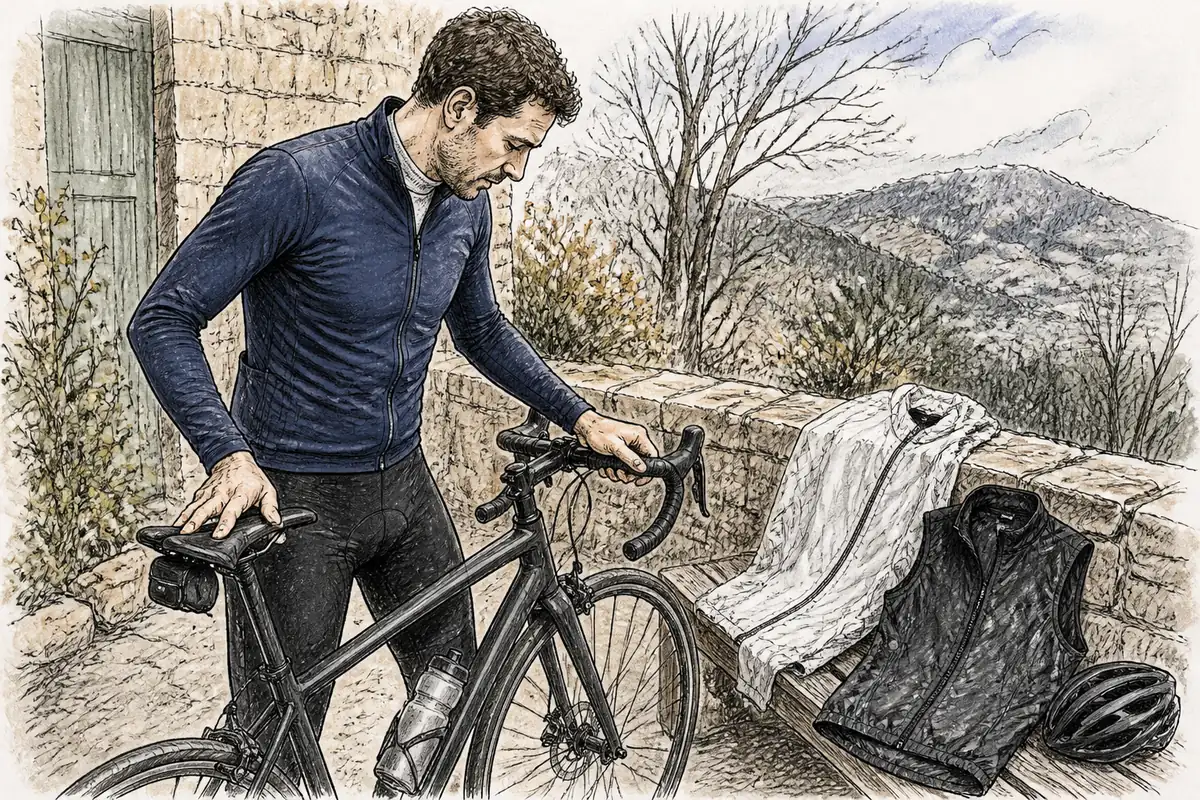
A simple system usually works better than one heavily insulated garment. Start with a close-fitting, moisture-managing base layer, add the winter jersey, then carry a vest or shell for wind and rain. You can adjust that combination during the ride instead of committing to one narrow temperature range.
Use a sleeveless base layer when you need only a little extra warmth or expect to work hard. A long-sleeve base layer adds coverage for slower rides and colder starts. Merino-blend base layers can feel comfortable across changing conditions and resist odour well, while synthetic fabrics generally dry quickly. Neither is universally best; choose according to effort and washing routine.
For a high-output road ride, a light base layer and breathable thermal jersey may be enough, with a wind vest for exposed sections. For commuting or a low-intensity utility ride, a warmer base layer and wind-blocking outer layer are more useful than a race-oriented jersey. Stop-start riding does not generate the same steady body heat as a fast group ride.
Adding a thin base layer is often more versatile than buying an excessively insulated jersey. It lets you use the same jersey across more of the season.
Avoid cotton next to your skin. It absorbs sweat and dries slowly, which can leave you cold once your pace drops. Also avoid cramming too many tight layers underneath the jersey. Finally, do not use the jersey as a substitute for proper rain protection.
Fit and construction details that matter
Most brands divide their cuts into race, performance and relaxed fits. Race fit is close through the torso and sleeves, with little spare fabric for casual layering. Performance fit is still shaped for riding but gives you a little more room. Relaxed fit suits upright commuters and riders who want thicker layers underneath.
For most people, a close but non-restrictive performance fit is the sensible default. Sizing up automatically for winter layers often creates flapping fabric, sagging pockets and gaps where cold air can enter. Extra room is useful only if you genuinely need it for a substantial base layer or jacket.
Try the jersey in your riding position, not just standing in front of a mirror. Check that the sleeves reach your wrists, the rear hem covers your lower back and the collar sits comfortably. Cuffs should meet gloves or mitts without leaving a large gap, but should not press hard enough to affect hand movement.
A full-length zip is worth having. It gives you much better control on climbs, descents and sudden changes in effort than a short quarter zip. Look for a zipper guard at the neck and a pull that you can operate with gloves.
Three rear pockets remain useful for food, gloves, a phone and a spare layer, but pocket count is not the whole story. The pockets should stay stable when loaded, and a gripper at the hem should stop the jersey riding up. Reflective details are useful for commuting and dull winter roads, although they do not replace proper lights.
Easy-care construction is a genuine advantage because winter jerseys see frequent washing. It is not, however, a reason by itself to pay a premium. Fit, fabric and usable pockets matter more than decorative panels or a fashionable logo.
Which winter cycling jersey should you buy?
Choose a lightweight thermal jersey if you run warm, ride hard or already own a good shell. It gives you more ventilation and makes it easier to add wind protection only when needed.
Choose a midweight brushed jersey if you want one dependable option for general autumn and winter riding. For most road and gravel cyclists, this is the safest starting choice: warm enough for moderate efforts, but flexible enough to use with a lighter or warmer base layer.
Choose a wind-blocking hybrid jersey when your routes are genuinely exposed or consistently breezy. It is particularly sensible for steady commuting, but less attractive for riders who spend long periods climbing hard. In that case, a breathable thermal jersey and separate wind vest usually offer better control.
Commuters should prioritise wind protection, visibility, stable pockets and compatibility with a waterproof shell. Road riders producing high effort should avoid paying for maximum fleece thickness they will simply unzip or remove on every climb.
Before replacing a jersey, look at the rest of your system. If your current jersey fits well and performs acceptably, a better base layer, gilet or lightweight waterproof shell may solve the problem for less money. Upgrade when the existing fabric is too warm, the fit is poor, the wind protection is wrong for your routes or the construction is deteriorating. Shoulder-season alternatives include long-sleeve cycling jerseys and merino cycling jerseys; for cool legs see 3/4 cycling bibs.
Care and buying mistakes to avoid
Check the care label and avoid high heat unless the manufacturer specifically allows it. Excessive heat can damage stretch fibres, flatten brushed interiors and reduce the effectiveness of water-repellent finishes. Wash promptly after sweaty rides and avoid products that leave a heavy residue on technical fabrics.
Do not choose a size solely from a stated temperature range. Those figures cannot account for your effort, wind, humidity or tolerance. Use the size chart, measure a garment that already fits and check the returns policy, especially with race-fit clothing bought online.
Before buying, check the intended conditions, effort level, base layer, wind and rain plan, riding-position fit, pocket stability and care requirements. If those answers point to mixed conditions, buy the versatile midweight option rather than the warmest one.
Winter cycling jersey FAQs
Can you wear a winter cycling jersey without a jacket?
Yes, in cool and dry conditions, especially on sheltered routes. Add a vest or shell when wind, rain or long descents make the jersey insufficient. A jersey should not be treated as waterproof unless it has genuinely waterproof construction and protected seams.
What should you wear under a winter cycling jersey?
Use a close-fitting moisture-managing base layer. Choose a lighter layer for hard riding and a warmer one for commuting or slower rides. Avoid cotton, and do not add so many tight layers that the jersey restricts your shoulders or loses its intended fit.
Are fleece-lined cycling jerseys too warm for climbing?
Not necessarily, but they can be warm at high effort. A full-length zip, breathable fabric and removable shell make temperature control easier. Riders who regularly climb hard will usually get better versatility from a lighter thermal jersey plus a wind vest than from the thickest fleece-backed option.

I’ve spent way more time in the bike trade than anyone should reasonably want to. In that time I’ve wanted to make cycling jargon and marketing easier to cut through to help people get the bike of their dreams.
When I’m not writing about bikes, I can be seen out bikepacking on single speed bikes or teaching kids how to ride.


