If you want to carry a phone, keys or a couple of snacks without wearing a backpack, cycling shorts with pockets can be a sensible upgrade. They are especially useful for commuting, gravel, touring and shorter rides where your jersey does not offer enough storage.
But a pocket does not magically turn any pair of shorts into good cycling kit. Fit, chamois, pocket position and fabric still determine whether the shorts stay comfortable after an hour or start sagging like an overloaded shopping bag. Choose the design around how you ride, not the number of pockets listed on the packaging.
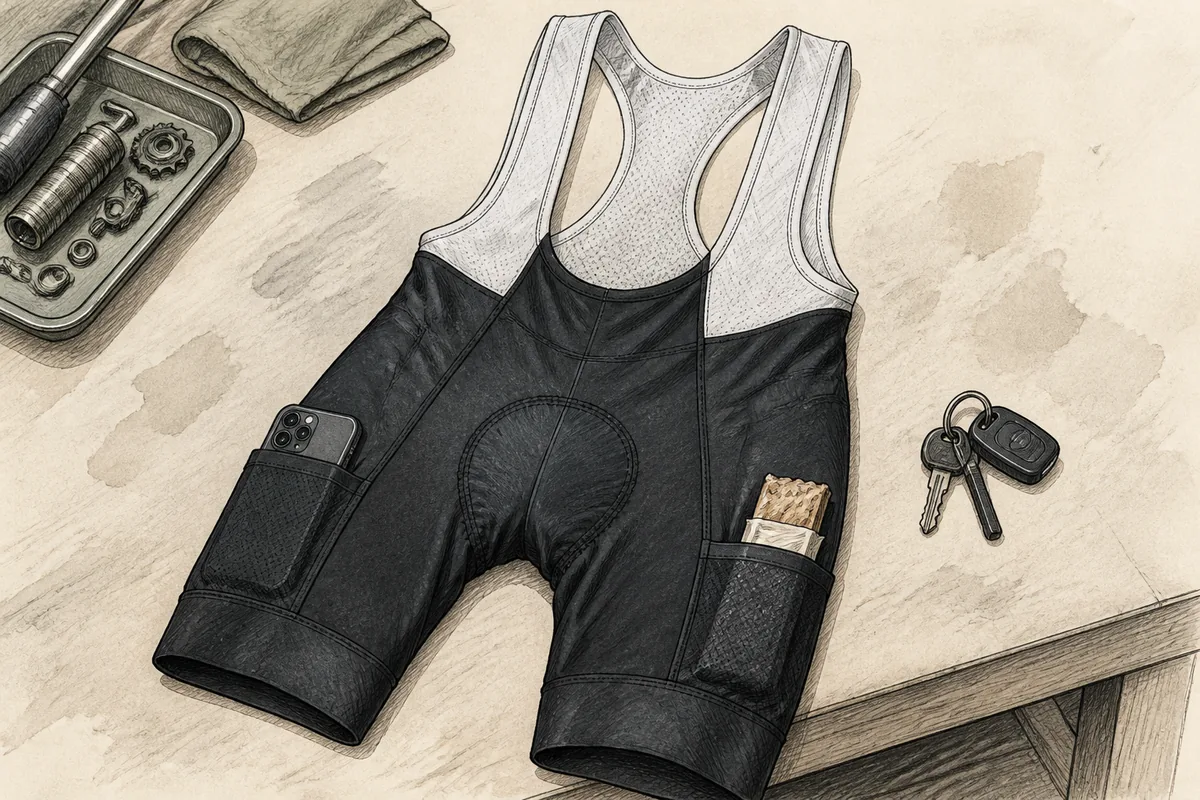
The focus is shorts and bib shorts with integrated pockets for riders who already have basic cycling clothing and want carrying capacity without relying entirely on a jersey or bag.
Why choose cycling shorts with pockets?
The main benefit is simple: pockets put frequently used items within reach. A phone, bank card, keys, a gel or a small snack can sit on your thigh instead of in a jersey pocket, handlebar bag or backpack. That can make a short ride easier and a commute less dependent on carrying another piece of luggage.
Side-thigh pockets are usually the easiest to reach while riding. You can remove a phone or food without twisting far off the bike, and the contents remain away from the middle of your back. For gravel and touring, another pair of pockets also gives you somewhere to distribute small items.
The tradeoff is stability. A pocket carrying a large phone, keys, wallet and several snacks can pull the shorts down or create a pressure point. On a close-fitting garment, heavy contents may bounce as you pedal. A deep pocket is only useful if it holds its contents securely and does not interfere with your movement.
Treat the pockets as supplementary storage, not a replacement for every bag on the bike. A small saddlebag remains better for a multitool, spare tube and pump, while a small pack makes more sense for heavier commuting or touring loads. Pocketed shorts are most useful when you want quick access without wearing a jersey or backpack.
The main types of cycling shorts with pockets
There is no single category called “pocketed cycling shorts.” The phrase covers several designs with different priorities.
Road bib shorts with pockets
These have the close fit, shoulder straps and cycling-specific chamois associated with road bib shorts, with one or more pockets added to the thighs or lower back. They are usually the best choice for longer road rides when you want a stable fit and some extra storage.
The close-fitting fabric reduces flapping and keeps the pocket close to your body. Look for enough stretch for a phone, but not so much that the pocket becomes loose when empty. Pocket construction still varies widely, so do not assume every road bib with a cargo label is equally useful.
Cargo bib shorts
Cargo bib shorts are designed around larger storage pockets. They are often the strongest all-round option for regular road and gravel riders who want integrated storage without moving to loose outer shorts.
A cargo bib can carry a phone, food and a card while retaining a cycling position and secure leg fit. However, “cargo” describes storage, not a guaranteed standard of padding, fabric or construction. One cargo bib may have a refined chamois and stable pockets; another may simply have two stretchy panels and a confident name.
Liner shorts with pockets
Padded liner shorts sit underneath baggy mountain-bike, gravel or casual outer shorts. They suit riders who want cycling comfort without the appearance of full road kit, or who need to change into ordinary clothing at work.
Liner shorts are usually the practical choice for commuting and trail riding. The outer shorts provide abrasion resistance and everyday coverage, while the liner supplies the chamois. Check that the liner stays in place independently of the outer garment. If it slides down during pedaling, the pocket is the least of your concerns.
Mountain-bike and gravel baggy shorts
These combine tougher outer fabric with a waist adjustment, roomier cut and often several pockets. Some use a separate padded liner, while others are unpadded and intended to be worn over cycling underwear or regular shorts.
Baggy shorts make more sense than road-style bibs when your route includes rough surfaces, hike-a-bike, brush or frequent stops. The compromise is more fabric movement and wind resistance, which matters on fast road sections but much less on a technical trail.
Casual and commuter cycling shorts
These use everyday-looking fabrics and may have lighter padding, a simple elastic waist or pockets positioned like ordinary shorts. They can work well for short rides and mixed transport, but inspect the cycling fit rather than assuming casual appearance means comfort.
A fashion pocket can hold a phone, but that does not tell you whether the chamois is shaped for pedaling or whether the seams will sit under pressure. For anything beyond short trips, a properly designed padded liner is usually the safer starting point.
| Riding use | Best starting design |
|---|---|
| Road riding | Close-fitting bib or cargo bib; stable storage with less flapping. |
| Gravel and bikepacking | Cargo bib or liner with secure, generous pockets; prioritize comfort and durability. |
| Commuting | Liner shorts or everyday-looking outer shorts; easy changing and secure phone storage. |
| Mountain biking | Padded liner under baggy shorts; better movement and abrasion protection. |
| Short fitness rides | Comfortable padded shorts with one secure pocket; avoid paying for unused cargo features. |
What to check before buying
Fit comes before pocket count
Shorts should stay in place without digging into your waist, thighs or groin. Buying by waist size alone is a common mistake. Thigh circumference, torso length and the shape of the leg opening can matter just as much.
Bib straps should lie flat and provide gentle support without pulling the shorts upward or restricting comfortable breathing. If the straps feel tight while standing, they may feel worse once you are riding. If they are too loose, the chamois may move out of position.
Look at the chamois, not its thickness
The chamois is the padded insert intended to support you in a cycling position. It should be shaped for the saddle, have smooth edges and avoid bulky seams in high-pressure areas. More padding is not automatically more comfortable. A thick, poorly shaped pad can bunch, retain moisture and feel less stable than a thinner one.
For longer rides, a cycling-specific chamois and stable fit matter more than a large-looking pad. Casual commuter shorts with light padding can be adequate for short trips, but they are not necessarily a substitute for long-distance bib shorts.
Check pocket placement and opening
Side-thigh pockets are convenient because they are easy to reach and usually keep a phone away from the saddle. The pocket should sit below the hip crease and remain flat when loaded. A rear pocket can work for light items, but it may be harder to access and places contents closer to your back.
For valuables, look for an elastic opening that grips the contents or a zipper. A zip adds security but can create a hard edge. Elastic openings are quicker, although their security depends on the tension and item size.
Put your phone in the pocket before deciding. If it presses into your hip, catches on the saddle or pulls one side of the shorts down, the design is not right for that phone. Avoid loading one pocket heavily.
Match the fabric to the route
Stretchy, breathable fabric suits road and fitness riding because it follows your pedaling motion and dries relatively quickly. Tougher woven panels are more useful for gravel, commuting and mountain biking, where branches, rough surfaces and repeated contact with bags can wear through lightweight material.
A water-resistant pocket can help with road spray, but it is not waterproofing. Zippers and seams can still let moisture in, and rain trousers remain the proper solution in sustained wet weather.
Do not ignore grippers and care
Leg grippers help stop shorts riding upward, but aggressive silicone strips irritate some riders. A wide, well-shaped leg opening can sometimes hold position without excessive grip. Waistbands should support the shorts without folding or digging in.
Cycling shorts need frequent washing, so durable stitching, colorfast fabric and clear machine-washing instructions matter more than decorative details. Do not choose a complicated pocket system if you will resent maintaining it.
Which pocketed shorts suit your riding?
For road rides: choose close-fitting bib or cargo bib shorts with a cycling-specific chamois and stable pockets. Loose cargo shorts are fine for relaxed riding, but they create more movement and wind resistance at higher speeds.
For gravel and bikepacking: prioritize pocket security, durable fabric and comfort in several riding positions. Liner shorts under outer shorts make sense if the route includes walking or hike-a-bike. Keep tools and spare tubes in a small saddlebag.
For commuting: liner shorts or everyday-looking outer shorts are usually more practical than road-style bibs, especially if you change at work. A bag remains better for clothing, lunch and anything heavy enough to pull the shorts down.
For mountain biking: padded liner shorts under mountain-bike baggy shorts are the sensible default. Tougher fabric and freedom of movement matter more than low aerodynamic drag.
For short fitness rides: do not overspend on elaborate cargo layouts. A comfortable pair of padded shorts with one secure pocket may be all you need.
For touring and long-distance riding: use pockets for food and quick-access items, but distribute heavier equipment elsewhere. Even well-designed cargo shorts can sag when overloaded.
Common buying mistakes
The first mistake is buying by waist size alone. Check the brand’s thigh, hip and bib measurements, then pay attention to the return policy. Padded shorts are fit-sensitive, and sizing varies between brands.
Another mistake is assuming that a large phone pocket can carry everything. A phone, keys, wallet and several snacks may be too much for one thigh. Heavy items pull on the garment and can create pressure points.
Do not choose fashion pockets over cycling fit. A pair can look like ordinary shorts and still have a poor chamois, badly placed seams or a waistband that rolls while you pedal.
It is also easy to pay for features you will never use. Multiple cargo panels, waterproof zips and premium fabric treatments are poor value for occasional short rides if a basic padded short already meets your needs.
Many riders find padded cycling shorts more comfortable without underwear because underwear can introduce seams and retain moisture beneath the chamois – see do you wear underwear with cycling shorts. Treat that as a comfort and fit consideration, not a rigid rule. For pad formats and fit basics, start with padded cycling shorts.
The safest starting choice for each rider
For regular road or gravel riding, a close-fitting cargo bib is the best default if you genuinely want integrated storage. It combines a stable cycling fit with useful carrying capacity and avoids most of the flapping associated with loose cargo designs.
For mountain biking, commuting and riders who prefer a less technical appearance, choose padded liner shorts under baggy outer shorts. They are easier to pair with everyday clothing and usually handle changing, abrasion and walking better.
Beginners should spend first on correct fit, a decent chamois and one secure pocket. Premium materials, elaborate pocket layouts and waterproof zips come later, if you discover that you need them.
Before buying, check your intended riding, padding needs, likely pocket load, pocket security, overall fit, fabric durability and the return policy. If the shorts pass those checks, you have probably found useful storage rather than merely more places to put things.
Frequently asked questions
Are cargo bib shorts slower than regular bib shorts?
Usually, a close-fitting cargo bib has little practical aerodynamic penalty for everyday riding. Loose baggy shorts create more drag, especially at higher road speeds. If you are choosing between close-fitting cargo bibs and regular bibs, fit and storage convenience will usually matter more than a small theoretical difference.
Can you put a phone in cycling shorts with pockets?
Yes, if the pocket is snug and positioned on the thigh or hip without interfering with the saddle. Use a secure zip or elastic opening for valuables, and avoid overloading one side. Test the pocket with your actual phone before removing tags or committing to the purchase.
Do cycling shorts with pockets replace a saddlebag?
Not usually. They are useful for a phone, food and small essentials, but a saddlebag remains better for tools, spare tubes and heavier repair equipment. Using shorts pockets for hard objects can also create pressure points during longer rides.

I’ve spent way more time in the bike trade than anyone should reasonably want to. In that time I’ve wanted to make cycling jargon and marketing easier to cut through to help people get the bike of their dreams.
When I’m not writing about bikes, I can be seen out bikepacking on single speed bikes or teaching kids how to ride.