A long-sleeve cycling jersey fills a useful gap in your clothing drawer. It gives you more coverage than a short-sleeve jersey without the bulk and weather protection of a winter jacket. The difficulty is choosing the right one: a thin summer-weight jersey, a brushed thermal version and a wind-resistant top can look similar on a product page while behaving very differently on the bike.
This is a buying guide for cool, mild and changeable conditions. It is not a full guide to deep-winter layering or waterproof jackets. The right choice depends on your pace, wind exposure, humidity, sun and the layers you intend to wear underneath.
What a long-sleeve cycling jersey is best for
A long-sleeve jersey is usually at its best in spring and autumn, on cool mornings, and during rides when a short-sleeve jersey leaves your arms exposed but a jacket would be excessive. It can also provide useful sun protection and reduce the amount of road spray reaching your arms. More coverage is not only about warmth.
The basic categories overlap, but they are not interchangeable:
- Lightweight long-sleeve jersey: thin, breathable and usually best for high-output riding or mild shoulder-season weather.
- Thermal jersey: often brushed or fleece-backed inside, adding insulation for cooler, steadier rides.
- Weather-resistant jersey: may use wind-resistant panels or a water-repellent finish, but is still not a dependable waterproof shell.
- Winter jacket: designed to block more wind and rain, often with room for additional layers.
There is no universal temperature at which one category takes over. A fast road ride generates more heat than a relaxed commute. A damp, windy route can feel colder than a dry ride at the same air temperature, while strong sun can make a dark thermal jersey surprisingly uncomfortable.
For most riders, a breathable, midweight long-sleeve jersey is the safest first purchase. It covers more ordinary shoulder-season conditions than a heavily insulated model. Add a thin base layer when you need more warmth, or a packable wind vest when the main problem is wind. That combination is usually more versatile than buying several specialized tops immediately.
| Riding conditions | Best starting choice |
|---|---|
| Mild shoulder-season rides | Lightweight or midweight long-sleeve jersey |
| Cool, dry and steady rides | Thermal or fleece-backed jersey |
| High-output riding | Lightweight, highly breathable jersey, possibly with a thin base layer |
| Changeable and windy weather | Breathable jersey plus a packable wind vest |
| Persistent rain, strong wind or genuinely cold conditions | A cycling jacket or shell with an appropriate layering system |
Do not ask a jersey to do a jacket’s job. Light drizzle may bead on a treated fabric, but sustained rain will usually work through it. Strong wind and slow riding can also overwhelm a jersey’s insulation.
Choose the fabric and warmth level
Lightweight synthetic jerseys are commonly made from polyester or similar technical fibres. Their main advantages are low weight, stretch and quick drying. They can move sweat away from your skin effectively during harder efforts, then dry relatively quickly after a climb or a brief shower.
The tradeoff is that synthetic fabric can retain odor, particularly if the garment is worn repeatedly without proper washing. That is a maintenance issue rather than a reason to reject it. For high-output riding, a breathable synthetic jersey is usually the sensible default because excessive insulation becomes uncomfortable faster than a slightly cool start becomes a problem.
Thermal jerseys use a brushed or fleece-backed inner surface to trap more air against the body. This improves warmth and makes them useful for cooler, dry rides. The same insulation can become too much on a hard climb or during an unexpected change in weather. A thermal jersey is worthwhile if your normal rides are cool and steady; it is not the best answer to every autumn morning.
Merino-blend jerseys and base layers appeal to riders who value a softer feel and better odor control between washes. Merino can regulate comfort well across changing conditions, but it often costs more, may dry more slowly than a thin synthetic fabric and generally deserves gentler care. A blend can provide a practical compromise, but the percentage of merino does not automatically tell you how warm or breathable the whole garment will feel.
Wind-resistant panels and water-repellent finishes can be useful in exposed conditions. They may reduce wind chill across the chest or shrug off light spray. However, they also reduce airflow compared with a fully breathable fabric, and a durable water-repellent treatment is not the same as waterproof construction. Marketing departments are fond of making a drizzle sound like a monsoon’s personal defeat.
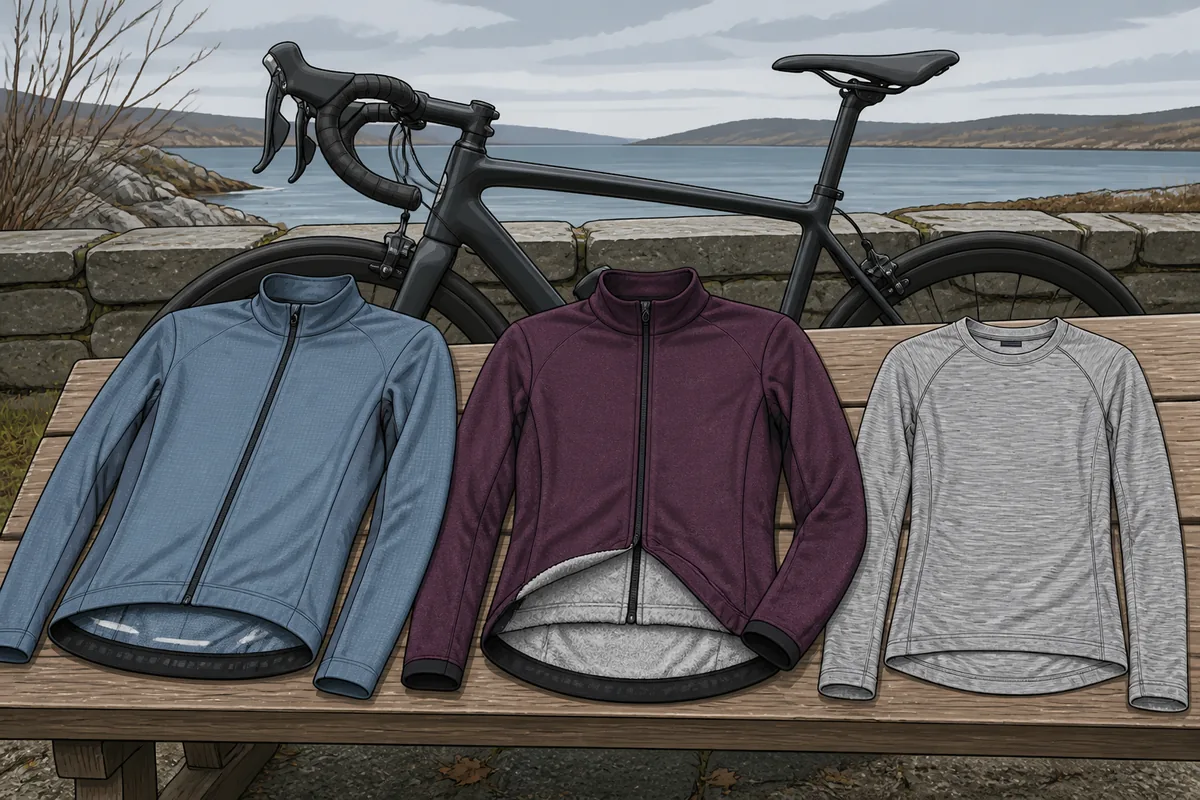
Choose warmth according to how you ride. A lightweight jersey suits high-output road rides, climbs and warmer days. A thermal jersey suits colder, drier routes where you will not spend the whole ride pushing hard. If the forecast is uncertain, a normal breathable jersey with a wind vest often gives you more control than a heavily insulated top.
Get the fit right for riding
Fit matters more than premium fabric claims. Cycling jerseys are designed around a forward-leaning position, so judge the garment on the bike rather than while standing upright in a shop or bedroom mirror.
Race fit is close to the body and usually works best for riders who want minimal flapping and will wear a thin base layer. Club fit gives you a little more room without becoming loose, while relaxed fit prioritizes comfort and casual use. None is automatically better, but the cut must match your position, pace and layering plan.
Check that your shoulders move freely when you reach the bars. The sleeves should stay long enough in that position to meet your gloves without leaving a cold gap at the wrist. Cuffs should be secure but not so tight that pulling them over a watch or base layer becomes a wrestling match.
The hem should remain in place when you bend forward. A silicone gripper can help, particularly if you carry items in the rear pockets or wear a vest over the jersey. Avoid sizing up automatically. Excess fabric can flap in the wind, hold moisture and make loaded pockets sag. At the other extreme, an overly tight jersey can restrict breathing and leave no room for the layer you actually need.
Brand sizing varies substantially. Check the garment measurements, not just the small, medium or large label, and compare them with a jersey that already fits you well. If you are between sizes, decide based on the intended base layer and riding position rather than assuming bigger is always safer.
Features worth paying for
Start with the rear pockets. A stable three-pocket layout, strong stitching and enough depth for your normal ride essentials are more useful than a collection of tiny compartments. Pockets should hold a phone, keys, food and a spare layer without pulling the jersey down. A jersey should not become a fabric pannier.
A full-length front zip is valuable because it lets you control airflow on climbs and descents. It is also easier to remove the jersey without pulling it over your head. Look for a zip that runs smoothly, a soft collar that does not rub and a zip garage at the top so the slider is not pressing into your neck.
Reflective details are worth prioritizing if you commute or regularly ride in low light. They do not replace proper lights, but they can make your moving outline easier for other road users to see. A secure hem gripper and reinforced pocket seams are similarly unglamorous features that improve daily use and longevity.
Thumb loops can be handy when you want extra wrist coverage under gloves, especially with a thinner jersey. They are not essential and can become annoying if they pull while you are riding. Extra ventilation zips and water-repellent coatings are use-case features, not automatic upgrades. Pay for them when your routes justify them, not because the product page has found another adjective for “technical.”
How to buy one without overcomplicating your wardrobe
If you mainly ride in spring and autumn, start with one breathable, midweight long-sleeve jersey. It is the most useful general-purpose choice. Before buying a second specialized jersey, consider a thin base layer or packable cycling wind vest. Those pieces can extend the useful range of the same jersey and are often cheaper than maintaining several narrowly focused tops.
Choose a thermal jersey when your rides are regularly cold, dry and steady enough that you will benefit from extra insulation. Choose a standard long-sleeve jersey plus a shell or wind vest when weather changes quickly. That separates warmth from weather protection, making it easier to adjust during the ride.
Care affects how the fabric performs. Follow the garment label, close zips before washing and avoid fabric softener where the manufacturer warns that it can affect moisture management. Air-drying is usually kinder than high heat. Do not leave a damp jersey buried in a kit bag unless you enjoy cultivating expensive science.
Use this checklist before you buy:
- What conditions will you ride in most often?
- Will you ride hard, steadily or at commuting pace?
- Do you need lightweight breathability or thermal insulation?
- Will you wear a base layer underneath?
- Does the jersey fit correctly in the riding position?
- Are the sleeves, cuffs and hem stable?
- Are the pockets, zip and reflective details useful for your routes?
Stop upgrading when the jersey, your layering plan and your usual weather are covered. For most cyclists, a versatile midweight model is a better first step than an expensive, heavily insulated top that only works on a small number of rides.
Frequently asked questions
Can you wear a long-sleeve cycling jersey in summer?
Yes, particularly a lightweight, breathable version for cool mornings, high-altitude rides or strong sun. A thermal jersey will usually be too warm for hot-weather riding.
Do I need a base layer under a long-sleeve cycling jersey?
Not always. A base layer adds warmth and can help manage moisture in cooler conditions, but on mild rides it may make an otherwise breathable jersey unnecessarily hot.
Is a long-sleeve jersey waterproof?
Usually not. Some jerseys repel light drizzle, but sustained rain needs a cycling-specific waterproof shell with more reliable protection.

I’ve spent way more time in the bike trade than anyone should reasonably want to. In that time I’ve wanted to make cycling jargon and marketing easier to cut through to help people get the bike of their dreams.
When I’m not writing about bikes, I can be seen out bikepacking on single speed bikes or teaching kids how to ride.