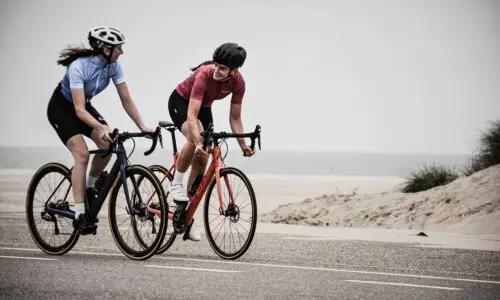
Choosing cycling shorts for girls is mainly a fit problem, not a branding problem. The right pair should stay in place while pedalling, avoid rubbing and suit the riding the young cyclist actually does. Premium race fabric is a poor bargain if the waistband digs in or the pad slides around.
The audience is children and teenagers choosing clothing for recreational rides, commuting, club rides or youth racing – youth sizing, not adult women’s cycling clothing.
What to look for in cycling shorts for girls
Youth cycling shorts are not simply adult women’s shorts made smaller. Children’s proportions, waist shape, inseam and growth patterns vary, while age labels differ considerably between brands.
For most young riders, prioritise comfort and a secure fit over race-style compression or the lightest fabric. The shorts should sit close to the body without restricting movement or making the rider constantly aware of pressure.
| Short type | Best use and main tradeoff |
|---|---|
| Padded Lycra-style shorts | Good for longer road rides, club rides and repeated saddle time. They are comfortable when correctly sized, but some riders prefer extra coverage over them. |
| MTB liner shorts | A strong choice for mountain biking, casual riding and riders who prefer a less road-specific appearance. They sit under outer shorts, though pockets may be limited. |
| Baggy shorts with a liner | Useful for MTB, BMX and riders wanting pockets or more coverage. They are versatile, but loose outer fabric can feel warm or catch on the saddle. |
| Unpadded casual shorts | Fine for brief trips if the rider is comfortable. They are less suitable for regular long rides because they do not manage saddle friction and pressure in the same way. |
Unpadded shorts may be perfectly adequate for a short trip to a friend’s house. For repeated saddle time, a properly fitted pad usually earns its place. The rider’s comfort matters more than the label.
How cycling shorts should fit
The waistband should sit securely without rolling, slipping down or digging into the skin. The hips and seat should be covered by close-fitting fabric, with no large folds that can rub during pedalling.
Leg openings should hold the shorts gently in place rather than leave deep pressure marks. If they ride up, the shorts may be too loose, too short or simply the wrong shape. If they pinch as soon as the rider bends their knees, try another size or cut.
Check the shorts in a riding position, not only while standing. The chamois, or pad, should remain under the sit bones while the rider is seated and pedalling. It should not bunch at the front, twist to one side or move significantly when walking.
| Check | What good fit looks like |
|---|---|
| Waist | Secure and comfortable, with no rolling or sharp pressure. |
| Hips and seat | Close to the body without loose folds or sagging fabric. |
| Inseam | Long enough to stay in place without restricting knee movement. |
| Leg openings | Gently secure, not sliding upward or digging in. |
| Chamois position | Stays beneath the sit bones while pedalling rather than bunching or shifting. |
| Movement | The rider can squat, walk and pedal without pulling, rubbing or restriction. |
Wider waistbands, longer legs and flat seams can matter more than an aggressive race cut. If the rider wants more coverage, padded shorts can go under baggy outer shorts, or an MTB liner can provide the same function in one garment.
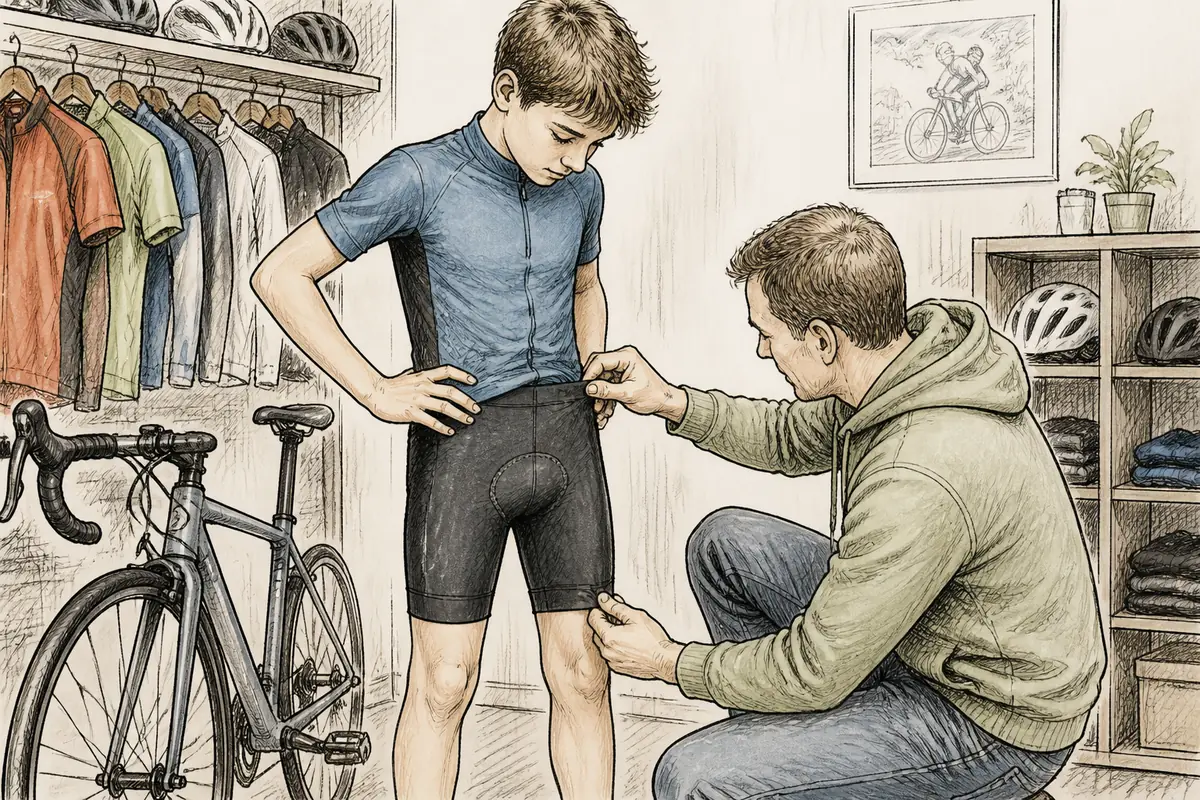
Do not automatically size up for growth. A little extra length can be useful, but excess fabric allows the pad and leg openings to move. Size up when the current pair is clearly tight or short, not merely because a larger size might last longer.
Padding and chamois: what young riders actually need
The chamois reduces friction and spreads pressure between the rider, saddle and shorts. It does not remove every source of saddle discomfort and cannot compensate for an unsuitable saddle, incorrect saddle height or a ride that is too long for the rider’s current experience.
For most young cyclists, a thin or moderate, flexible pad is the sensible starting point. More foam is not automatically more comfortable. Bulky padding can fold, feel warm and stay damp, while a thinner pad that stays flat may work better.
Pad shape and placement matter more than gender-specific marketing. Some manufacturers offer designs intended for girls, but not every rider needs a specialised chamois. The useful test is simple: does the pad fit the riding position and remain flat while pedalling?
Choose padded shorts for longer rides, regular commuting or repeated training. Unpadded shorts are acceptable for brief casual trips when the rider is comfortable. If discomfort appears, check the fit, saddle and ride length rather than assuming that thicker padding is the answer.
Youth cycling shorts sizing and measuring
Use the manufacturer’s youth size chart instead of guessing from age. One brand’s 12-year size may match another brand’s 10-year size, and charts may use height, waist, hips or a general garment size.
Measure height, waist and hips with the child standing naturally, then follow the chart’s priority measurement. Do not pull the tape tight: a garment that seems acceptable standing up can feel restrictive once the rider is seated.
If the rider is between sizes, choose the smaller size only when the waist and leg openings remain comfortable and the pad stays in position. Choose the larger size when the smaller pair is clearly tight, short or restrictive. The larger pair still needs to stay put; “room to grow” is not useful if the shorts slide down every few minutes.
Before keeping the shorts, check the retailer’s hygiene and return rules. Then have the rider sit on the bike, make a few pedalling movements, walk and squat. Standing in front of a mirror tells you much less than checking the shorts in the position where they will be used.
Fabric, seams and features worth paying for
Nylon or polyester blends with elastane provide the stretch needed for pedalling while keeping the shorts close to the body. The useful features are straightforward: flat seams, a soft waistband, secure leg grippers and fabric that remains opaque when stretched.
UPF claims can be useful on exposed rides, but they do not replace sensible coverage, sunscreen or shade. For MTB and BMX, durable outer fabric, pockets and a loose cut may be more valuable than highly stretchy road-racing fabric. An MTB liner is often the better default when the rider wants baggy coverage without giving up padding.
Premium compression, elaborate panel construction and race-level fabrics rarely justify a large price jump for occasional youth riding. Spend first on the correct size and a construction the rider will actually wear.
The safest buying choice for most young riders
For longer recreational rides, start with correctly sized youth padded shorts with a soft waistband, flat seams, a moderate-length leg and a flexible pad. This is the safest default because it addresses comfort and stability without overbuying.
If the rider wants pockets, extra coverage or a less road-cycling appearance, choose padded MTB liner shorts under baggy shorts. This is usually better than forcing a child into a tight race-style garment they dislike wearing.
Do not upgrade just because a more expensive short has a thicker pad or more technical fabric. If the current pair fits well and the rider is comfortable, premium materials are unlikely to transform ordinary rides. Replace shorts when the pad becomes misshapen, the elastic loses its hold or the fabric becomes worn.
Wash shorts after use and follow the care label. Avoid fabric softener when the manufacturer advises against it. The best pair is the one that stays comfortable throughout the ride and gets chosen again next time.
One practical question
Should girls wear underwear under padded cycling shorts?
Usually no. Padded shorts are designed to sit directly against the skin, and underwear seams can add friction and hold moisture – the same rule covered in do you wear underwear with cycling shorts. Follow the retailer’s hygiene rules when trying them on, particularly if the shorts cannot be returned after contact with skin. For adult pad types and formats, see padded cycling shorts.

I’ve spent way more time in the bike trade than anyone should reasonably want to. In that time I’ve wanted to make cycling jargon and marketing easier to cut through to help people get the bike of their dreams.
When I’m not writing about bikes, I can be seen out bikepacking on single speed bikes or teaching kids how to ride.