
When bib shorts feel too cool but full-length tights seem excessive, 3/4 cycling bibs can fill the gap. They extend below the knee, adding coverage without wrapping your entire lower leg in thermal fabric.
That middle ground is useful, but it is not automatically the best-value option. Bib shorts with knee warmers are usually more adaptable. Choose 3/4 bibs when you want fixed coverage and dislike adjusting separate warmers during a ride.
What are 3/4 cycling bibs?
3/4 cycling bibs are bib shorts with fabric extending below the knee, usually toward the upper or middle calf. The bib section and chamois work like those in standard bib shorts, while the longer legs provide more warmth and coverage.
Brands use the names inconsistently. You may see three-quarter bibs, capri bibs or knicker bibs describing similar garments. Some finish just below the knee; others reach mid-calf. Check product photos and inseam measurements rather than relying on the label.
Compared with bib shorts, 3/4 bibs cover the knees and part of the lower leg. Compared with knee warmers, they are one integrated garment rather than removable sleeves. Compared with full-length bib tights, they leave the ankles and some lower calf uncovered.
The key judgment is that they are shoulder-season clothing, not winter tights with a few inches missing. That missing fabric helps on mild rides, but limits protection from cold wind and rain.
When should you wear 3/4 cycling bibs?
They make most sense on cool spring and autumn rides, shaded routes, early starts and mild shoulder-season days. They add warmth around the knees without the bulk and heat of full-length tights.
They suit riders who dislike knee warmers, prefer fewer layers or regularly find bib shorts just too cool. The fixed coverage is also convenient: there is no separate fabric to slide down, bunch behind the knee or pack away later.
Wind changes the calculation. Exposed descents, coastal roads and fast riding can make uncovered calves feel cold. Rain has a similar effect. If the route is wet, windy or likely to stay cold for several hours, full-length bib tights are normally the better choice.
A practical default is simple: choose 3/4 bibs when bib shorts feel too cool but full tights would be excessive. Do not treat them as an all-season solution just because a product description does.
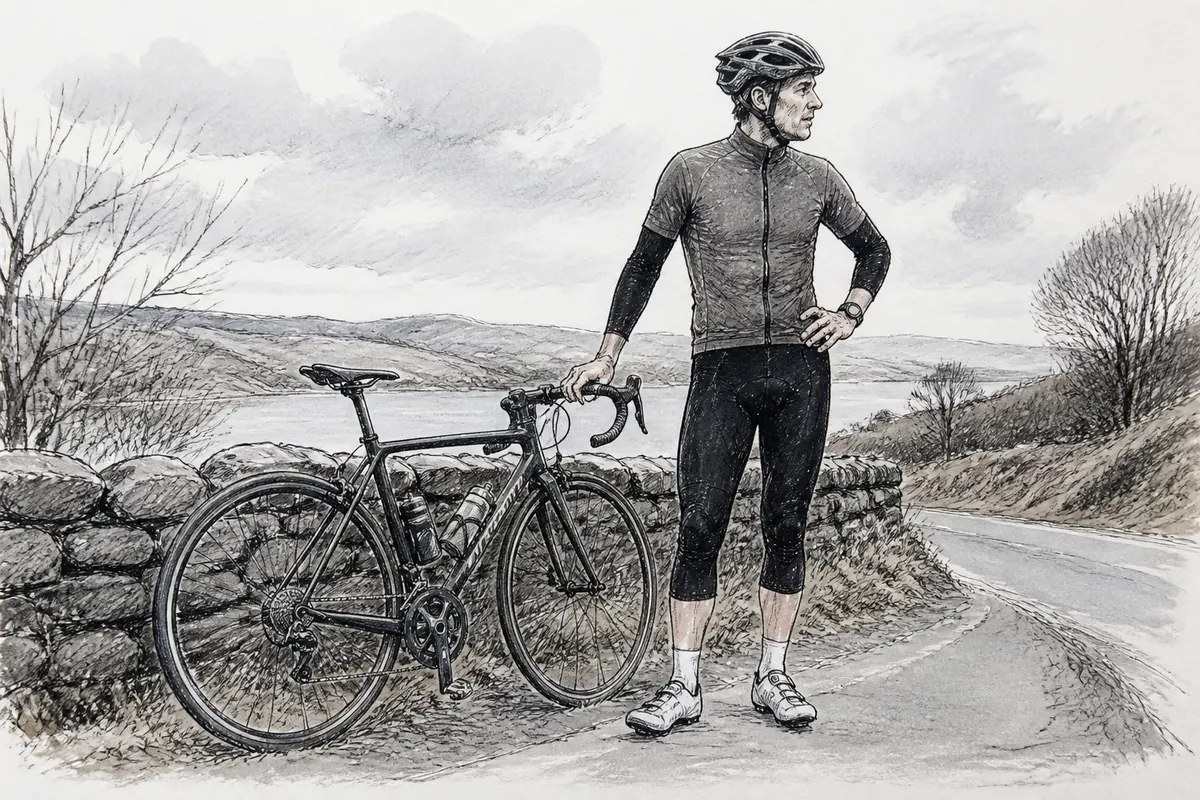
3/4 bibs versus bib shorts, knee warmers and bib tights
The right option depends on how much temperature variation you face during a ride. 3/4 bibs offer stable coverage, knee warmers offer flexibility and full-length tights provide the most protection.
| Option | Best use |
|---|---|
| Bib shorts | Warm weather and riders who want the coolest, simplest lower-body option. |
| 3/4 cycling bibs | Cool spring or autumn rides when you want fixed coverage below the knee. |
| Bib shorts with knee warmers | Changeable conditions where you may remove and store the extra coverage. |
| Full-length bib tights | Cold, windy or wet conditions, especially on longer winter rides. |
Knee warmers are usually the better-value starting point if you are building a versatile clothing drawer. You can use them with several pairs of bib shorts and remove them when the temperature rises. 3/4 bibs win on convenience, but they are a dedicated seasonal purchase.
Full-length bib tights remain preferable for genuinely cold weather. Look for thermal insulation, wind protection or weather-resistant construction when conditions require it. A 3/4 design is not a substitute for proper winter kit.
How to choose 3/4 cycling bibs
Put fit first
The bib should sit securely while you pedal without compressing your abdomen, pulling at your shoulders or allowing the chamois to move. Excess material behind the knees can rub, while sizing down can pull the straps tight and shift the pad.
Use the manufacturer’s waist, hip and inseam measurements. Your 3/4 size may match your bib-short size, but different fabrics and cuts can change how the garment sits. Pay particular attention to the finished leg length: just-below-knee and mid-calf models feel noticeably different.
Check the gripper and fabric
The leg gripper should hold the fabric in place without digging into your skin. A weak gripper lets the legs creep upward; an overly aggressive one can create pressure and bunching.
Light thermal fabric adds warmth without feeling like winter clothing. A brushed interior generally feels warmer, while wind-resistant panels help on exposed roads but can reduce breathability. Do not overspend on heavy insulation unless your routes are genuinely cool. A mid-weight pair is the safest starting choice for most riders.
Judge the chamois by your rides
A thicker pad is not automatically more comfortable. Choose an insert that suits your usual riding position and duration, with stable shaping and edges that are unlikely to rub. Short leisure rides do not necessarily require an endurance-style insert, while longer road and gravel rides justify closer attention to pad shape and moisture management.
Inspect the construction
Flat seams can reduce rubbing behind the knee, and strong stitching helps with durability. Bib straps should lie flat and stay in place without feeling restrictive. Reflective details are useful for low-light riding, but they do not make you visible from every angle.
Pockets are not standard on 3/4 bibs, and ankle coverage varies widely. Check the specification rather than assuming every model includes the same extras.
Common mistakes and the safest buying choice
Do not buy 3/4 bibs as a substitute for rain protection or deep-winter insulation. They leave the ankles exposed and cannot provide the same protection as full-length weather-appropriate tights.
Do not size down to create compression if the straps or chamois shift. Cycling clothing should be close-fitting, but stability matters more than a smaller number on the label.
Very cheap pairs are most likely to disappoint through rough seams, weak grippers and poor pad construction. Those are the cost-cutting areas riders notice repeatedly. Extra panels and fashionable fabric names matter less if the garment creeps upward or rubs.
If you are unsure, start with a mid-weight pair from an established cycling clothing range and use the brand’s waist, hip and inseam chart. For maximum flexibility, buy bib shorts and knee warmers instead. Choose 3/4 bibs when convenience and uninterrupted below-the-knee coverage matter more than adaptability. For colder days, pair them with layering ideas from winter cycling jerseys or consider wool cycling bibs if odour control matters.
3/4 cycling bibs FAQs
Are 3/4 cycling bibs warmer than knee warmers?
Usually they offer more consistent coverage and less movement. Knee warmers are more versatile because you can remove and store them if the temperature rises.
Can you wear 3/4 cycling bibs in winter?
Only in mild winter conditions. For freezing temperatures, strong wind or wet rides, full-length thermal or weather-resistant bib tights are normally the safer choice.
Do 3/4 cycling bibs need a different size from bib shorts?
Not necessarily. Use the brand’s measurements, then check the leg length and gripper position because the cut and fabric stretch can differ between models.

I’ve spent way more time in the bike trade than anyone should reasonably want to. In that time I’ve wanted to make cycling jargon and marketing easier to cut through to help people get the bike of their dreams.
When I’m not writing about bikes, I can be seen out bikepacking on single speed bikes or teaching kids how to ride.


