Buying gel cycling shorts looks straightforward until every product promises a different version of “maximum comfort.” Some use genuine gel inserts, some use gel-like foam, and others put a thick pad in ordinary waist shorts and call it a day. The material matters, but it is not the first thing you should judge.
A stable chamois, sensible shape and close fit usually matter more than the word gel on the label. A thick pad that moves around can be less comfortable than a thinner pad that stays exactly where it should. Cycling clothing is annoyingly good at turning simple questions into a fabric-based research project, so let’s make the useful distinctions.
The focus is clothing choice for riders who already cycle – not learning to ride, deep saddle fitting or medical treatment for persistent pain. See the NHS itchy skin guidance if skin problems need attention.
What are gel cycling shorts?
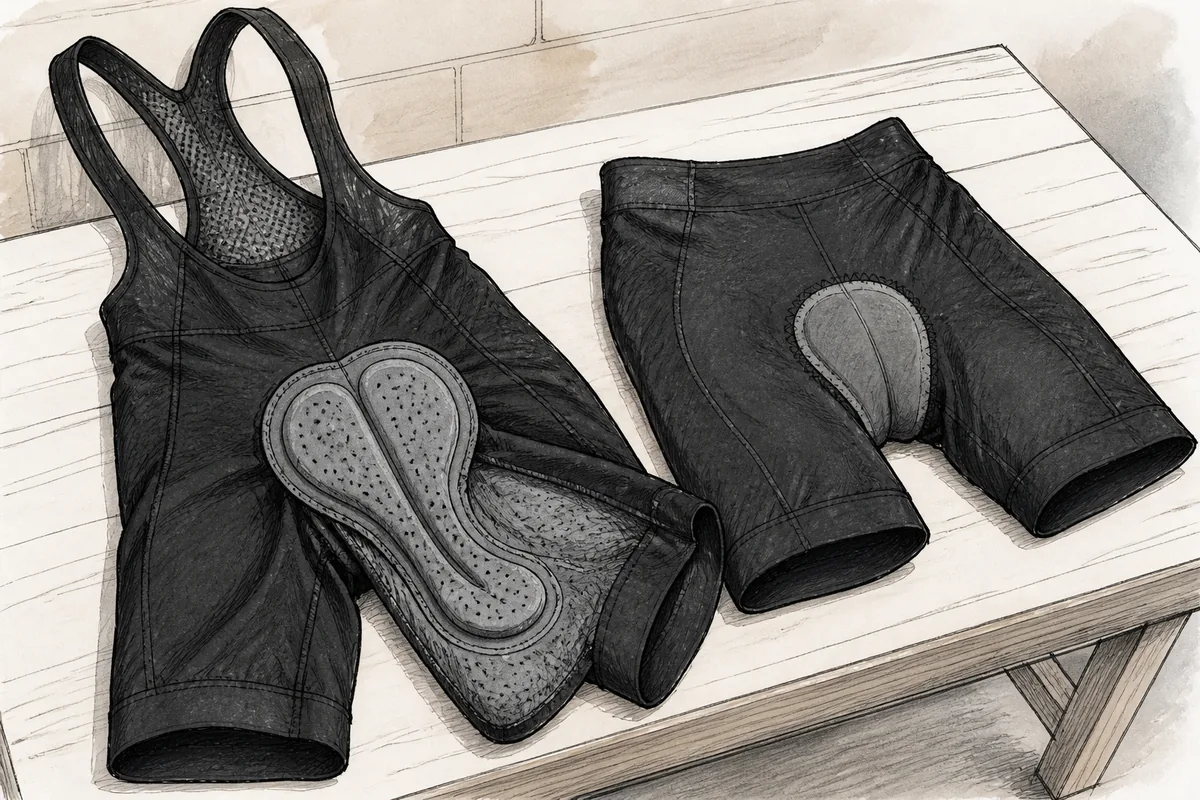
Gel cycling shorts are waist shorts or bib shorts that use gel inserts, gel-like panels or a cushioning compound within the chamois pad. The pad sits between you and the saddle, with thicker or denser areas normally positioned beneath the sit bones and other high-pressure zones.
Gel-padded cycling shorts are different from a gel seat cover or saddle pad. A saddle cover fits over the saddle and changes the contact surface for anyone riding in ordinary clothes. Gel shorts put the cushioning in the clothing instead. That generally gives you a more controlled interface, provided the shorts fit closely and the pad does not shift.
Ordinary padded cycling shorts may use foam only, usually in several densities and thicknesses. Gel is an additional material or layer, not a separate category of shorts with guaranteed comfort. A quality foam chamois can work extremely well, while a poorly shaped gel pad can feel bulky, hot or oddly lumpy.
Product listings also use the word loosely. Some garments contain clear gel sections or silicone-style cushioning. Others use a soft, elastic foam that feels gel-like but is not technically gel. Look past the badge and inspect the pad construction, shape and fit.
Most importantly, gel is not a substitute for the correct saddle height, sensible riding position or a saddle that suits your anatomy. It may spread pressure in a particular area, but it cannot repair every problem created by the bike underneath you.
Foam, gel and hybrid chamois padding compared
Foam remains the basic structure in many good cycling pads. Closed-cell and multi-density foams can be shaped to provide support under the sit bones while using thinner, more flexible material elsewhere. Density affects how firm the pad feels, and thickness affects how much material sits between you and the saddle.
Foam is usually light, relatively easy to shape and capable of drying reasonably quickly when the construction is well designed. A firmer foam pad can feel less comfortable for the first few rides, but it often creates fewer folds and less movement once you are settled into a road riding position.
Gel is more compliant. It can spread pressure across a small area and provide a softer first impression, which some riders appreciate on a firm saddle or during moderate-length rides. The tradeoff is that gel can add weight, bulk and heat retention. It may also feel less predictable if the insert is too thick or poorly integrated with the surrounding foam.
Hybrid pads use both materials. Foam provides the structure and shape, while gel sections target pressure zones such as the sit-bone area. In principle, this is the most sensible design for many riders because it avoids turning the entire chamois into a padded cushion. In practice, the execution still matters more than the word hybrid.
| Padding type | Best understood as |
|---|---|
| Foam | Light, shapeable cushioning that can be made in different densities. Usually less bulky and often better at managing moisture. A good choice for riders who prefer a firm, stable pad and a close road-riding position. |
| Gel | Compliant cushioning that can spread pressure in selected zones. It may feel softer at first, but can add weight, bulk and heat. Useful when you specifically prefer a plusher contact feel, not as an automatic comfort upgrade. |
| Hybrid | Structured foam combined with targeted gel or gel-like inserts. Often the most balanced approach, assuming the pad is shaped well and the inserts do not create hard edges or lumps. |
When comparing shorts, look at pad width, the transition between densities, the front-to-rear shape and the stitching. These details affect comfort, breathability and stability more directly than the marketing description. A pad that is too narrow may leave pressure in the wrong place. One that is too wide or thick can bunch when you bend forward.
When gel cycling shorts make sense
Gel or hybrid padding can make sense for newer riders, upright fitness riding, leisure cycling and anyone who dislikes firm saddle contact. If you are still adapting to cycling shorts or spending longer periods in the saddle, a little extra compliance may make the first stage more tolerable.
The practical default is not the thickest gel pad you can find. Start with a reputable, mid-thickness chamois that fits securely. That gives you cushioning without automatically adding the bulk that can cause bunching and trapped moisture.
Gel can be useful on moderate-length rides where comfort matters more than keeping the garment as light and streamlined as possible. It may also appeal to riders using a relatively firm road saddle who prefer more softness beneath the sit bones.
Experienced road riders often prefer thinner, firmer foam. Once your saddle and riding position are sorted, a low-bulk pad can feel more natural, dry faster and produce fewer folds. A soft, thick pad is not necessarily kinder to your contact points; it can compress unevenly and move as you pedal.
For genuinely rough routes, comfort-focused shorts may help, but do not assume the chamois should absorb everything. Wider tires at appropriate pressure, a suitable saddle and a sensible riding position can matter more than adding another layer of gel.
How to choose gel cycling shorts that fit
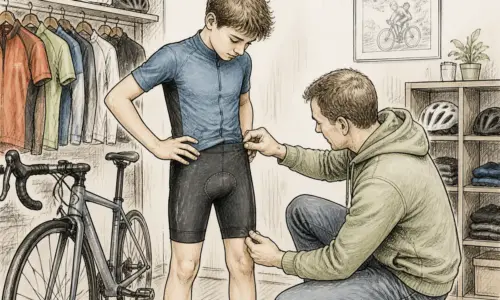
The chamois should sit smoothly against your body and remain in contact with it as you pedal. It should not shift from side to side, bunch at the front or create a ridge at the edge. A stable, slightly snug fit is the goal.
Use the manufacturer’s size chart and measure rather than automatically sizing up for comfort. Loose shorts may feel relaxed when you are standing in them, but they allow the pad to move once you start riding. That movement creates friction.
The pad should be shaped for a cycling position. It needs enough coverage where you need it, particularly beneath the sit bones, without putting excessive material at the front. An upright fitness bike and a lower road position do not place pressure in exactly the same way.
Bib shorts usually hold the chamois more securely because the shoulder straps keep the garment from sliding down. They also avoid a tight waistband pressing into your stomach when you lean forward. Their disadvantage is simple: they are less convenient when nature calls. Waist cycling shorts are easier to remove and can suit casual riders, commuters or anyone who does not want bib straps.
Look for fabric with useful stretch and recovery, flat seams and leg grippers that hold without pinching. Poorly finished seams can rub, while weak grippers allow the legs to ride up. Breathable fabric and a pad that does not extend unnecessarily high at the front can make a larger difference on warm rides than another gel insert.
Normally, do not wear underwear beneath padded cycling shorts. Extra seams and fabric sit between the chamois and your skin, where they can increase rubbing and retain moisture. Put the shorts on directly against your skin, and wash them after each sweaty ride according to the care instructions.
Gel cycling shorts: what is worth paying for?
Pay for construction rather than the label. A named gel insert is less important than a pad with sensible density changes, clean stitching, good fabric recovery and a shape that stays put. The safest starting purchase is one reputable pair of mid-range padded shorts or bib shorts, not a drawer full of cheap experiments.
Budget shorts often reveal their savings through a very thin or narrow pad, scratchy seams, loose leg grippers and fabric that loses its shape quickly. Gel that feels lumpy, plasticky or disconnected from the surrounding foam is not a premium feature; it is just extra material making itself known.
Spending more is easier to justify if you ride regularly, cover longer distances or wash your kit frequently. Better shorts may use more carefully shaped multi-density pads, fabrics that recover after repeated washing and construction that keeps the chamois stable. Those benefits are practical, but they only appear when the garment suits your body.
Do not upgrade simply because the first pair feels uncomfortable after riding for too many hours too soon. The cause may be an unsuitable road saddle, incorrect saddle height, excessive reach or a position that puts too much pressure in one area. Premium shorts cannot correct a bike setup problem, and a thicker pad can sometimes hide the warning rather than solve it.
Give one well-fitting pair several rides before judging the category. If you like the feel but need more support, try a hybrid pad. If gel feels hot or bulky, a quality multi-density foam chamois is probably the better direction.
Common questions about gel cycling shorts
Are gel cycling shorts better than foam cycling shorts?
Not automatically. A well-shaped foam pad can be cooler and less bulky, while gel can add targeted cushioning. Fit, pad shape and stability matter more than the material name.
Can gel cycling shorts stop saddle soreness?
They may improve comfort, but they cannot correct an unsuitable saddle, poor bike position, shorts that move or riding for too long too soon. Persistent or severe pain should be assessed rather than covered with increasingly thick padding. For pad formats in general, start with padded cycling shorts; seamless marketing claims belong in a separate comparison of seamless cycling shorts.
Do you wear underwear with gel cycling shorts?
Usually no. Underwear adds seams and fabric between the chamois and your skin, which can increase rubbing and retain moisture – covered in more detail in do you wear underwear with cycling shorts.

I’ve spent way more time in the bike trade than anyone should reasonably want to. In that time I’ve wanted to make cycling jargon and marketing easier to cut through to help people get the bike of their dreams.
When I’m not writing about bikes, I can be seen out bikepacking on single speed bikes or teaching kids how to ride.