
Do you wear underwear with cycling shorts? Usually, no. Wear padded cycling shorts or bib shorts directly against your skin, without ordinary underwear underneath.
The pad, fabric and seams are designed to manage pressure, sweat and movement while you pedal. Ordinary underwear is not dangerous, but it can add seams, folds and damp fabric in areas already dealing with plenty of friction.
This applies to both men’s and women’s cycling shorts. Fit and personal comfort still matter, but no underwear is the safest starting point when your shorts have a cycling pad.
The short answer: usually, no
The chamois, or pad, is intended to sit next to your body. It works best when it stays in the correct position as your hips move repeatedly against the saddle.
Underwear leg openings can rub against your groin or upper thighs. Fabric may bunch beneath the pad, and a waistband can create pressure around your stomach or lower back. Cotton is particularly poor for longer rides because it absorbs sweat and dries slowly.
So the practical default is simple: put clean padded shorts or bib shorts on clean skin, then wear your jersey or other riding layer over them.
Why underwear usually makes cycling shorts less comfortable
Seams and fabric can cause chafing
Every extra seam is another possible rubbing point. Underwear seams, elastic leg openings and stitching may feel harmless while you are standing around, then become irritating after thousands of pedal strokes.
Bulky boxer shorts are usually the weakest option. They have more material to move and fold, and their longer legs can fight with the cycling shorts’ own leg grippers. Ordinary briefs can also cause trouble if their seams sit beneath the pad or along the inner thigh.
Moisture makes friction worse
Cycling shorts generally use close-fitting synthetic or wool-blend fabrics intended to manage moisture during exercise. That does not make them magic, but they are better suited to a sweaty ride than cotton underwear.
Wet fabric increases friction and can leave you clammy when the pace slows or the temperature drops. Cotton underwear and thick everyday briefs are therefore poor choices under padded shorts, particularly in warm weather or on longer rides.
An extra layer can change the fit
A cycling pad needs to stay close to your body. If underwear shifts beneath it, folds can create pressure points and the pad may no longer sit where it should.
Removing underwear will not fix every comfort problem. Poorly fitting shorts, an unsuitable pad shape, an incorrect saddle position or simply riding farther than your clothing can handle may still cause irritation. No underwear is a useful default, not a guarantee that every pair of shorts will suit every rider.
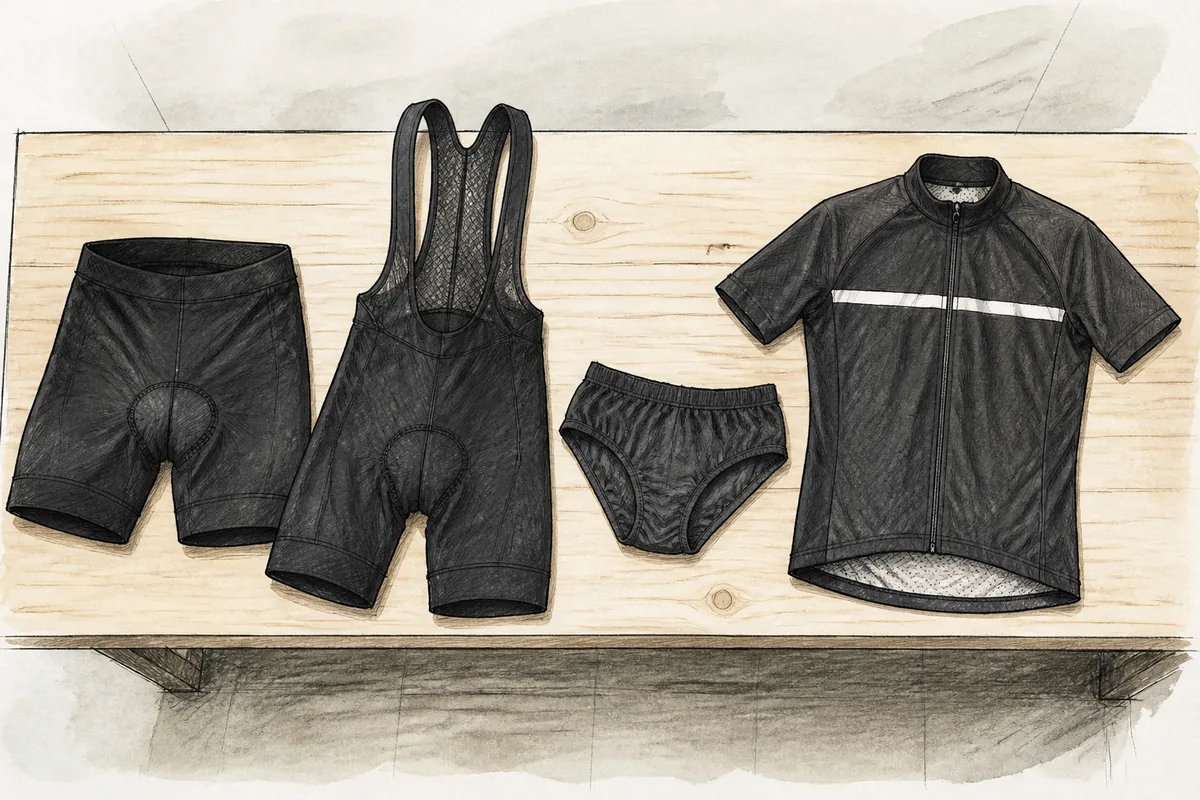
What to wear instead
Padded cycling shorts are the simplest complete base layer. They combine a close fit with a cycling-specific pad, so ordinary underwear is unnecessary.
Bib shorts do the same job but use shoulder straps instead of relying on a waistband. Many riders prefer them for longer rides because they are less likely to slide down or expose a gap at the lower back. The tradeoff is less convenience when nature calls. Cycling clothing has a surprisingly detailed relationship with toilets.
For mountain biking, gravel riding and casual commuting, loose cycling shorts with a removable padded liner are often more flexible. The liner sits next to your skin, while the loose outer shorts provide a more casual appearance and useful pockets.
A liner is not ordinary underwear. It has a cycling pad, a purpose-built fit and seams positioned for pedaling. If it is padded, it is already the base layer; adding briefs beneath it usually brings back the friction and moisture problems you were trying to avoid.
When buying, prioritize fit and pad placement over the price tag or elaborate chamois terminology. A premium pad that does not sit in the right place is still a badly placed pad. The shorts should feel supportive without cutting into you, and the pad should stay flat in your normal riding position.
| Shorts or riding setup | Practical base-layer choice |
|---|---|
| Padded road bib shorts | Wear directly against your skin with no ordinary underwear. |
| Padded cycling shorts | Wear directly against your skin and check the fit before changing anything else. |
| Loose mountain-bike or gravel shorts with a liner | Wear the padded liner next to your skin, with the loose shorts over it. |
| Unpadded casual shorts | Ordinary underwear is practical for a short ride, but it is not a replacement for a padded liner on a longer ride. |
| Short commute where changing clothes matters | Underwear beneath loose, unpadded shorts can be a convenient compromise if you will change on arrival. |
When wearing underwear can make sense
There are reasonable exceptions. A ten-minute trip to a cafe, a rental bike, borrowed clothing or a short ride in loose unpadded shorts may not justify buying or changing into cycling kit. In those cases, ordinary underwear is a practical choice.
Commuters may also need to arrive in work clothes, change at their destination or walk around before and after riding. Underwear beneath loose, unpadded shorts can work for that kind of short trip, but it is not the best setup for sustained saddle time.
Loose cycling shorts with a removable liner are the better option for mixed riding and walking. Ride in the padded liner, then remove it when you arrive while keeping the outer shorts on as normal clothing.
If you insist on wearing underwear beneath padded shorts, choose a thin, seamless, moisture-managing pair rather than cotton briefs or bulky boxers. This may reduce the problems, but it remains a compromise. Underwear is not an equivalent substitute for a cycling liner on a longer ride.
Hygiene, washing and preventing irritation
Wash cycling shorts after every sweaty ride and follow the garment’s care label. Sweat, skin oils and bacteria collect in the pad and fabric, so repeatedly wearing unwashed shorts is an easy way to create avoidable irritation.
Change out of damp shorts when you finish riding rather than sitting around in them for hours. This matters even more after a hot ride or a wet commute.
Chamois cream can help some riders on longer rides, but it is not mandatory and should not be the first response to every discomfort. Start with clean, well-fitting shorts and check that the pad and saddle position suit you. Adding cream to badly fitting clothing is treating the symptom while the shorts continue plotting against you.
Removing underwear also will not solve persistent sores, numbness, bleeding or ongoing pain. Stop riding if necessary and seek appropriate medical advice rather than repeatedly adding layers, creams or more expensive shorts – the NHS itchy skin guidance is a sensible starting point for when skin problems need help. Recurring discomfort deserves more attention than a clothing tweak.
The practical choice
For a sustained ride, wear padded cycling shorts or bib shorts directly against your skin. If you prefer loose outer shorts, use a padded liner. Ordinary underwear is fine for a short casual ride or convenience-led commute, but it is usually the wrong base layer when saddle time and comfort matter. Wash kit after every sweaty ride – see how to wash cycling bibs – and avoid stacking cotton layers; cotton cycling shorts are a separate, limited-use choice.

I’ve spent way more time in the bike trade than anyone should reasonably want to. In that time I’ve wanted to make cycling jargon and marketing easier to cut through to help people get the bike of their dreams.
When I’m not writing about bikes, I can be seen out bikepacking on single speed bikes or teaching kids how to ride.


