
If you are looking at seamless cycling shorts, the appeal is obvious: fewer seams, a softer feel and less chance of a waistband or inner-thigh join annoying you as you pedal. That can be genuinely useful. It does not, however, turn a pair of stretchy gym shorts into proper cycling kit by magic.
The important question is what you are buying: cycling-specific seamless shorts with a chamois, unpadded shorts for short rides, or seamless-style underwear and base-layer shorts. Those products can look similar on a product page but behave very differently on a saddle.
All three formats are covered below. The assumption is that you already have a suitable bike and can pedal – this is not a learn-to-ride primer.
What seamless cycling shorts actually mean
Seamless construction usually means the main fabric is knitted into a shaped garment, rather than cut from several pieces and joined with multiple stitched seams. The result can feel smooth against your skin, with fewer bulky joins around the inner thigh, waist and groin.
That description is not a performance standard. A product can be mostly seamless while still having stitched waistbands, leg edges, pad covers, pockets or a separate chamois. Some brands use “seamless” to describe the body fabric even though the garment is not literally free of stitching.
You should also separate three categories:
- Seamless cycling shorts: cycling-specific shorts that may include a chamois and cycling-focused shaping.
- Seamless padded liners: close-fitting shorts designed to sit under baggy commuter, gravel or mountain-bike shorts.
- Seamless underwear or gym shorts: smooth, stretchy garments that may be comfortable but usually have no saddle padding and no cycling-specific support.
That distinction matters because a smooth garment can feel excellent against your skin while doing little to manage pressure between you and the saddle. Seam count is not a substitute for a correctly positioned chamois, stable leg openings or a fit that stays put.
Where seamless construction helps on the bike
The main benefit is comfort at contact points. Fewer bulky seams can reduce the chance of rubbing around the inner thigh, groin and waist, particularly when the shorts are worn directly against the skin. A knitted fabric can also spread pressure across a wider area instead of concentrating it along one narrow elastic band or seam.
This is most useful on short commutes, indoor training sessions, spin classes and casual rides where you want a low-profile garment. Riders who dislike the heavy, panelled feel of traditional bib shorts may also prefer the softer, more uniform feel of a seamless design.
Fabric choice still matters more than the label. Nylon, polyester and elastane blends can offer useful stretch and reasonably quick drying, but seamless construction alone does not guarantee ventilation. A dense knitted fabric may feel soft while holding more heat and sweat than a thin cycling-specific panel with carefully placed mesh.
There is a tradeoff here. A soft, stretchy short can be comfortable when you first put it on, but it may offer less muscle support than a well-designed panelled garment. Excess stretch can also allow the seat area or waistband to migrate as you pedal. Comfortable does not always mean stable.
The limitations: when seamless shorts fall short
Seamless does not mean friction-proof. Chafing can still come from poor fit, damp fabric, a rough leg edge, a waistband that rolls or shorts that ride up. If the garment is too loose, fabric can bunch at the saddle contact area. If it is too tight, the leg edge or waistband may dig in.
The biggest limitation is usually the lack of a chamois. Many seamless lifestyle and gym shorts are unpadded. They can be reasonable for a short ride, but they are not automatically a substitute for padded cycling shorts once ride time and saddle pressure increase.
A chamois helps manage pressure and moisture between your body and the saddle, but it is not a cure for a poor saddle, incorrect bike fit or an unsuitable riding position. If those basics are wrong, adding thicker padding may only hide the problem temporarily.
Compression is inconsistent too. Some seamless shorts feel supportive because the knit has firm tension. Others are simply stretchy. Do not infer compression, stability or performance from the word “seamless”; check how the garment is shaped and what the manufacturer says about fabric and fit.
Knitted fabrics can also be more prone to snags, pilling and loss of stretch, especially around rough saddle covers, Velcro straps and careless washing. Follow the washing instructions and avoid high heat where the care label warns against it.
Seamless shorts versus padded cycling shorts
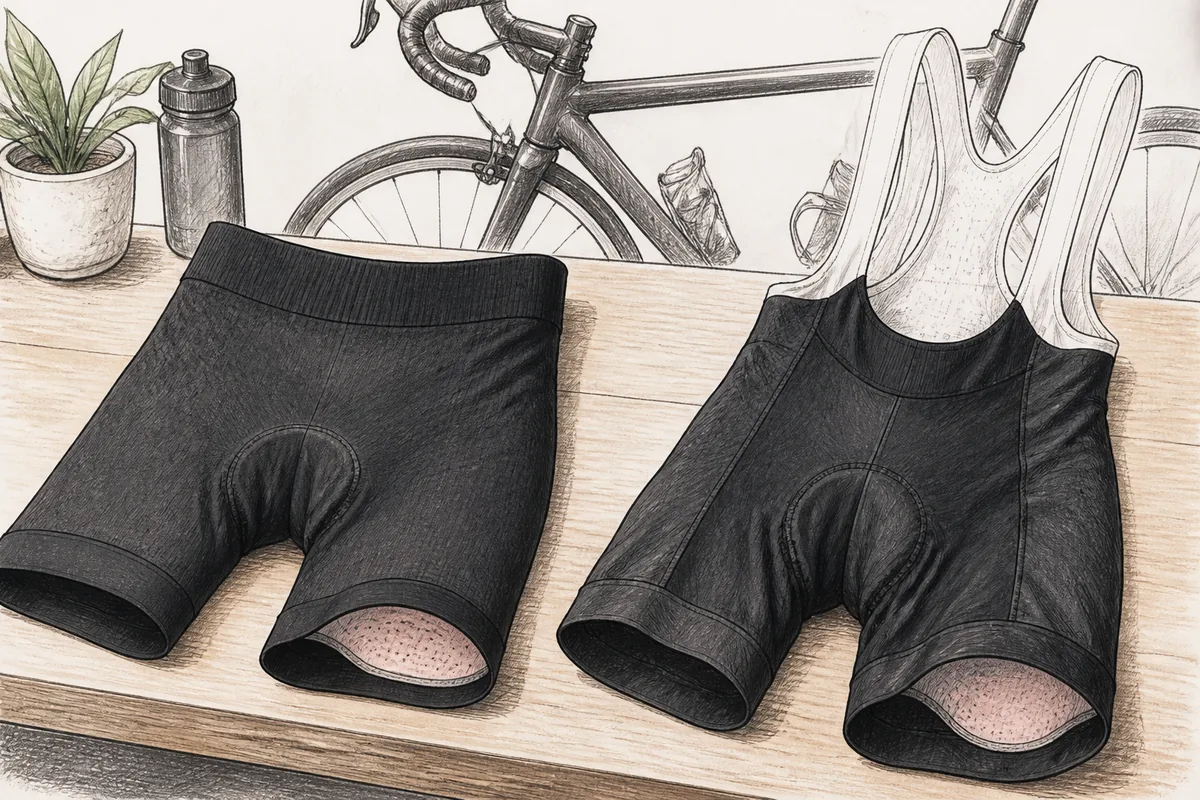
For rides of around an hour or more, the safer default is a properly fitted cycling short with a good chamois, unless you already know an unpadded option works for you. The pad, secure fit and cycling-specific shape generally matter more than removing every seam.
| Option | Best use and main compromise |
|---|---|
| Seamless unpadded shorts | Short commutes, casual rides and some indoor sessions. Comfortable and discreet, but with no saddle padding and often less stability than cycling-specific kit. |
| Seamless padded liner | Useful under baggy commuter, gravel or mountain-bike shorts. Provides a chamois while the outer short supplies pockets and a casual appearance. |
| Conventional padded cycling shorts | Longer road, gravel and touring rides. Usually offers the most dependable chamois positioning, ventilation and fit stability, although the panelled construction can feel more noticeable. |
A seamless padded liner is often the most useful compromise. You get saddle protection without wearing a full road-racing look, and you can choose an outer short with pockets or tougher fabric. The liner still needs to stay close to your body: loose fabric under the chamois defeats much of the point.
Products such as the Castelli Entrata Bibshort or Pearl Izumi Quest Bib Short represent the conventional cycling-specific approach: shaped panels, a dedicated pad and a fit intended to remain stable while riding. That does not make either universally best, but it shows what you are paying for beyond a smooth fabric surface.
Wear padded cycling shorts directly against your skin. Ordinary underwear, including seamless underwear, adds another layer that can trap moisture and introduce folds or rubbing. Seamless underwear is not automatically a cycling liner just because it has no obvious seams.
Best uses and how to choose a pair
Short commutes and casual rides
Unpadded seamless shorts can work well for a modest commute or relaxed ride when your saddle is comfortable and you are not spending hours in the saddle. They are convenient under casual clothing because they are quiet, low profile and less obviously cycling-specific.
Do not stretch that recommendation too far. A 20-minute commute is a different job from a two-hour ride home after a mechanical problem. Bikes have a habit of making these distinctions for you.
Indoor riding and spin classes
Seamless shorts can be practical indoors, where you may value a smooth waistband and easy movement. Check sweat handling and waistband stability, particularly if the class uses a firm racing saddle. A thick continuous knit may become hot or damp, while a light synthetic base layer can sometimes manage moisture more effectively.
If the session is long or high intensity, a padded seamless liner may be more comfortable than an unpadded gym short. The right choice depends on the saddle, your position and how much pressure you normally experience.
Road, gravel and touring rides
For longer rides, prioritize a cycling-specific chamois, secure leg openings and a fit that does not migrate. Seamless construction is secondary. Conventional shorts or bibs usually provide more predictable panel shaping, ventilation and pad positioning once the miles accumulate.
When shopping, check for:
- an explicitly described cycling chamois, rather than vague comfort claims;
- fabric composition and any ventilation or mesh zones;
- inseam length and whether the leg edge has a gripper;
- waistband construction and how it should behave in a bent riding position;
- pockets, if the shorts are intended to be worn without an outer layer;
- washing instructions, especially restrictions on heat and fabric softener.
The fit should be snug without cutting in. You should not see loose fabric bunching at the saddle contact area, and the waistband should not fold when you bend forward. If the legs roll upward or the shorts slide down while you walk around, they are unlikely to improve once you start pedalling.
The practical buying verdict
Seamless cycling shorts make sense for short rides, indoor sessions and low-profile everyday use. They can also be useful as a liner, provided the garment includes a suitable chamois and stays secure under your outer shorts.
They are not an automatic upgrade over conventional cycling shorts. Panel layout, chamois quality, fabric performance and fit matter more than seam count. Beginners should buy those fundamentals first and treat seamless construction as a bonus, not a reason to pay extra.
If you want one safe starting point, choose a properly fitted padded cycling short or liner from a cycling brand. For short, easy rides, unpadded seamless shorts are reasonable. For regular rides beyond roughly an hour, choose a stable cycling-specific pad unless you already know your saddle and body are happy without one. If you are comparing pad types, see gel cycling shorts. Ride length and saddle pressure come first; seamless marketing comes second.
Common questions about seamless cycling shorts
Can you wear seamless cycling shorts without underwear?
Yes. Cycling-specific shorts are normally designed to sit directly against the skin – see do you wear underwear with cycling shorts. Skipping underwear removes extra seams and fabric, provided the shorts fit properly and are washed after use. Ordinary seamless underwear is not a substitute for a cycling liner or chamois.
Are seamless shorts suitable for long rides?
They can be if they include a well-positioned chamois and stay secure, but conventional cycling shorts are usually the safer default. Their panels, pad and leg grippers are designed around cycling, so you are less likely to discover a fit problem several hours from home.

I’ve spent way more time in the bike trade than anyone should reasonably want to. In that time I’ve wanted to make cycling jargon and marketing easier to cut through to help people get the bike of their dreams.
When I’m not writing about bikes, I can be seen out bikepacking on single speed bikes or teaching kids how to ride.


