Wool cycling bibs can sound like a clever upgrade: softer fabric, better temperature control and fewer smells after a long day in the saddle. Some of those benefits are real. Others depend heavily on the blend, fabric weight, fit and chamois. A merino label is not a substitute for good bib-short design.
This is a material and buying guide for riders who already use cycling bib shorts. The short version is simple: a good synthetic bib remains the safest default for most riders, while merino and wool blends make the most sense for commuting, touring and variable-weather riding.
What are wool and merino cycling bibs?
Merino is a type of wool from Merino sheep. In cycling clothing, “wool cycling bibs” usually means bib shorts made with merino or a wool-synthetic blend rather than pure wool.
Pure wool is uncommon in modern bib shorts. Cycling bibs need stretch, shape recovery, abrasion resistance and a secure fit around the legs and waist. Nylon, polyester and elastane are usually added to provide those qualities. The percentage on the label matters more than the word “wool” on the product page.
A small amount of merino may add softness or help with odour, while a higher wool content may alter the fabric’s moisture handling, warmth and durability. Those are not the same garment. Fibre fineness, fabric weight and panel construction matter too.
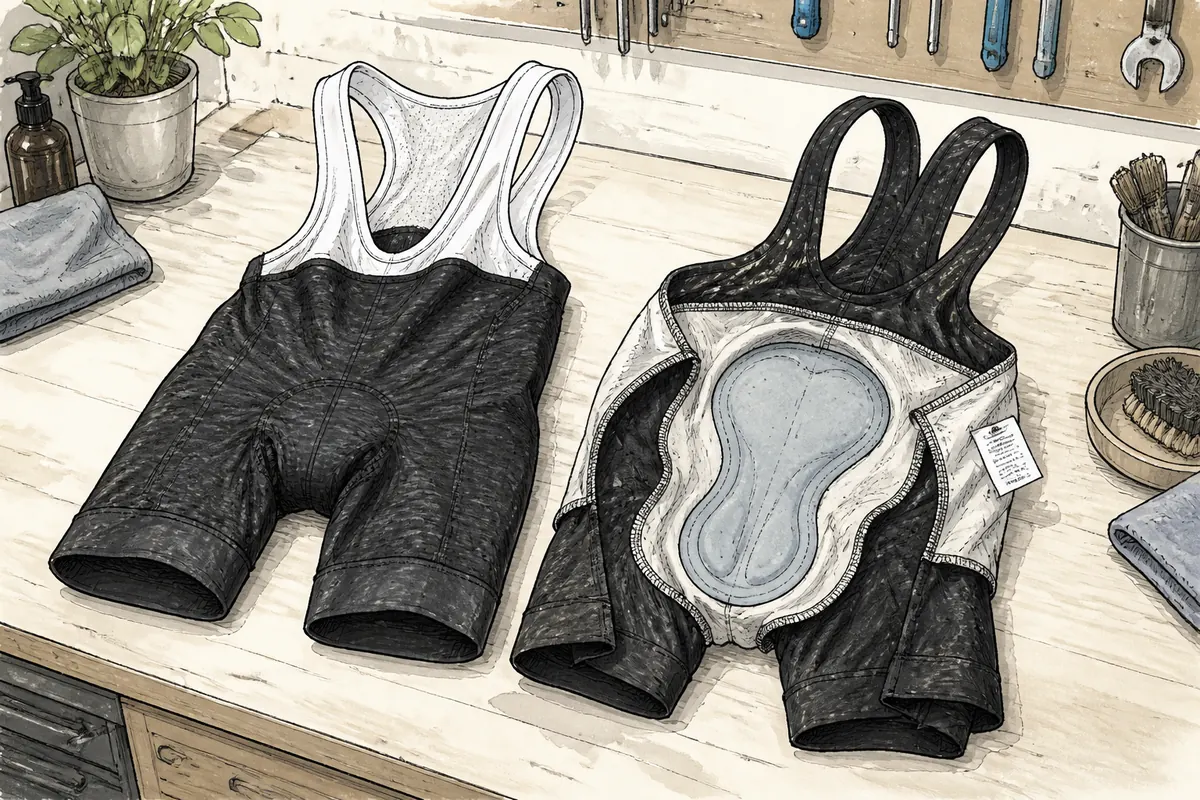
The sensible buying principle is to assess the complete bib: fabric, pad, straps, seams and leg grippers. Wool is a useful ingredient, not a magic material. If the chamois is poorly shaped, no sheep-based marketing will rescue the ride.
The real benefits of wool cycling bibs
Better odour control
Merino can resist the rapid build-up of odour better than many synthetic fabrics. That is useful when you are commuting, touring or riding several days with limited access to laundry. It does not mean the bibs are self-cleaning. They still need washing, particularly after sweaty rides.
Comfort across changing temperatures
Wool can feel comfortable when conditions move between cool starts, mild afternoons and frequent stops. It can absorb moisture vapour while remaining relatively comfortable against the skin, rather than immediately feeling clammy.
That makes merino attractive for steady rides, touring and shoulder-season use. It is not insulation by itself, and it does not replace windproofing or rain protection. A merino bib will not turn into winter tights just because the weather has lost its enthusiasm.
A softer feel
Fine merino can feel soft against the skin, especially when compared with a coarse or heavily textured synthetic fabric. However, softness depends on fibre diameter, the blend and the inside finish. Not every rider tolerates wool equally well, and even fine merino can irritate some people.
A natural-fibre element
Wool is a natural fibre, which is one reason some riders prefer it. But a merino bib is rarely fully natural. Elastane, nylon or polyester support panels, leg grippers, thread and the chamois are still likely to be synthetic.
That means you should be cautious about broad sustainability claims. Farming, processing, dyeing, synthetic content and how long the garment lasts all affect its overall impact. A durable bib worn for years is generally a better proposition than a fashionable material that wears out quickly.
The drawbacks you should expect
Durability can be weaker
Wool fibres can be more vulnerable to abrasion, snagging and rough washing than robust nylon-based fabrics. The saddle-contact area is especially important. If the fabric is thin or the construction is basic, repeated riding and washing may shorten its life.
A wool blend with reinforced panels is usually a more sensible choice than a high-wool-content garment that sacrifices durability. Do not assume a natural fibre is automatically better made.
Slower drying
Wool can hold more moisture than a thin synthetic race fabric. It may remain comfortable while damp, but it is generally not the fastest option to dry after a hard effort, a rain shower or a hand wash in a hotel sink.
That makes synthetic bibs the stronger default for hot, high-output training and wet multi-day use. A merino blend may be more pleasant during a long, steady ride, but comfort while damp and rapid drying are different advantages.
Less compression and shape recovery
A high-wool-content fabric may not feel as compressive or retain its shape as well as a quality synthetic blend. Some riders prefer the softer, less restrictive feel. Others will find that the bib loses support or the leg openings become less secure over time.
Elastane content and panel design are more useful clues than the wool percentage alone. The garment still needs to hold the chamois in place without creating pressure points.
More care and a higher price
Merino usually costs more than standard polyester or nylon. That premium is difficult to justify when the bib has an ordinary chamois, vague fibre percentages or basic construction.
Care matters too. Follow the label, but cool washing, avoiding fabric softener and air drying are generally safer than hot cycles or aggressive heat. Fabric softener can interfere with the performance of technical fibres, while heat can damage elastane and shorten the garment’s useful life.
How wool bibs compare with synthetic bib shorts
| Feature | Practical difference |
|---|---|
| Odour control | Merino usually has an advantage for repeated wear, which suits commuting and touring. It still needs regular washing. |
| Drying speed | A lightweight synthetic bib normally dries faster after washing, rain or heavy sweating. |
| Durability | Quality synthetic fabrics are usually more resistant to abrasion and frequent washing. Wool blends need careful construction. |
| Temperature comfort | Merino can feel comfortable across changing conditions. Synthetic fabrics are often better for hard efforts in hot weather. |
| Softness | Fine merino may feel softer, but fibre fineness, seams and fit determine the result. |
| Care requirements | Synthetic bibs are often more forgiving. Wool blends benefit from cool washing and air drying. |
| Typical value | Synthetic bibs usually offer the lower entry price. Merino is worth paying for only when its comfort or odour benefits match your use. |
For hot training, racing, frequent washing and maximum durability, choose a well-made synthetic bib. That is the practical default, not an insult to wool. For commuting, touring, bikepacking and changing temperatures, a merino blend can earn its place.
Neither fabric can compensate for poor panel shaping, a weak chamois or straps that dig into your shoulders. Those features affect comfort more directly than the fibre name.
What to check before buying wool cycling bibs
- Check the actual blend. Confirm whether the garment uses merino, generic wool or only a small wool percentage added for marketing. The fibre proportions should be clear.
- Prioritise fit. The chamois should stay positioned without excessive compression, the leg openings should hold without pinching and the straps should lie flat. Beginners should solve these issues before chasing a natural fibre.
- Inspect the chamois description. Pad width, density, shape and construction matter more to ride comfort than the wool label. A premium fabric with a mediocre pad is an expensive way to remain uncomfortable.
- Look for sensible construction. Reinforced saddle-contact areas, flat seams and durable leg grippers are worthwhile. They matter particularly when wool is used in the main shorts fabric.
- Match the garment to the season. Check whether the bib is designed to be worn alone or under tights. Wool cycling bibs are not automatically windproof or rainproof.
- Check the care routine. If you wash everything on a hot, fast cycle, a delicate merino garment may be a poor match for your habits. A cycling-specific wash and a mesh laundry bag can make care easier, but neither excuses ignoring the label.
Do not buy a merino-blend bib when the fit is uncertain, the fibre percentages are vague or the chamois information is missing. Those are warning signs, not charming mysteries.
Who should buy them, and who should skip them?
Wool or merino bibs suit commuters, tourists, bikepackers and riders who value lower odour between washes. They can also be comfortable for steady riding in variable conditions and for anyone who prefers a softer fabric feel.
A synthetic bib is the safer starting choice for beginners, hot-weather riders, racers and anyone who wants simple washing, quick drying and dependable durability. It is also the better choice when your budget only stretches to one good pair. Spend the money on fit and chamois quality before paying extra for merino.
Skip the wool premium if the product makes broad claims but gives no clear fibre percentages, uses a vague pad description or has basic-looking construction. The best upgrade is often a better-shaped bib, not a more exotic fibre.
The practical verdict: merino is a useful specialist material and a legitimate comfort option, but it is not an automatic upgrade over a good synthetic bib. Choose wool cycling bibs when odour control, softness and changing-weather comfort are central to your riding. Choose synthetic when fast drying, easy care and durability matter most – start with fit basics in padded cycling shorts. Merino on top is covered separately in merino cycling jerseys; cool-weather leg coverage options include 3/4 cycling bibs.
Frequently asked questions
Are merino cycling bibs suitable for hot weather?
They can work for steady riding, but a lightweight synthetic bib is usually the safer choice for hot, high-output training because it dries faster. Merino’s comfort in changing conditions does not make it the best fabric for every heat-management problem.
Can you machine-wash wool cycling bibs?
Many can be machine-washed, but the care label takes priority. Cool washing, no fabric softener and air drying are generally safer than hot cycles or tumble-drying. If your normal laundry routine is aggressive, a delicate merino bib may not be a sensible match.

I’ve spent way more time in the bike trade than anyone should reasonably want to. In that time I’ve wanted to make cycling jargon and marketing easier to cut through to help people get the bike of their dreams.
When I’m not writing about bikes, I can be seen out bikepacking on single speed bikes or teaching kids how to ride.