White cycling shorts can look sharp, particularly as part of a team kit, but they leave you less room for errors than black shorts. Thin fabric, a dark chamois, road spray and one badly timed snack can all become much more obvious.
This is a buying and care guide for padded performance shorts suitable for cycling, not fashion-led lifestyle shorts, white liners or a general guide to saddle comfort. The sensible default is simple: buy white only when you have checked the fabric in a riding position and are prepared to wash it promptly after use.
Are white cycling shorts a sensible buy?
White cycling shorts are not automatically a bad idea. They can suit a coordinated kit and look distinctive when the fabric is dense, the fit is stable and the panels are well made. The problem is that white exposes weaknesses that darker colors hide.
Sweat marks, road grime, chain grease and food stains are easier to see. So are pad outlines, seams and underwear. That does not make white shorts unsafe, but it does make them less forgiving. You need to treat cleanliness and opacity as part of the purchase decision rather than as minor details.
Product photography is especially unreliable here. Bright studio lighting can make a fabric look more solid, while an upright model does not show how much the shorts stretch across the seat and thighs. A fabric that looks fine in a catalog image may be less convincing when you bend over the bars.
White cycling shorts are worth considering when the design has clear close-up images, useful fabric information and a reasonable returns policy. If those details are missing, black or another darker color is usually the safer purchase. There is no prize for buying the hardest color to maintain.
How to check whether white cycling shorts are opaque
The main test is to assess the shorts while they are stretched in the position you will use on the bike. Stand with your hips bent, as if holding the bars, and check the seat, inner thighs and front panel under bright, even light.
Look for visible skin, underwear, pad edges, seams and dark colors underneath. Check the shorts from the front, side and rear. The seat panel deserves particular attention because it is usually under the greatest stretch when you are riding.
Fabric density and construction matter more than the word “white” on the product page. A tightly knitted, reasonably substantial fabric will generally hide more than a very thin fabric pulled hard over the body. Nylon or polyamide blends and polyester blends can both work well; the actual knit, panel weight and amount of stretch are more useful clues than the fiber name alone.
Pay attention to the pad and its lining. A dark chamois, contrasting edge or strongly colored logo can show through pale outer fabric. A white or light-colored pad lining is preferable where available, although it is not a guarantee of opacity. A pale lining can also make pad outlines less conspicuous.
Try the shorts with the underwear, base layer or saddle position you normally use. Black underwear is not a sensible everyday solution beneath white shorts, and trying them on over clothing tells you very little about transparency or seam visibility. A retailer with a clear returns policy is the safest buying route.
Sweat and rain can change the result. Some thin fabrics become less opaque when wet, while stretching can make any fabric look more transparent. Product reviews that specifically mention riding in rain, heavy sweating or bending over are more useful than a collection of vague five-star ratings, but individual reviews are still not proof.
Fit, padding and fabric features that matter
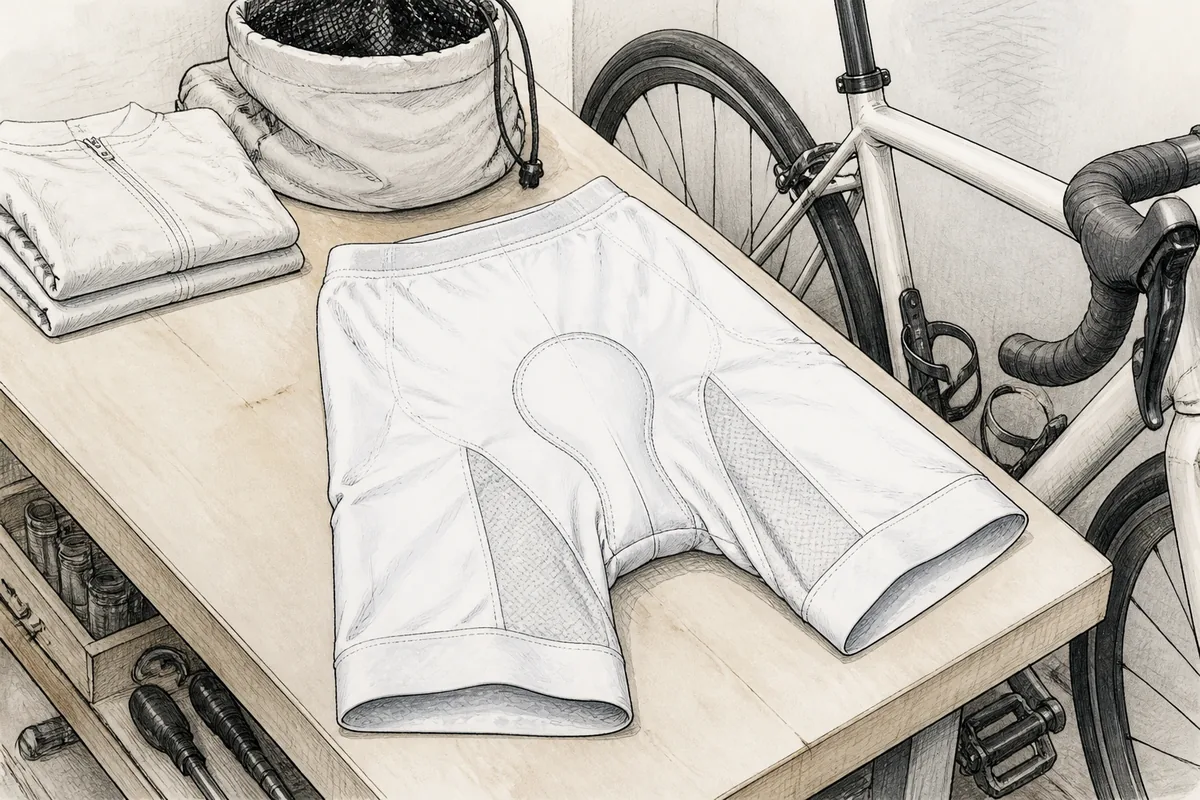
Fit matters twice with white shorts. Sizing up can leave excess fabric that wrinkles, moves and creates visible lines. Sizing down can overstretch the fabric and make it less opaque. Use the manufacturer’s measurements and aim for a secure cycling fit rather than buying large for supposed comfort.
The leg grippers should hold the shorts in place without digging in. Stable waist construction or bib straps, flat seams and sensible panel placement reduce movement and friction. They do not, however, turn transparent fabric into opaque fabric. A good gripper cannot rescue a poor main panel.
The pad matters most when rides become longer. Its shape, density and thickness affect pressure distribution and moisture management, but thicker does not automatically mean better. A pad should sit in the right place without folding or bunching. If the shorts fit badly, adding more padding is usually the wrong fix.
Nylon or polyamide blends are commonly chosen for their stretch and close fit, while polyester blends can offer useful durability and drying performance. Neither is automatically superior. Look for a construction that feels dense enough when stretched and has care instructions suited to regular washing.
Compression, UPF and moisture-wicking claims can be useful, but they come after opacity, fit and pad quality. A pair with impressive marketing language is still a poor buy if you can see the pad through the seat panel. Spend money on construction, not merely on the fact that the garment is white.
| Check | Why it matters |
|---|---|
| Opacity when stretched | White fabric can look solid upright but become transparent across the seat and thighs in riding position. |
| Pad and lining visibility | Dark pads, contrasting edges and logos can show through pale outer fabric. |
| Fit and sizing | Sizing up can cause wrinkles and movement; sizing down can overstretch the fabric. |
| Leg grippers and seams | These help keep the shorts stable and reduce rubbing, but cannot compensate for weak fabric. |
| Fabric blend and panel construction | Stretch, density, drying and durability depend on the actual construction rather than color alone. |
| Care instructions | White shorts need prompt washing and stain treatment, so unclear instructions are a warning sign. |
| Returns policy | You need a practical way to reject a pair that fails the opacity test once properly assessed. |
How to wash and care for white cycling shorts
Rinse or wash white cycling shorts promptly after riding. Sweat, road spray and food residue become harder to remove when they dry into the fabric. Leaving them in a kit bag until the next weekend is an effective way to create a new color, just not one you ordered.
Follow the care label and use a normal sportswear detergent. Avoid fabric softener, which can affect technical fibers and their moisture management. Wash white shorts with suitable light colors, and keep them away from dark kit that may release dye. A laundry bag can help protect delicate grippers and straps in the machine.
Treat mud, chain grease and food marks before washing. Lift or blot residue rather than scrubbing it deeper into the fibers, then use a stain-removal product that is compatible with the care label. A soft stain-removal brush may help with dried dirt, but use light pressure around elastic panels and printed details.
Do not use chlorine bleach unless the manufacturer explicitly permits it. Bleach can damage elastane and weaken the garment even when it makes a stain appear less obvious for a short time. Aggressive treatment is a poor trade for a pair of shorts that still has to stretch repeatedly.
Air-dry the shorts away from excessive heat. Check the care label before using a dryer, and do not assume that a low setting is harmless. Heat can shorten the useful life of elastic components and grippers. Stain treatment also has limits: it cannot restore fabric that has permanently discolored or become transparent through wear.
What to look for when buying white cycling shorts
Use this short checklist before ordering:
- Opaque fabric shown in close-up images of the seat and inner-thigh panels.
- A pad suited to your typical ride length, with no obvious dark outline likely to show through.
- Accurate sizing information rather than a vague small, medium and large chart.
- Secure leg grippers, flat seams and stable construction.
- Clear fabric and care information.
- A returns policy that lets you make a proper fit and opacity assessment.
Read reviews for specific comments about transparency when bent over, sweat, rain, pad visibility and washing. Star ratings do not tell you whether the shorts work in your riding position. Check close-up product images as well as full-body marketing photographs.
A white bib short, a light-colored cycling liner, a mesh laundry bag, sportswear detergent and a soft stain-removal brush can all be useful comparison items when planning your kit. None is a substitute for good outer fabric, though, and a liner may create more visible outlines if the shorts are already thin.
Do not pay a premium simply because a pair is white. Spend more only when the construction, pad, fit and opacity evidence justify it. Skip any pair with vague fabric details, weak imagery, no care instructions or an inconvenient returns policy. The safest choice is the pair you can inspect properly, wash sensibly and return if it fails the stretched-fabric test. For general pad and fit choices see padded cycling shorts; for washing routines that protect the chamois, use how to wash cycling bibs.
White cycling shorts: common questions
Can you wear black underwear under white cycling shorts?
It is not a reliable test or a good everyday choice. Dark underwear can show through, and its seams may be visible. Assess the shorts with the clothing and fit you actually plan to use, ideally while bent into a riding position.
Are white cycling shorts harder to keep clean?
Usually, yes. Road spray, chain grease, sweat and food marks are more visible, so prompt washing and careful stain treatment matter more than they do with black shorts.
Do white cycling shorts become transparent when wet?
Some can. Thin fabric may become less opaque when wet or stretched, so check the panel construction, read reviews that mention wet conditions and buy from a retailer with a suitable returns policy.

I’ve spent way more time in the bike trade than anyone should reasonably want to. In that time I’ve wanted to make cycling jargon and marketing easier to cut through to help people get the bike of their dreams.
When I’m not writing about bikes, I can be seen out bikepacking on single speed bikes or teaching kids how to ride.