Knowing how to wash cycling bibs properly is mostly about avoiding a few damaging shortcuts. Wash them after every ride, use a cool gentle cycle, add a small amount of mild detergent, and air-dry them promptly. That routine protects the chamois, elastic, technical fabric and fit without requiring specialist laundry products.
The care label takes priority, especially for wool blends, waterproof fabrics, bonded panels or unusual chamois construction. The advice below covers routine machine and hand washing for modern cycling bibs and padded shorts.
The safest default for washing cycling bibs
Wash bibs and shorts after every ride. Sweat, skin oils and road grime are easier to remove before they sit in the chamois and fabric for days. A quick gentle wash is usually kinder than allowing several rides’ worth of residue to build up and then using a harsh cycle.
Before washing, turn the bibs inside out. Close zippers and fasteners, check pockets, and remove race numbers, lights or anything else attached to the garment. Keep them away from towels, jeans, Velcro, hooks and other rough laundry that can snag fabric or stretch leg grippers.
The safest starting point is a cool or 30 C gentle wash with a small amount of ordinary mild liquid detergent. Specialist cycling detergent is optional, not compulsory. Correct dosing, prompt washing and thorough rinsing matter more than buying another bottle with a bicycle on the label.
| Do | Avoid |
|---|---|
| Use the care-label temperature, normally cool or 30 C | Use high heat or a hot wash unless the label permits it |
| Select a gentle or sportswear cycle | Wash with rough items, Velcro, hooks or heavy jeans |
| Use a small amount of mild liquid detergent | Use fabric softener, bleach or strong stain treatments by default |
| Turn bibs inside out and use a loose mesh bag if useful | Overload the drum or compress garments into a tight bag |
| Remove bibs promptly and air-dry them | Leave them damp in the machine or put them on a radiator |
How to wash cycling bibs in a washing machine
A normal gentle machine wash is usually safer and more consistent than repeatedly scrubbing the chamois by hand. Aggressive hand washing can stress stitching, elastic and shoulder straps, while a suitable machine cycle moves water and detergent through the garment evenly.
- Read the care label. Check the permitted temperature, cycle and drying instructions. Sort the load by color and fabric weight.
- Prepare the bibs. Turn them inside out and fasten closures. A loose mesh laundry bag can protect delicate bibs, but do not pack it tightly; water still needs to move through the fabric.
- Add a small amount of mild detergent. More detergent does not mean cleaner bibs. Excess product can remain in the chamois and leave residue, a slippery feel or strong fragrance next to your skin.
- Choose the lowest effective temperature. Cool or 30 C is the usual starting point. Select a gentle, delicate or sportswear setting if available.
- Add an extra rinse when needed. This is useful if detergent residue bothers your skin or clothes regularly smell strongly of soap after washing.
- Remove the bibs promptly. Take them out when the cycle finishes and start drying straight away. Do not leave a warm, damp bundle sitting in the drum.
Do not overload the machine. A tightly packed drum limits water movement and can leave sweat, detergent and grit behind. Bibs need room to move, even if they do not need a first-class cabin.
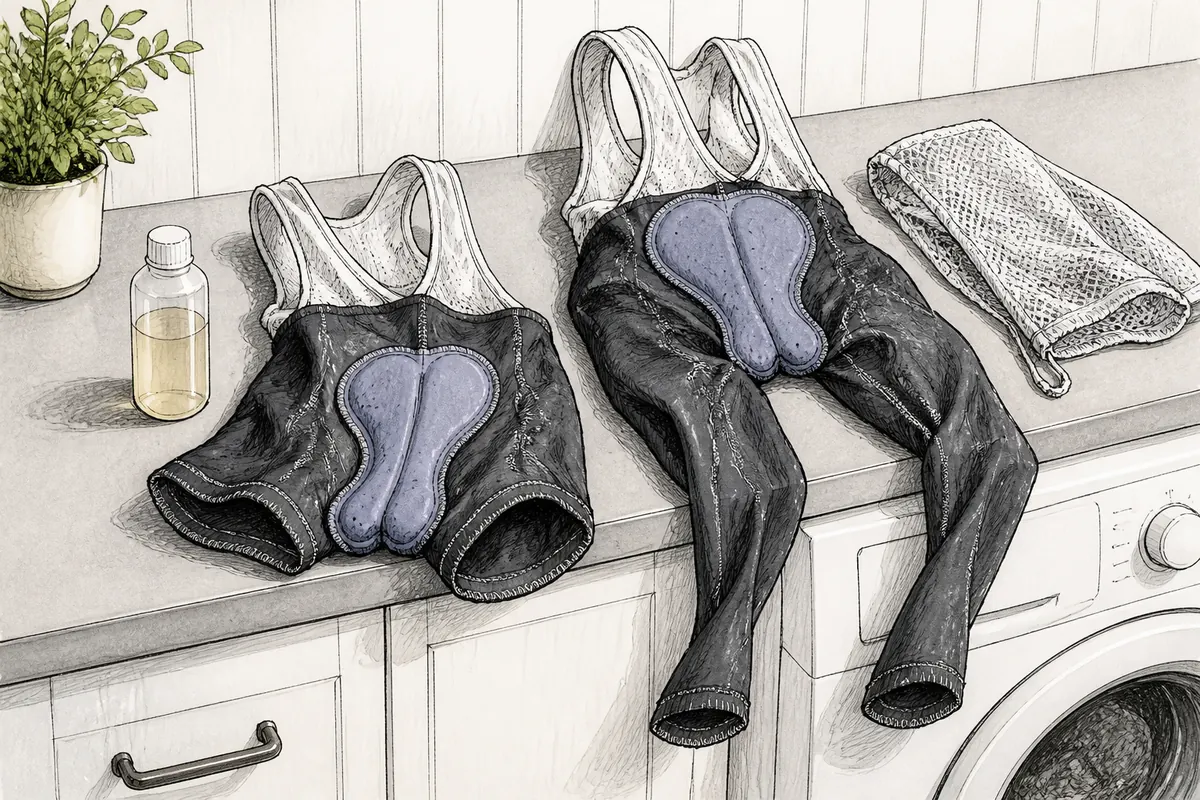
How to hand-wash bib shorts when they need extra care
Hand washing is useful for travel, a quick post-ride rinse, particularly delicate garments or items whose care label requires it. It is not automatically gentler, though: twisting and scrubbing can damage the garment faster than a proper gentle machine cycle.
- Rinse with cool water. Flush away sweat, grit and loose detergent.
- Soak briefly. Use clean cool water with a small amount of mild detergent. Avoid a long hot soak, which can stress elastic and encourage dye bleed.
- Press water through the garment. Gently squeeze the fabric and chamois. Do not twist, scrub aggressively or pull on the shoulder straps.
- Rinse thoroughly. Continue until the water runs clear and the fabric no longer feels slippery.
- Remove excess water. Press the bibs between your hands or in a clean towel. Do not wring them.
How to dry cycling bibs without damaging the chamois
Air-dry bibs immediately in a ventilated place, preferably away from strong direct sunlight. Airflow helps prevent stale odor, while avoiding unnecessary heat protects elastic, synthetic fibers and bonded details.
Wet bibs are heavy. Hang them from the waistband rather than stretching wet shoulder straps over a thin hanger. For very wet garments, lay them flat until they are less saturated or spread the weight across a broad drying rack. Do not hang them by one strap.
Avoid tumble-drying unless the care label explicitly allows it. Radiators and heated towel rails are also poor defaults because concentrated heat can weaken elastic and adhesive details. If you hand-washed the shorts, press out excess water with a towel instead of wringing them.
Detergents and mistakes that shorten bib life
Fabric softener is a poor default for bibs. It can coat technical fibers, affect moisture movement and leave residue in the chamois. Heavily fragranced products are not better simply because they smell stronger.
Avoid bleach and stain removers containing harsh oxidizers unless the care label specifically permits them. They can affect color, elastic and bonded details. Treat marks gently and follow the garment instructions.
Too much detergent, an overloaded drum and inadequate rinsing can create the odor problem you are trying to solve. If bibs still smell, do not double the detergent dose. Re-rinse them, dry them completely and check whether the washing machine needs cleaning.
Delayed washing and damp storage can also trap odor. Leave the machine door and detergent drawer open between loads where practical, and do not seal damp kit in a bag. If the smell returns immediately after careful rinsing and full drying, the garment may be past economical recovery.
Check bib shorts before wearing them again
Inspect the garment before the next ride. Look and feel for trapped grit, detergent slickness, tears, hardened areas, delamination or damaged stitching. The chamois should feel clean and flexible, not stiff, coated or lumpy.
Check the leg grippers and shoulder straps too. They should sit flat rather than appearing wavy, permanently stretched or partly detached. A bib can look fine from the outside while its elastic and chamois are already worn out.
Replace bibs when the chamois is worn, the grippers no longer hold position or the fit has become stretched and unstable. A pristine outer fabric does not compensate for a failing pad or loose leg opening. Comfort and stable fit matter more than making an old garment survive one more wash.
FAQs about washing cycling bibs
Can you wash cycling bibs with normal laundry detergent?
Yes. A small amount of mild liquid detergent is usually sufficient when the care label allows machine washing. Specialist sports detergent is optional; correct dosage and a thorough rinse matter more.
Can cycling bib shorts go in the dryer?
Only if the care label allows it. Air-drying is the safer default because repeated heat can weaken elastic, bonded details and synthetic fabric.
Why do bibs still smell after washing?
Delayed washing, excess detergent, poor rinsing, an overloaded machine or damp storage can trap odor. Re-rinse the bibs, dry them fully and clean the machine if necessary. Persistent odor after that may mean the garment is beyond economical recovery.
The practical routine is simple: wash promptly, use a cool gentle cycle, add little detergent, skip fabric softener, rinse properly and air-dry. Follow the care label whenever it differs. For choosing the shorts themselves, see our padded cycling shorts guide; white kit also needs the opacity and stain checks in white cycling shorts.

I’ve spent way more time in the bike trade than anyone should reasonably want to. In that time I’ve wanted to make cycling jargon and marketing easier to cut through to help people get the bike of their dreams.
When I’m not writing about bikes, I can be seen out bikepacking on single speed bikes or teaching kids how to ride.