
Understanding how a cycling jersey should fit helps you avoid two common mistakes: buying a loose shirt that flaps and rides up, or forcing yourself into a smaller size because tight supposedly means fast. A good jersey sits close to your body, but it should not make breathing, reaching or eating on the bike feel like a negotiation.
The focus is cycling jersey fit and sizing for road riding, commuting, leisure and faster rides – not bib shorts, base-layer fit or a full bike fit.
The short answer: a cycling jersey should fit differently on the bike
Judge a jersey in your normal riding position, not only while standing upright in front of a mirror. Cycling jerseys are cut for a forward-leaning posture, so a little extra fabric at the front while standing can settle neatly once you reach the handlebars.
The usual starting point is a close club fit. The fabric should sit reasonably flat against your chest and stomach without restricting breathing or shoulder movement. You should not see strong tension lines radiating from the zipper or pockets, but a few relaxed folds while standing are not automatically a problem.
Check that the lower back remains covered when you lean forward. The hem may move slightly, but it should not constantly expose your base layer or skin. A silicone hem gripper helps hold the jersey in place, although it cannot rescue a cut that is simply too short or too tight.
The collar should close comfortably, the sleeves should stay put and your arms should move freely. If the jersey only feels acceptable when partly unzipped or standing motionless, it is not a good fit. Lycra is forgiving, but it is not a small miracle worker.
Race fit, club fit and relaxed fit compared
Fit names are not universal standards. One brand’s race fit may be similar to another brand’s club fit, so use these labels as a guide rather than a guarantee. The manufacturer’s chest, waist and height chart still matters more than the marketing name.
| Fit | Best use and main tradeoff |
|---|---|
| Race fit | The closest cut, usually with less spare fabric, a longer torso and sometimes longer sleeves. Suits racing, fast group rides and riders comfortable in close-fitting clothing. It offers a stable shape but leaves less room for sizing errors or thick layers. |
| Club fit | Moderately close without being aggressively body-hugging. This is the safest general-purpose choice for most riders, including club rides and mixed-intensity road riding. It balances comfort, coverage and reduced flapping. |
| Relaxed fit | Looser through the chest and waist. It suits commuting, leisure rides, touring and easier layering. It prioritises comfort and freedom over a neat aerodynamic shape. |
A race-fit jersey generally has less loose fabric, which can feel more settled when you are riding quickly or spending a lot of time low over the bars. That does not mean every tight jersey is automatically faster in real-world riding. If the cut restricts your posture, stresses the zip or makes you ride with the jersey partly open, the supposed advantage has become mostly wardrobe theory.
Club fit is the safest starting choice if you are buying your first technical jersey or want one garment for ordinary road rides. Relaxed fit makes more sense when you value easy movement, casual proportions or the ability to wear a thicker layer underneath.
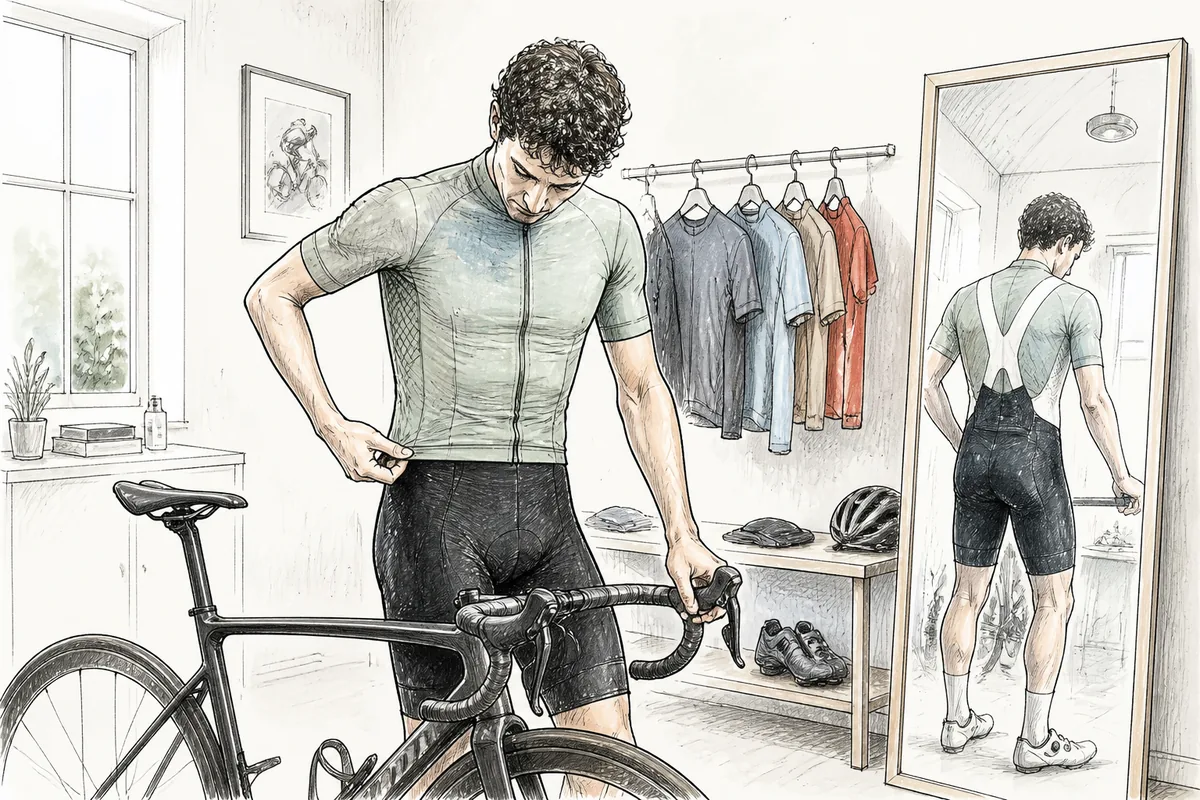
How a cycling jersey should fit in each area
Shoulders and chest
The shoulder seams should sit in a sensible position without digging into the armpits. The fabric should lie fairly flat across the chest when you reach forward, but it should not pull hard across the front. Raise your arms and bend your elbows to check that the jersey allows normal movement.
Some stretch is useful here. It lets the jersey follow your body rather than hanging loosely or pulling sharply as you move.
Sleeves
Fitted sleeves should stay on the upper arm without cutting into it. Longer sleeves are common on race-oriented jerseys and can keep coverage stable when you are leaning forward. They are not automatically better: the cuff should remain comfortable and should not create a tight band around the arm.
Collar and neck
Zip the jersey fully before judging the collar. It should sit close without choking pressure, rubbing or forcing you to tilt your head to find room. A large open gap may indicate that the neck shape or size does not suit you.
Waist and hem
The hem should remain over the waistband of your bib shorts in a riding position. A silicone gripper reduces ride-up by holding the fabric against the shorts, while stretch fabric lets the jersey move with your breathing and torso.
If the hem rolls, digs in or exposes your lower back every few minutes, do not assume you need to tolerate it. The jersey may be too short, too tight through the torso or simply the wrong cut for your shape.
Back pockets and zipper
Reach toward the pockets without twisting excessively. They should be accessible while riding and should hold normal essentials without sagging badly. A jersey can feel fine when empty but pull down once you add a phone, keys, food and a lightweight layer.
The zipper should close without a stressed bulge around the stomach or wavy fabric beside it. Some wrinkling is normal, particularly while standing, but strong horizontal tension usually means the jersey is too small or the cut is wrong for your torso.
The five-minute jersey fit check
Put the jersey on over the base layer you normally use. Zip it fully, stand naturally and check the collar, sleeve position, hem coverage and any strong pulling across the chest or stomach.
Then recreate the riding position. Sit on your bike if it is available, or lean forward with your elbows slightly bent as though you are holding the hoods. A jersey that looks loose while standing may now sit correctly; one that becomes restrictive has failed the more important test.
Reach forward, bend both elbows, look over each shoulder and raise your arms slightly. The jersey should follow you without pulling sharply at the neck or armpits. Add a realistic load to the rear pockets if possible, since a loaded jersey may sag or feel tighter than an empty one.
Persistent restriction, an exposed lower back, a collar that feels wrong when zipped or severe bunching are reasons to exchange the jersey. Those are fit problems, not character-building exercises.
Should you size up or size down?
Start with the manufacturer’s chest, waist and height measurements rather than your usual T-shirt size. Cycling brands vary considerably, and a medium in one range may be a large in another. Judge the garment by its measurements and intended cut, not the letter on the label.
If you fall between sizes, choose according to use. Size up when you want more comfort, have a broader midsection, plan to wear a thicker base layer or prefer relaxed riding. Stay with the smaller option for a genuinely close race fit only if you can breathe normally and move without restriction.
Do not automatically size up because a technical jersey feels snug while standing. Many jerseys settle into shape when you reach the bars. On the other hand, do not size down simply because the product description says race fit. Excessive tension can stress the zipper, distort the pockets and make the jersey unpleasant rather than aerodynamic.
Which jersey fit is right for your riding?
Choose club fit if you want one versatile jersey for ordinary road rides, club runs and mixed speeds. It is the safest default for most riders because it gives you a close enough shape without demanding race-specific clothing preferences.
Choose race fit for racing, fast group rides or regular riding in an aerodynamic position. It suits riders who actively prefer close-fitting clothing and are prepared to check sizing carefully.
Choose relaxed fit for commuting, leisure rides, touring, short trips and easy layering. It is also the better answer if you dislike compression or do not want every contour of your torso announced to passing traffic.
Pay attention to fabric stretch, sleeve construction and hem grippers as well as the fit label. Those details often determine whether a jersey remains comfortable and stable more than the label itself. Prioritise a stable riding fit, test it with your normal base layer and use a retailer with a workable return policy. For cooler months, see our guide to long-sleeve cycling jerseys; if you need a broader clothing cut, start with plus-size cycling clothing.
Common cycling jersey fit questions
Should a cycling jersey be tight around the stomach?
It should be close without restricting breathing or creating strong tension lines. A small amount of stretch is normal, but persistent pressure or a stressed zipper usually means the jersey is too small or the cut does not suit your shape.
Should you wear a base layer under a cycling jersey?
You can, and the jersey should be tested with the base layer you normally use. A thicker base layer may make a close race fit uncomfortably tight, so do not judge sizing with one layer and ride with another.
Why does my cycling jersey ride up at the back?
Some lift is normal when standing, but constant ride-up usually points to an unsuitable length, inadequate hem grip, too much tension through the torso or a jersey worn with the wrong cut. Try the jersey in a riding position before deciding whether sizing is the problem.

I’ve spent way more time in the bike trade than anyone should reasonably want to. In that time I’ve wanted to make cycling jargon and marketing easier to cut through to help people get the bike of their dreams.
When I’m not writing about bikes, I can be seen out bikepacking on single speed bikes or teaching kids how to ride.