If you ride flat pedals, ordinary trainers can work, but they are not always the best tool for the job. The right cycling shoes for flat pedals give you a more stable platform, better grip and useful support without forcing you into cleats or awkward walking.
This guide is for riders already using flat pedals who want better footwear. It is not a guide to learning to ride or choosing clipless pedals. If you are still comparing pedal designs, our guide to types of bike pedals covers that separately.
What makes a good flat-pedal cycling shoe?
The shoe’s main job is simple: keep your foot stable on the pedal while remaining comfortable when you walk away from the bike. That sounds obvious, but many ordinary running shoes are designed around soft cushioning and a curved sole. Those features are useful for running, but can feel vague on a flat pedal.
A cycling-specific flat-pedal shoe usually has a flatter sole with more moderate stiffness. That creates a broader, more consistent contact patch with the pedal and reduces the amount the sole flexes around the pedal body. You will notice this most on longer rides, when a soft shoe can feel less supportive, or when aggressive pedal pins are trying to press through the sole.
For regular riding, the safest default is a moderately stiff shoe with a flat, grippy rubber sole. Do not automatically choose the softest and most cushioned option. Cushioning is not the same thing as support, and a squishy sole can make your foot move around under load.
Flat-pedal shoes do not need cleats. Some models have a recessed cleat area and can be used with clipless pedals later, but that feature does nothing to improve their performance on flat pedals. Hidden cleat compatibility is worth considering only if you genuinely expect to switch systems. Otherwise, you are paying for a feature currently doing an excellent impression of a hole.
The sole and tread matter most
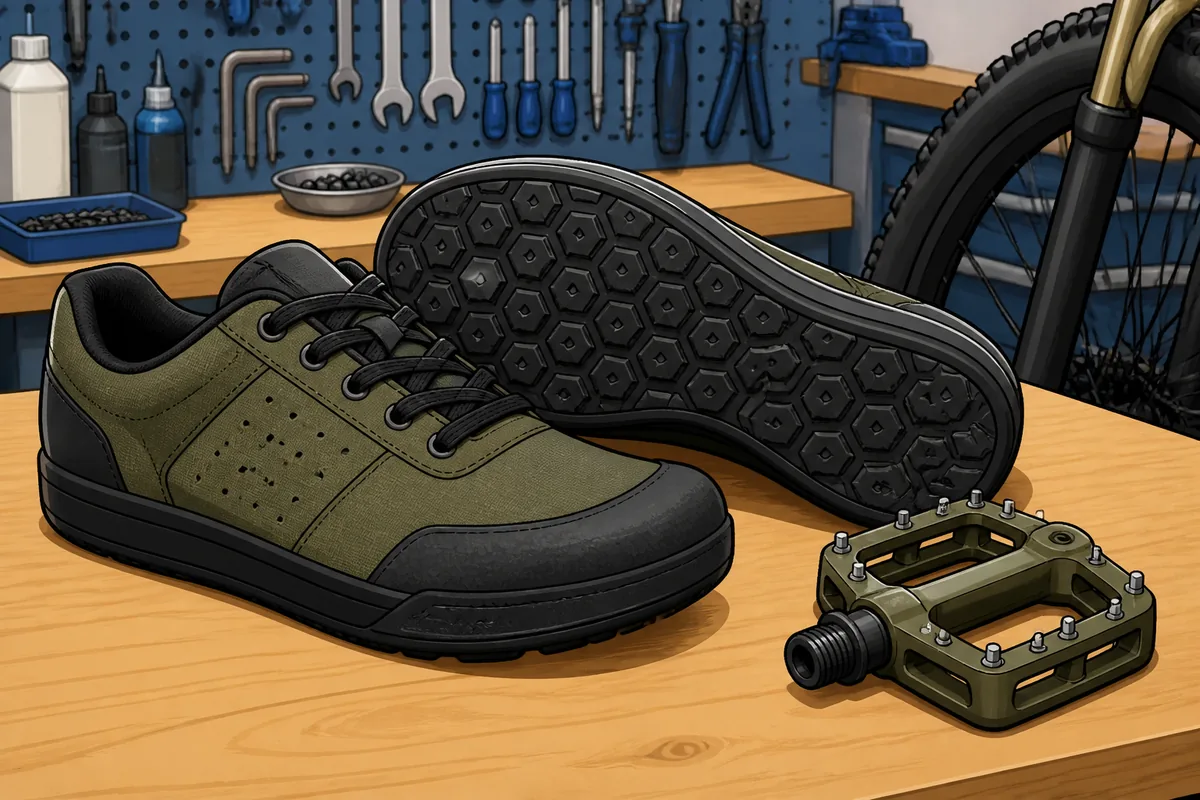
Start with the rubber and tread pattern before worrying about the closure system or the color. On a flat pedal, a relatively flat sole with a grippy compound generally feels more planted than a deep hiking-style tread.
Deep lugs can be useful when you are walking through mud or loose ground, but they reduce the amount of consistent rubber contacting the pedal. They can also interact awkwardly with pedal pins, especially if the pins sit between the lugs rather than pressing into a broad, flat surface.
A sticky rubber compound improves grip, particularly on pedals with sharp or aggressive pins. The tradeoff is wear. Soft rubber can abrade faster against metal pins, so some sole wear is normal rather than evidence that the shoe has failed. If the sole starts separating from the upper, that is a construction problem; if the tread slowly wears down, that is the price of friction doing its job.
Sole stiffness is a compromise. Moderate stiffness supports your foot and makes longer rides more comfortable, while still allowing you to walk reasonably normally. Excessive stiffness may be useful for riders spending most of the day on rough trails, but it adds little to a relaxed commute and makes every shop stop feel more like a small expedition.
Use the riding category as a starting point:
- Casual and commuting shoes: prioritize walkability, comfort and a reasonably grippy sole.
- Gravel shoes: look for moderate stiffness, reliable tread and some protection without excessive armor.
- Mountain-bike-style shoes: choose sticky rubber, a firm platform and a sole designed to work with pedal pins.
- BMX-style shoes: favor a broad, flat contact area and durable construction for repeated impacts and hard pedaling.
Pedal design matters too. A shoe that grips well on a mildly textured platform may behave differently on a large pinned pedal. The pins, their height and their setup all affect how the sole feels, so do not treat the shoe’s tread pattern as the only source of grip.
Fit, support and protection
Prioritize a secure heel and midfoot over an aggressively tight toe box. Your feet can swell during longer rides, and cramped toes are not a sign of a performance fit. You want the heel to stay put when you pull against the pedal and the midfoot to feel supported without pressure points.
A firm heel counter helps reduce movement inside the shoe. A supportive upper does the same around the midfoot, while adequate toe room lets your toes spread naturally. That combination improves control and comfort more than a fashionable closure system on a poorly fitting shoe.
The main closure options each have a sensible use:
- Laces: simple, comfortable and easy to replace. Tuck them securely so they cannot reach the crank or pedal.
- Hook-and-loop straps: quick to adjust and useful for riders who want a firm hold without much fuss.
- Dial closures: offer precise tension adjustment and easy operation, but usually cost more and are not necessary for relaxed riding.
- Traditional tongues and standard fasteners: often provide the best value when fit is already good.
Fit and heel retention matter more than a fancy closure. Pay extra for a dial only if you value fast, precise adjustment or regularly need to change tension. Make those adjustments before riding or while stopped; a dial cannot rescue the wrong shoe shape.
Reinforced toes and uppers are worthwhile on trails, rough paths and rides where roots, rocks or obstacles are part of the scenery. They add protection, but also weight and warmth. For an urban commute, heavy toe armor is usually an unnecessary upgrade.
Try shoes with the socks you actually ride in. Sizing varies between brands, and a shoe that feels fine barefoot may be too tight with thicker cycling socks. Check the return policy before ordering online, particularly if the manufacturer recommends sizing up or down.
Choose shoes for how you actually ride
| Riding use | Prioritize |
|---|---|
| Commuting | Walkability, ventilation, secure fit, understated styling and light weather resistance |
| Casual riding | Comfort, easy walking and enough sole grip for your pedal setup |
| Gravel and mixed surfaces | Moderate stiffness, dependable tread, a protective upper and reasonable walking comfort |
| Mountain biking | Sticky rubber, firm platform, secure closure and reinforced toe and heel areas |
For commuting and everyday riding, walkability often deserves priority over maximum pedal grip. A shoe that is comfortable in the office, on a station platform or during a short errand is more useful than a heavily armored trail shoe that stays on your feet for the whole day.
For gravel and mixed-surface routes, look for the middle ground. A shoe such as the Ride Concepts Livewire represents the type of construction to compare: more supportive and protective than a casual trainer, but not necessarily as bulky as a dedicated trail shoe. The right choice depends on how much time you spend walking and how rough the route becomes.
Mountain-bike-style shoes make more sense when you ride technical trails, use aggressive pinned pedals or regularly put a foot down in awkward places. The Five Ten Freerider Pro is an example of the category to compare, rather than a universal answer. This style typically emphasizes pedal grip and impact protection, with walking comfort coming second.
For short, easy rides on pedals without aggressive pins, normal trainers may be perfectly adequate. There is no prize for wearing cycling-specific shoes to the corner shop. The case for dedicated footwear becomes stronger as rides get longer, pedals become more aggressive, weather worsens or trail riding enters the picture.
Water-resistant uppers can help in light rain and road spray, but they rarely make a shoe waterproof. Fully waterproof construction is often warmer and less breathable. If your rides are mostly dry commutes, ventilation may be more valuable than a waterproof label.
Features you can skip, and features worth paying for
Do not overbuy stiffness, armor or complexity. Extreme stiffness, heavy protection, elaborate dial systems and recessed cleat mounts are commonly wasted on relaxed road riding. Spend first on the parts that contact your foot and pedal: fit, heel retention, sole grip and construction quality.
If you are actually planning to move to clipless pedals, compare dedicated options such as best casual SPD shoes separately. A recessed cleat mount is not a substitute for a shoe designed around your current flat-pedal use.
Cheap shoes often cut costs in less obvious places. Watch for very soft soles, poor heel hold, flimsy toe caps and smooth rubber that slips on wet pedals. Sole bonding is also worth inspecting, especially around the toe flex point and the edges where the sole meets the upper.
Before buying, run through this checklist:
- What terrain do you ride most often?
- How much walking will you do in the shoes?
- Are your pedals lightly textured or fitted with aggressive pins?
- Do you need ventilation, water resistance or extra protection?
- Does the shoe hold your heel and midfoot without squeezing your toes?
- Can you return or exchange it if the sizing is wrong?
For a relaxed commute, a durable skate-style flat-pedal shoe with a comfortable fit is usually enough. For longer rides, choose the moderately stiff grippy option. For trail riding and aggressive pins, accept the extra weight of a mountain-bike-style shoe because the additional grip and protection are doing real work.
Common questions about flat-pedal cycling shoes
Can you wear normal trainers on flat bike pedals?
Yes. Normal trainers are reasonable for short, easy rides, particularly when the pedals are not fitted with aggressive pins. They become a weaker choice as rides get longer because soft, curved soles can offer less support and less predictable contact with the pedal.
Do flat-pedal cycling shoes have cleats?
Usually not. Some shoes have recessed mounts for optional clipless use, but those mounts do not add grip on flat pedals. Buy that feature only if changing pedal systems is a realistic plan, not because the product page makes it sound versatile.
Are stiff cycling shoes better for flat pedals?
Moderate stiffness is usually the useful middle ground. It supports the foot on longer rides without making normal walking unpleasant. Very stiff shoes make more sense for demanding trail riding than for casual routes, and they are not automatically faster or better on a flat pedal.
Match the shoe to the ride you actually do, then spend your budget on the fit, sole compound and construction. Those choices determine whether the shoe stays planted, survives pedal pins and remains pleasant once the bike is parked.

I’ve spent way more time in the bike trade than anyone should reasonably want to. In that time I’ve wanted to make cycling jargon and marketing easier to cut through to help people get the bike of their dreams.
When I’m not writing about bikes, I can be seen out bikepacking on single speed bikes or teaching kids how to ride.