
Finding padded cycling shorts for heavy riders is not mainly about buying the thickest chamois or the largest size. The shorts need to stay in place while you pedal, support you without cutting into your stomach, and keep the pad centered over the saddle.
Cycling clothing is cut for a riding position, not for standing in a changing room. You may need more waist room, a longer inseam, a higher rise or a different body shape. Heavy and big-and-tall are not the same fit problem.
The scope is clothing fit and comfort for commuting, leisure riding, indoor training and longer road rides – not weight-loss advice or treatment for persistent pain. For general activity context, see NHS exercise guidance.
What larger riders should look for in cycling shorts
Padded shorts work because the fabric holds the chamois in the right place as your legs move. Loose shorts allow the pad to shift and the fabric to fold. Overly tight shorts can make the waistband dig in, distort the pad and restrict comfortable breathing.
Buy the correct size in a supportive, stretchy fabric. Sizing down for extra compression is usually a mistake if it causes waistband digging, pad distortion or restricted movement. A tight label is not a performance upgrade.
The shorts should feel snug while standing but comfortable when seated. You want the pad against your body without loose fabric beneath it, and without folds around the groin or upper thighs.
- More waist room: look for an extended-size pattern, a higher rise or bib construction.
- More length: check the inseam instead of simply increasing the waist size.
- A longer torso: make sure bib straps do not pull down on your shoulders.
- Wider hips or thighs: find a cut that follows your shape without excessive pressure at the leg opening.
A larger size in the wrong pattern can give you a loose waist while still squeezing your thighs. Size charts matter, but the garment’s proportions matter just as much.
Chamois padding: support without a bulky diaper feel
The chamois reduces friction and spreads pressure between your body, the shorts and the saddle. It does not replace a suitable saddle or correct bike position. Persistent pain should not automatically be treated as a padding problem.
Thinner, flexible pads usually suit short commutes and casual rides. Denser, multi-layer pads can make more sense for longer road rides or indoor training, where you spend more time continuously in contact with the saddle.
More foam is not automatically better. An excessively thick chamois can bunch, retain heat and move sideways as you pedal. A pad that stays centered is generally more useful than one that looks impressive from the side.
Pay attention to the pad’s shape and width. It should cover the areas that contact the saddle without extending so far at the front that it folds. Men-specific and women-specific designs are useful starting points, but your saddle width, riding position and shorts pattern still decide whether the pad stays in place.
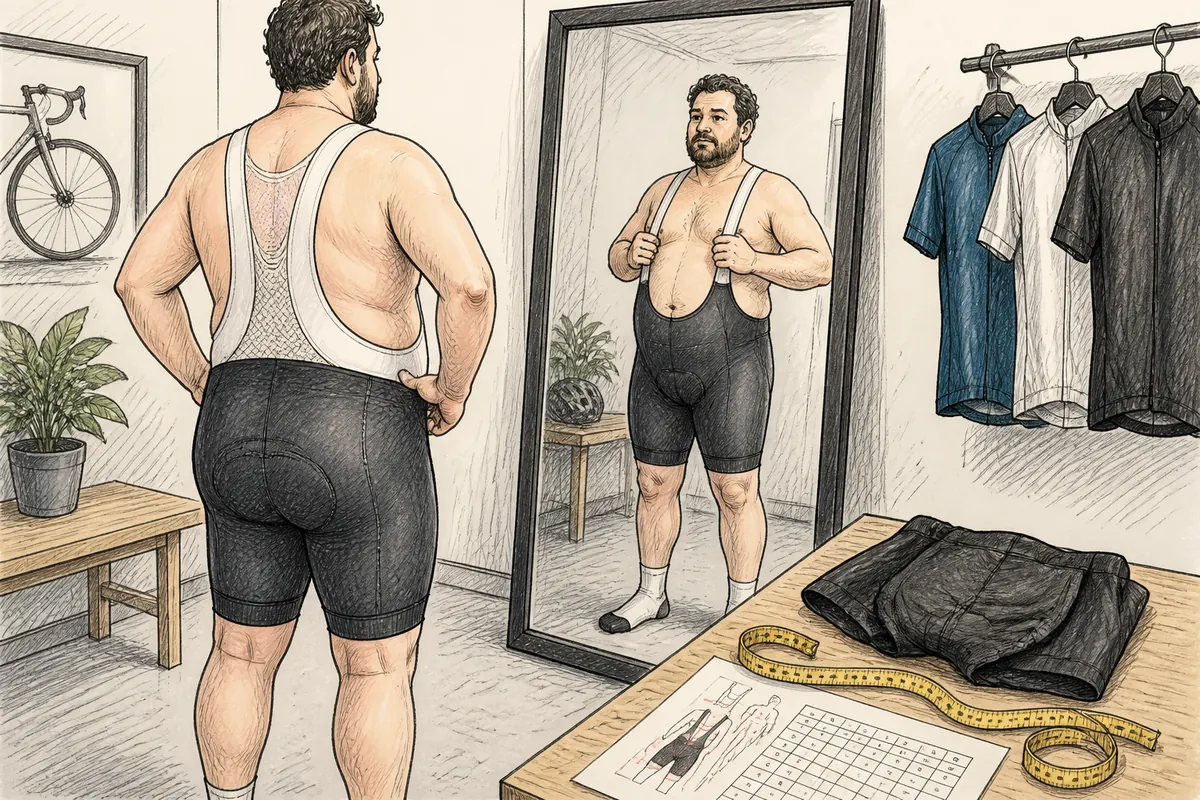
Waistbands, bibs and leg grippers for bigger bodies
Bib shorts usually stay in place better than waist shorts. The shoulder straps hold the shorts up, reducing the chance of a waistband rolling down or digging into your stomach when you lean forward. That stability is especially useful on longer rides.
The tradeoffs are higher cost, less convenient bathroom access and possible discomfort from the straps. Those are practical objections, not a failure to appreciate Lycra.
If you prefer waist shorts, choose a broad, soft waistband rather than a narrow elastic strip. A wide band spreads pressure over a larger area and is less likely to roll while seated.
Tall riders should check bib length carefully. The straps should lie flat over the shoulders without pulling down, and the shorts should not feel suspended too low through the torso.
Leg grippers stop the shorts riding up. Wide, lightly tensioned grippers are usually more comfortable than aggressive silicone bands, particularly around larger thighs.
| Feature | What it is best for |
|---|---|
| Bib construction | Longer rides and riders who regularly fight waistband roll. |
| Waist shorts | Commuting, short rides, quick bathroom access and lower cost. |
| Moderate-density chamois | A sensible starting point for mixed recreational riding and indoor training. |
| Broad waistband | Spreading pressure across the abdomen without a narrow band cutting in. |
| Wide leg grippers | Keeping the hem stable with less concentrated pressure on the thigh. |
| Liner shorts | Padding under baggy mountain-bike or casual shorts. |
| Extended sizing | Getting the waist, hip, thigh and inseam proportions closer to your shape. |
How to get the fit right when size charts are unreliable
Measure your waist, hips and inseam according to the manufacturer’s instructions. Do not rely only on trouser size. Cycling clothing uses brand-specific patterns, and a 3XL from one manufacturer may not match another in width or length.
Where actual garment measurements are available, compare them with a pair of shorts that already fits well. Check the return policy before ordering, especially with bib shorts and other close-fitting garments.
Assess the shorts standing and seated. Look for no exposed lower back, severe waistband roll, loose fabric beneath the chamois, sharply rising leg hems or shoulder straps that pull the shorts down through the torso.
If the waistband rolls but the legs fit, the cut may be wrong rather than the size. If the pad shifts while the waist feels secure, try a different pattern. If the grippers are too tight, sizing down will make matters worse.
Pearl Izumi Quest or Attack shorts, Endura Xtract or FS260 shorts, and Baleaf plus-size padded shorts are useful reference points when comparing fit and availability. Treat them as examples, not automatic winners. Size ranges and model details change, and one larger rider’s good fit may be another’s poor one.
| Problem | Likely cause or adjustment |
|---|---|
| Waistband rolls down | The rise or waistband may be wrong; try a higher-rise cut or bib shorts. |
| Pad shifts while pedaling | Excess fabric, poor pad shape or the wrong size; try a better-proportioned pattern. |
| Leg hem rides up | Weak grippers, an unsuitable leg cut or insufficient inseam. |
| Shoulder straps pull | The bib may be too short through the torso; try a taller cut. |
| Chafing | A seam, gripper or pad edge is rubbing; change the cut or fabric before sizing down. |
| Excess fabric | The shorts may be too large or poorly cut for your waist-to-thigh proportions. |
Shorts for commuting, casual riding and long-distance use
Match the construction to the riding rather than paying for features you will not use. Commuters may prefer waist shorts or a basic liner short under casual or baggy mountain-bike shorts. That provides padding without requiring a full road-cycling outfit.
For longer road rides, stable bib construction and a centered pad matter more than pockets or aggressive race styling. Indoor riding benefits from breathable fabric and a secure chamois because you pedal continuously and usually sweat more than expected.
Look for dense, opaque fabric that does not become translucent when stretched, secure stitching around the pad and grippers that feel broad rather than harsh. Wash shorts promptly, follow the care label and avoid fabric softener. Replace them when the pad has compressed, the fabric has become see-through or the grippers no longer hold the hem.
Spending more on a better cut, dependable fabric and a useful return policy is usually worthwhile. Premium branding alone does not guarantee a better fit. For short recreational rides, expensive race fabrics and extreme compression are usually money spent in the wrong place.
The safest starting choice for most larger riders
For most riders, the safest starting point is a correctly sized mid-range bib short with a moderate-density chamois, stable construction and wide, comfortable leg grippers. It addresses waistband roll, pad movement and rising hems without assuming that maximum padding is the answer. For broader clothing cuts and jersey fit, see plus-size cycling clothing; for pad basics use padded cycling shorts.
Choose waist shorts instead when easy bathroom access, lower cost or a dislike of shoulder straps matters more than maximum stability. They remain the better-value choice for commuting and shorter rides.
Before buying, check your waist, hip and inseam measurements, the manufacturer’s size chart, the return policy and how the shorts feel when seated. If the fit is wrong, try a different cut before upgrading to a more expensive chamois.
Frequently asked questions
Should heavy riders choose bib shorts or waist shorts?
Bibs usually stay in place better and avoid waistband roll. Waist shorts cost less and are easier for quick bathroom stops. Choose bibs for stability on longer rides, or waist shorts when convenience matters more.
Do heavier riders need a thicker chamois?
Not automatically. A supportive, well-shaped pad that stays centered matters more than maximum thickness. Excess foam can bunch, increase heat and move as you pedal.
Can you wear underwear under padded cycling shorts?
Usually no. Underwear adds seams and can trap moisture between your skin and the chamois, increasing friction – see do you wear underwear with cycling shorts. Wear padded shorts next to the skin and wash them after each ride.

I’ve spent way more time in the bike trade than anyone should reasonably want to. In that time I’ve wanted to make cycling jargon and marketing easier to cut through to help people get the bike of their dreams.
When I’m not writing about bikes, I can be seen out bikepacking on single speed bikes or teaching kids how to ride.


