How often to replace a bike chain is not “every 12 months” or “every 2,000 miles.” Replace it when measured wear reaches the limit for your chain and drivetrain. Mileage is useful context, but it is a poor substitute for checking the chain itself.
Many road chains may last roughly 1,500-3,000 miles in reasonably clean, dry conditions. Wet commuting, road grit, winter salt, muddy off-road riding, high power and neglected cleaning can shorten that considerably. A lightly used chain does not automatically need annual replacement, although corrosion and stiff links are reasons to inspect it before riding.
Assumes your bike is functioning and you want to judge whether the chain needs replacing. For the measurement procedure, see how to check bike chain wear.
The short answer: replace a bike chain by wear, not by age
A chain does not normally wear out because the calendar says so. It wears as the pins and bushings inside the chain wear against one another. This increases the effective length of the chain, which cyclists usually call “chain stretch”. The metal is not stretching like a rubber band; the internal bearing surfaces are wearing.
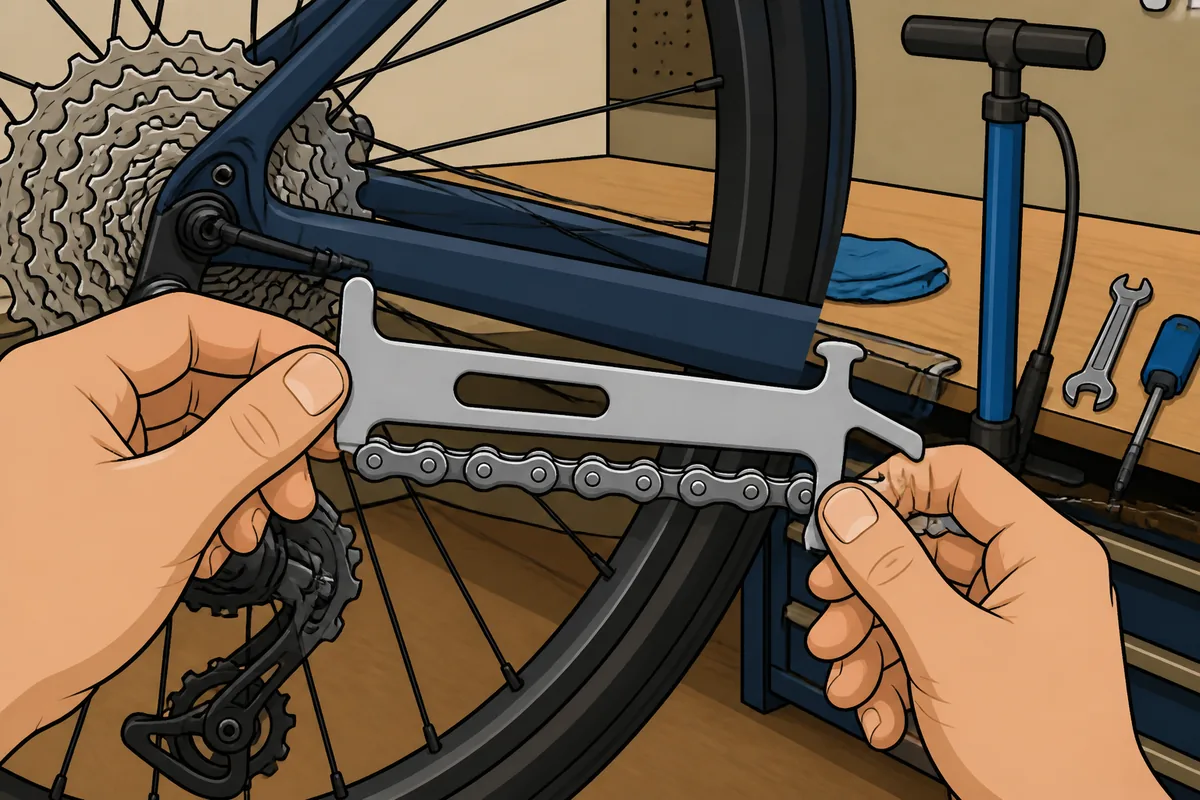
The safest default is simple: use a chain-wear checker at regular service intervals and replace the chain when the tool says it has reached its limit. Different gauges and drivetrain manufacturers can specify different thresholds, so follow the markings and instructions for your tool rather than applying one internet number to every bike. Park Tool’s chain wear and replacement guidance explains the measurement issue and why the threshold matters.
A basic chain checker is usually a better purchase than guessing from the calendar. It is inexpensive compared with a cassette and can stop a small consumable part from damaging several more expensive parts. This is one of the rare bike tools that can save money without asking you to build a workshop around it.
What determines how long a bike chain lasts?
Mileage is only one factor. Every pedal stroke loads the chain, and frequent shifting under heavy pressure increases the stress on the links and sprockets. Strong riders, loaded touring bikes and high-mileage commuters can wear a chain faster than an occasional rider covering the same type of road over a longer period.
Conditions often matter more than the odometer. Rain washes contamination into the chain, while road grit acts as an abrasive. Winter salt is particularly unhelpful, and gravel or mountain biking can put a steady supply of fine dirt into the drivetrain. Muddy riding can wear a chain quickly even when the bike has not covered an impressive distance.
Lubrication helps reduce friction and noise, but it does not reverse wear. Adding fresh lube on top of a dirty chain may make it quieter for a while while leaving abrasive paste inside the links. Cleaning and lubrication are separate jobs. See how often you should lube your chain for the maintenance side of that equation.
Drivetrain design also affects the cost of ignoring wear. Modern 11- and 12-speed systems use narrower chains and often have more expensive cassettes and chainrings. They are not necessarily doomed to short chain lives, but they give you less reason to postpone checking. A worn chain running over a costly cassette is a false economy.
How to know when your chain needs replacing
Use a chain checker or an accurate measurement method rather than relying on sight. A chain can look clean and still be worn. Conversely, a dirty chain is not automatically worn out if it has not reached the measured limit and can be cleaned properly.
Chain checkers do not all work in exactly the same way. Some account for roller movement differently, and their markings may be intended for particular chain types or replacement thresholds. Read the tool’s instructions, especially on 11- and 12-speed drivetrains. The important point is to use a repeatable measurement rather than pressing a ruler against a chain and hoping for mechanical prophecy.
Check the chain promptly if you notice:
- Skipping under hard pedalling, particularly in familiar gears.
- Noisy or inconsistent shifting despite correct derailleur adjustment.
- Visible rust or corrosion that will not clean away.
- Stiff links that do not articulate smoothly.
- Damage from a jammed chain, crash or incorrect shifting.
- A chain that has been ridden for a long time in grit, mud or winter salt.
These symptoms do not all prove that wear has reached the replacement threshold. They do justify checking rather than continuing until the drivetrain complains louder. A new chain will not fix every shifting problem, but it is a sensible first diagnostic when wear is unknown.
Why replacing a worn chain early saves money
A worn chain does not just become less smooth. As its effective length increases, it no longer meshes correctly with the teeth on the cassette and chainrings. Continued use can accelerate wear on those teeth, turning a chain replacement into a chain, cassette and possibly chainring replacement.
That is why the practical judgment is to replace the chain promptly once it reaches the stated wear threshold. Trying to extract a few more rides can cost considerably more if the new chain then skips on the old cassette.
Compatibility matters when buying the replacement. Match the chain to the number of speeds and the drivetrain system. A Shimano 12-speed chain, for example, is not a universal substitute for every setup. Check the manufacturer’s compatibility guidance; Shimano’s dealer manuals and technical documents are the sensible reference for Shimano systems.
Also check the chain’s joining method. Some chains use a brand-specific quick link, while others may require a compatible rivet. The correct chain length matters too. A replacement that is too short can damage the drivetrain, while one that is too long can shift poorly. Those are installation decisions rather than reasons to postpone a measured replacement.
If the old chain was significantly past its wear limit, inspect the cassette and chainrings before assuming the new chain has solved everything. A new chain skipping on one or two heavily used sprockets is often revealing existing cassette wear, not creating a new fault.
A simple replacement routine for different riders
Use the following as a checking schedule, not a guaranteed replacement interval. You may measure a chain several times before it actually needs replacing.
| Riding situation | Practical check interval |
|---|---|
| Regular road riding | Monthly or every few hundred miles |
| Daily commuting and wet winter use | Monthly, plus after extended wet or salty riding |
| Gravel or mountain biking | Every few rides or after dirty, muddy conditions |
| Occasional fair-weather riding | Several times per year and before a long ride |
| Before fitting a new cassette | Always check the chain first |
For an occasional rider, there is no good reason to replace a clean, lightly used chain every year just because it has spent twelve months hanging in the garage. Inspect it for rust and stiff links, then measure it if possible. Storage in damp conditions changes the answer; age alone does not.
For commuters, winter riders and off-road cyclists, cleaning more often is just as important as checking more often. If contamination has worked into the chain, more lubricant is not a cleaning strategy. Remove the grit, lubricate the clean chain and measure it at sensible intervals.
The safest starting routine is straightforward: buy or borrow a chain checker, measure the chain, follow the tool’s stated threshold, and inspect the cassette if the chain is already well worn. That approach beats replacing by calendar date and avoids treating mileage estimates as a warranty.
Frequently asked questions
Can a bike chain last for years if I barely ride?
Yes. Mileage is usually the bigger factor, but inspect an old chain for rust, stiff links and contamination before riding. Measure it if possible rather than replacing it solely because of its age.
How many miles should a bike chain last?
There is no reliable universal number. Roughly 1,500-3,000 miles is useful context for many road chains, but wet, gritty or poorly maintained riding can reduce that substantially. Treat the range as background information, not a replacement rule.
Can I replace only the chain if my cassette is worn?
You can, but a new chain may skip on a heavily worn cassette. If the old chain was ridden well past its wear limit, inspect the cassette and chainrings as well. In some cases, replacing the chain and cassette together is the more economical repair.

I’ve spent way more time in the bike trade than anyone should reasonably want to. In that time I’ve wanted to make cycling jargon and marketing easier to cut through to help people get the bike of their dreams.
When I’m not writing about bikes, I can be seen out bikepacking on single speed bikes or teaching kids how to ride.