Working out how many carbs per hour cycling requires less precision than most sports-nutrition packaging suggests. You do not need to turn every ride into a laboratory experiment, and you certainly do not need a pocket full of expensive gels for a gentle hour on the bike.
For many riders, a sensible starting point is 30-60g of carbohydrate per hour on rides lasting roughly 60-120 minutes. Longer, harder rides may justify progressing toward 60-90g per hour, but only if your stomach tolerates it and you have practiced the strategy. That is a progression, not a beginner’s compulsory target.
This guide covers fueling cycling sessions and events. It is not medical nutrition advice, a weight-loss plan, or treatment for diabetes or another health condition. If you have diabetes, gastrointestinal disease, a history of an eating disorder, are pregnant, or take medication that affects food or blood sugar, get individual advice from a qualified clinician or sports dietitian.
The short answer: how many carbs per hour should you eat?
Start with the ride, not the marketing claim on the gel box. An easy 45-minute spin, a hard interval session and a four-hour sportive place very different demands on your carbohydrate stores.
For a ride under about an hour, normal meals are usually enough for many riders, particularly if the pace is easy and you have eaten normally. Dedicated on-bike carbohydrate is optional here. Beginners often spend more on gels for short rides than they need to, which is an expensive way to discover that a banana also contains carbohydrate.
Once a ride moves beyond 60-90 minutes, carrying fuel becomes more useful. For a steady ride of 60-120 minutes, 30-60g per hour is a practical range. A hard session, a hilly route or repeated efforts may push you toward the upper end because intense riding uses carbohydrate faster and leaves less room for under-fueling.
For several-hour endurance rides, some experienced riders can work toward 60-90g per hour. Do not jump straight there because a professional rider or product advertisement says you should. Start lower, practice across normal training rides and increase gradually if your energy fades before your gut does.
This is carbohydrate consumed during the ride. It is not your total daily carbohydrate intake and does not replace ordinary meals before and after cycling. The basic calculation is:
carbohydrate per hour x planned ride hours = total carbohydrate to carry
A three-hour ride at 45g per hour therefore needs a plan for about 135g during the ride. Carrying a small margin is sensible, but do not force every gram down if you become unwell.
Choose your target from ride time and intensity
Duration gives you the first estimate, but intensity decides how aggressively you need to fuel. A relaxed hour on flat roads is a different job from an hour of intervals, repeated climbs or racing. Harder riding relies more heavily on carbohydrate, and there is less spare capacity for getting the plan wrong.
| Ride situation | Practical starting point |
|---|---|
| Easy ride under 60 minutes | Usually 0-30g per hour if you have eaten normally. Carry emergency food rather than automatically forcing down a gel. |
| Steady ride of 60-120 minutes | Start around 30-60g per hour. Move higher if the ride is hilly, fast or includes repeated efforts. |
| Hard intervals, racing or sportive efforts | About 45-75g per hour can be a reasonable training range. Higher intake suits experienced riders only when practiced and tolerated. |
| Endurance ride of 2-4 hours | Begin around 45-60g per hour. Progress toward 60-90g only when duration, intensity and gut tolerance justify it. |
| Events longer than four hours | Plan the total in advance. Many trained riders begin around 45-60g per hour and adjust for intensity, weather, food access and tolerance. |
These are starting points, not exam results. Body size, training status, what you ate beforehand and the conditions all matter. A cool, easy ride may need less than a hot, hilly one even if both lasted three hours.
The safest default is to start lower and build gradually. Beginners commonly buy expensive gels before learning whether they actually need 30, 45 or 60g per hour. Your stomach, not the packet design, gets the final vote.
Heat and hills can make carbohydrate harder to take, even when they do not automatically dictate a particular number. Concentrated drinks and some gels are harder to tolerate when you are short of fluid, while solid food can become unappealing during hard efforts. Change the format and timing rather than assuming more grams will solve every problem.
A carb-per-hour table you can actually use
Use this table as a planning tool. Check the label on every product because a gel is not automatically 30g of carbohydrate, and serving sizes vary between brands and flavors.
| Ride duration and effort | Starting target | Practical example |
|---|---|---|
| 60 minutes, easy | 0-30g per hour | Normal meal beforehand, with a banana or small drink if you start hungry. |
| 90 minutes, steady | 30-45g per hour | Sports drink, or a banana plus small pieces of jam sandwich. |
| 2 hours, steady to moderately hard | 45-60g per hour | Carbohydrate drink combined with chews, a banana or a gel. |
| 2-4 hours, endurance pace | 45-75g per hour | Mix bottles, ordinary food and compact products according to what you can carry and tolerate. |
| Long or competitive event | 60-90g per hour if trained | A practiced combination of drink, gels and chews, with solid food when intensity allows. |
The table describes carbohydrate during the ride. It does not replace normal meals before and after cycling, and it is not a reason to keep eating when you are nauseated, short of fluids or becoming unwell.
How to turn grams into bottles, food and gels
Multiply your target by the planned ride duration. For a three-hour ride at 45g per hour, the planned total is 135g. That total can come from a mixture of sources rather than three identical servings of sports nutrition.
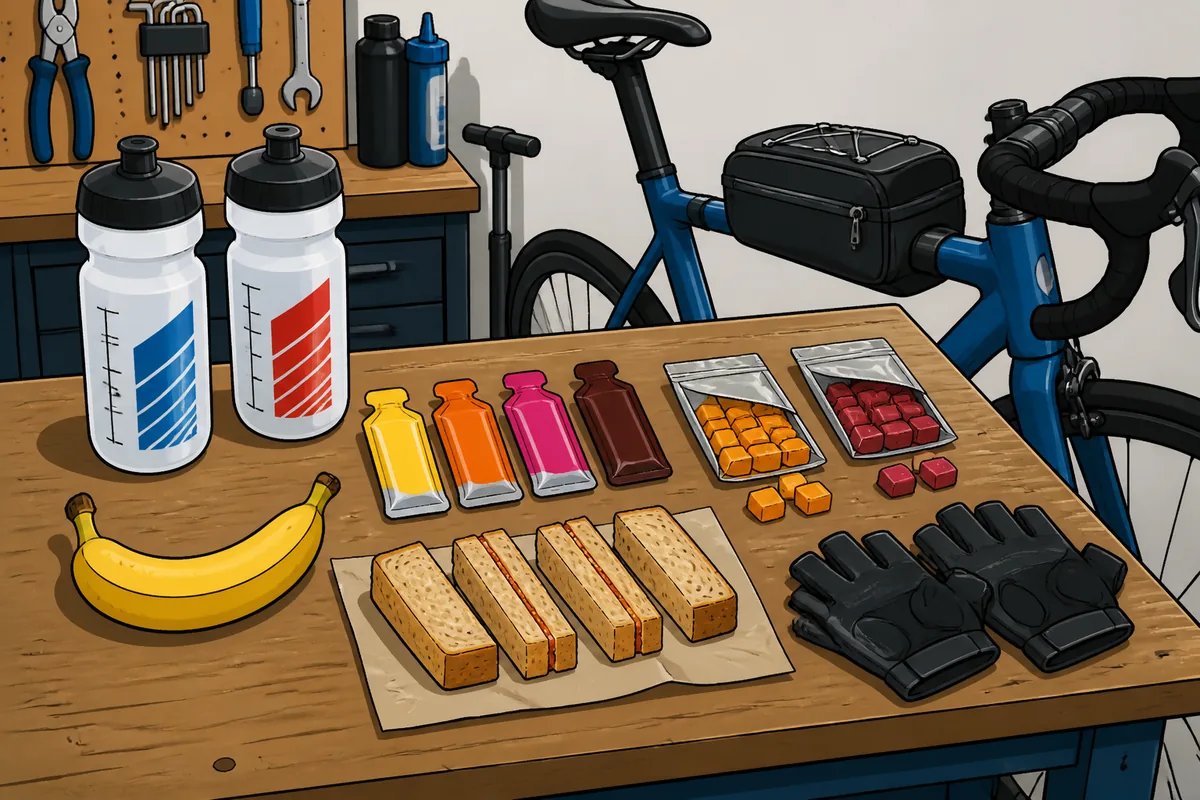
Sports drink provides carbohydrate alongside fluid, making it useful when you want to avoid carrying a bag full of food. Gels are compact and convenient during hard efforts, but some riders need water with them. Chews such as Clif Bloks allow smaller, repeatable portions. A banana or pieces of jam sandwich are often cheaper and more satisfying on a steady ride, though they take more space and become awkward to eat when the pace rises.
| Fuel option | What it contributes and practical tradeoff |
|---|---|
| Sports drink | Carbohydrate plus fluid. Check the label and concentration; a very strong mix may be harder to tolerate in heat. |
| SIS GO Isotonic Energy Gel | A compact carbohydrate portion. Check the current label and whether you need additional water with it. |
| Clif Bloks | Chewable portions that can be spread through the hour. They may be easier to dose than one large serving. |
| Banana | Portable familiar food with carbohydrate, but it bruises and contributes little fluid. |
| Jam sandwich pieces | Low-cost, easy-to-portion food for steadier rides. They are less tidy during hard efforts. |
| Homemade drink | Economical and adjustable, but measure consistently and keep preparation and storage hygienic. |
There is no prize for using the most expensive option. Familiar food and drink with the carbohydrate amount checked before you leave is the safest value choice. Premium packaging does not rescue a badly timed or badly concentrated plan.
When should you start eating on the bike?
Start before you feel hungry, particularly when the ride is planned to last more than 90 minutes. Hunger is a poor alarm system once you are already riding hard; catching up usually means taking too much at once.
Small regular servings are generally easier than a large mid-ride rescue. For a two-hour ride at 45g per hour, you might take roughly 15g every 20 minutes. That could be a few chews, some drink or part of a sandwich.
For a longer event, begin within the first 20-30 minutes and keep intake steady. Adjust around climbs, feed stations and stops, but avoid leaving all your food for the final hour. A timer or bottle markings can help when fatigue has erased your arithmetic.
Fueling and hydration are related but not interchangeable. A gel may be easier to tolerate with water, while an overly concentrated bottle can feel heavy in hot weather. Drink according to thirst, conditions and access to fluids rather than copying a universal volume.
Single-source versus mixed-carbohydrate fueling
Glucose-based carbohydrates and fructose use different transport pathways in the intestine. That is why many high-carbohydrate products combine more than one type: the mixture can help some experienced riders take in more carbohydrate than they could from one source alone.
Mixed-carbohydrate products are not mandatory. At moderate targets, ordinary foods, a sports drink or a single carbohydrate source may work perfectly well. The approach becomes more relevant when you are trying to push toward 75-90g per hour and need a compact plan.
Check the ingredient list and serving size, then practice the exact combination in training. Event day is a poor time to discover that your ambitious nutrition strategy has the personality of wet cement.
How to avoid stomach problems
Gut distress commonly comes from taking too much too soon, using a drink that is too concentrated, taking a gel without enough fluid, riding hard in the heat or introducing unfamiliar foods. It can also appear when you try to recover from an hour of under-fueling by eating half your bag at once.
Increase your target across several rides. Keep a basic note of grams per hour, timing, temperature, intensity and symptoms. Change one thing at a time so you can identify whether the problem was the product, amount, concentration or pace.
- Use smaller servings more often.
- Reduce drink concentration if your bottles cause bloating.
- Take gels with water when the product instructions and your tolerance call for it.
- Use liquid fuel when riding hard and solid food when the pace is steadier.
- Slow your intake on climbs if breathing makes eating difficult.
Nausea, bloating and diarrhea are reasons to stop increasing the target, not proof that you are fueling like a professional. Persistent or severe symptoms deserve discussion with a qualified clinician. Riders with diabetes, gastrointestinal disease, disordered-eating history, pregnancy or relevant medication needs should seek individualized advice.
Do you need carbs for every ride?
No. A short, easy ride after normal meals usually does not need dedicated on-bike carbohydrate. You may still carry a snack in case the route takes longer than planned, but buying gels for every coffee spin mostly makes your pockets sticky.
Hard sessions and long rides are different. Carbohydrate can help maintain interval quality and avoid the late-ride collapse that turns an endurance session into a negotiation with gravity. Saving a few calories on a three-hour ride is usually a poor bargain if it leaves you unable to finish safely.
Fasted riding is not a requirement for fitness or fat loss, and it can reduce hard-session quality for some riders. If you ride before eating, keep the route and intensity sensible and carry emergency food.
A simple fueling plan for your next long ride
- Estimate the actual ride duration, including likely stops and climbs.
- Choose a moderate target based on duration and intensity.
- Multiply grams per hour by the number of hours.
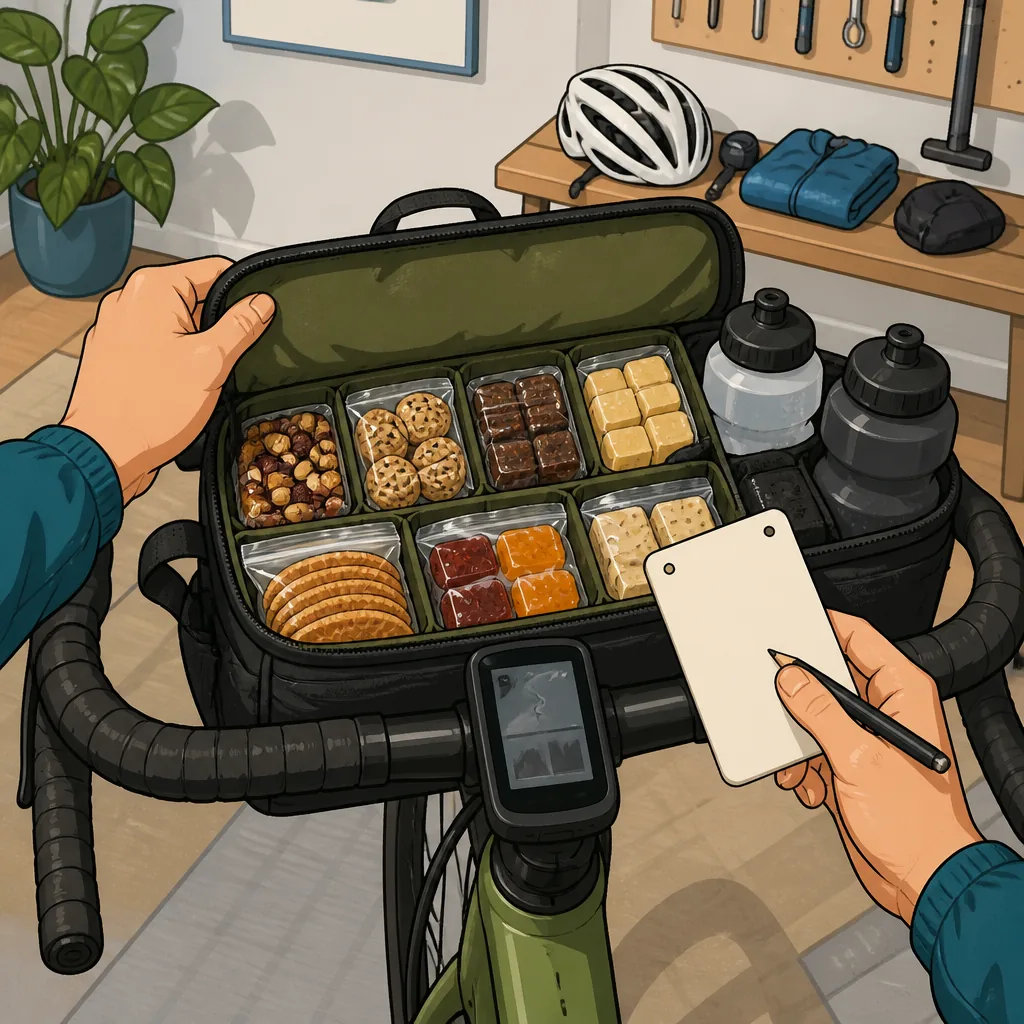
- Divide the total between bottles, food, chews and gels.
- Pack a small margin for delays or detours.
- Start eating early and record how the plan felt afterward.
For a three-hour steady ride at 45g per hour, the planned total is 135g. At 60g per hour, it becomes 180g, so you need larger bottles, more food or a greater proportion of gels and chews. Test the exact bottles, portions, storage method and products before an event.
Worked carbohydrate totals for common ride lengths
| Target per hour | 2 hours | 3 hours | 4 hours |
|---|---|---|---|
| 30g per hour | 60g | 90g | 120g |
| 45g per hour | 90g | 135g | 180g |
| 60g per hour | 120g | 180g | 240g |
| 90g per hour | 180g | 270g | 360g |
These are planned totals, not an instruction to force-feed yourself when ill. If the plan fails, address fluids and intensity and reassess rather than treating more carbohydrate as the automatic answer.
FAQs
Is 100g of carbs per hour too much for cycling?
It is a high target that some experienced endurance riders may train toward, but it is not a sensible starting point. Gut tolerance, product composition, intensity and fluid intake all matter.
Can I use normal food instead of gels on a long bike ride?
Yes. Bananas, jam sandwiches and other familiar foods can work, although gels are more compact and often easier during hard efforts. Choose based on pace, storage space and tolerance.
Should I eat carbs on a one-hour bike ride?
Usually not for an easy one-hour ride if you have eaten normally. A small amount can help during a hard session or if you start under-fueled.
How do I increase carbs per hour without getting stomach cramps?
Increase gradually, take smaller regular servings, check drink concentration and practice the exact strategy before an event. If symptoms persist, stop increasing the target and seek qualified advice.
For most riders, the sensible next step is 30-60g per hour on rides where fueling matters, started early and built from food and products you already tolerate. Make the basic plan work before chasing a higher number; faster arithmetic is no substitute for a settled stomach.

I’ve spent way more time in the bike trade than anyone should reasonably want to. In that time I’ve wanted to make cycling jargon and marketing easier to cut through to help people get the bike of their dreams.
When I’m not writing about bikes, I can be seen out bikepacking on single speed bikes or teaching kids how to ride.