
If you want to start cycling, begin with the routes you will actually ride, not the most expensive bike you can find. A correctly sized bike, basic safety equipment and a manageable first route matter more than race-ready parts sitting unused in the shed.
Assumes you can already balance and pedal. If you are still learning those basics, practise in a traffic-free area or seek instruction before riding on public roads. If you have a health condition, an existing injury or concerns about exercise, get appropriate medical advice before increasing your activity.
Start with the type of cycling you actually want to do
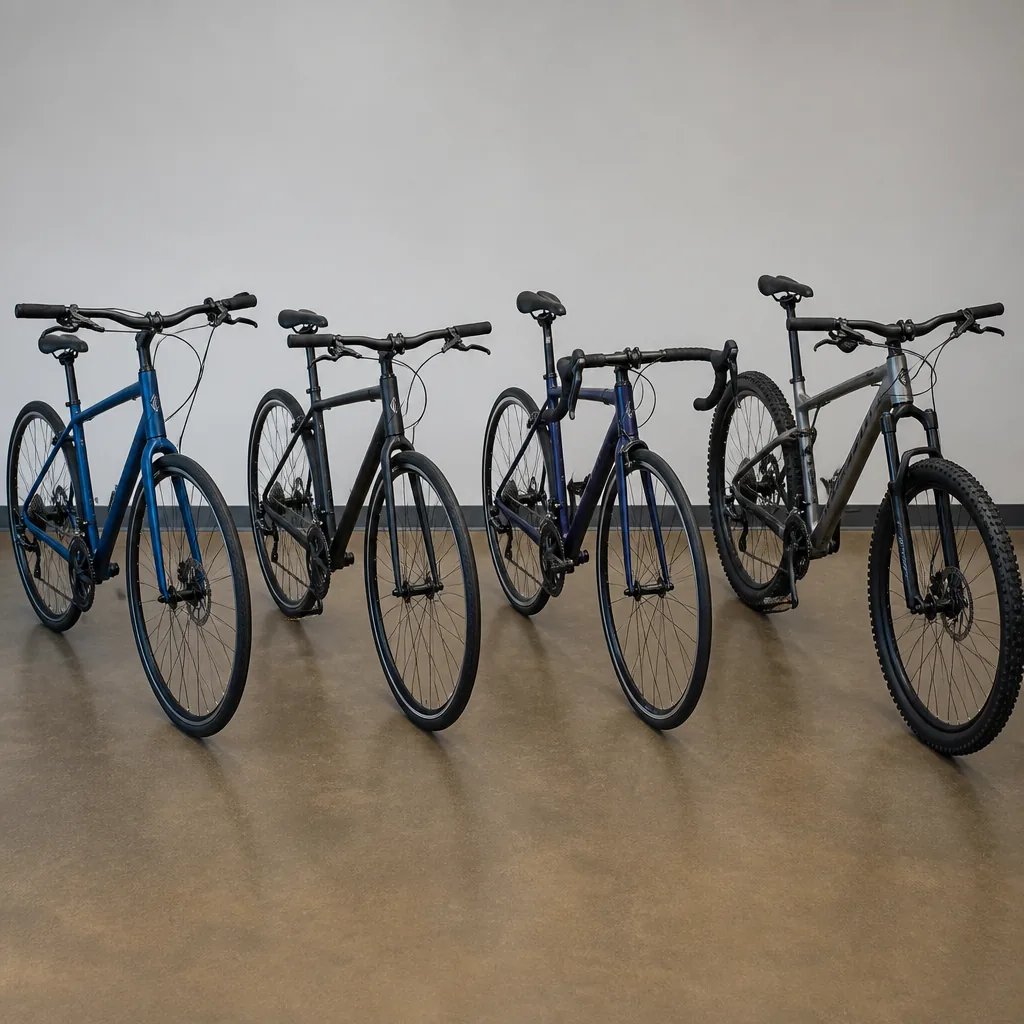
Your intended route matters more than the label on the frame. For commuting and mixed paved riding, a flat-bar hybrid or upright city bike is usually the safest starting point. For smooth roads where speed and longer distances matter, an entry-level road bike may suit you better. Light gravel and towpaths call for wider tires, while genuinely rough off-road routes justify a mountain bike.
- Commuting: Choose a hybrid or city bike, preferably with mounts for mudguards and a rack.
- Paved leisure rides: A hybrid, fitness bike or comfortable road bike can work.
- Fitness riding: A road bike makes sense when most rides are on smooth roads and speed is important.
- Light gravel: A hybrid with wider tires or an entry-level gravel bike is usually enough.
- Family and social riding: Prioritize comfort, easy handling and reliable brakes over low weight.
For most beginners riding roads, cycle paths and light trails, a correctly sized hybrid with flat bars, reliable gears and a rigid fork is the least-regret choice. It is versatile without adding unnecessary weight and maintenance. A road bike is not automatically a better fitness bike, and a mountain bike is not automatically a better bike for potholes.
Also consider storage, stairs, local traffic, hills and weather. A bike that is difficult to carry upstairs or store securely will not earn many miles. Buy for the next few months of riding, not for an imagined future version of yourself.
| Your likely riding | Best starting point |
|---|---|
| Paved commuting and leisure | Flat-bar hybrid or upright city bike. A full-suspension mountain bike is unnecessary overkill. |
| Cycle paths, towpaths and light gravel | Hybrid with wider tires or an entry-level gravel bike. |
| Mostly smooth roads with speed as a priority | Entry-level road bike, provided you are comfortable with drop bars and the riding position. |
| Rough, technical off-road routes | Mountain bike with suitable tires and suspension. Do not buy this category for ordinary roads. |
Choose a first bike without overspending
A first bike should be usable, correctly sized and easy to maintain. Do not spend the entire budget on the frame: reserve money for a helmet, lights, lock, pump, puncture kit and an initial service if needed. Fit, reliable brakes and decent tires usually matter more to a new rider than a lighter frame or a higher component group.
Flat bars offer familiar controls and an upright view. Drop bars provide more hand positions and suit longer, faster road rides, but take some getting used to. A rigid fork is lighter and simpler on paved surfaces. Cheap suspension forks are often heavy, poorly adjusted and fitted because they look impressive on a specification sheet. Suspension helps when the route is genuinely rough, not merely because it appears on the bicycle.
Disc brakes can offer consistent braking in wet conditions and allow wider tire clearances. Rim brakes are simple and adequate for much dry-road riding. Reliable setup matters more than the brake category. Gears should provide a low enough gear for your local hills; a large gear count is not automatically useful.
Be wary of very cheap full-suspension bikes, suspension seatposts sold as instant comfort fixes and low-quality shifting components. Extra moving parts add weight and maintenance, while bargain-bin freewheels and twist shifters can make an otherwise usable bike feel clumsy. The cheapest bike is rarely the cheapest way to begin if it needs immediate replacement parts.
A good used bike can offer excellent value, particularly when it comes from a reputable shop or knowledgeable seller. On a used bike, inspect the frame for cracks or serious dents, check that the wheels run reasonably true, test the brakes, look for worn drivetrain parts and perished tires, confirm the size and ask for proof of ownership. If you cannot judge the condition, pay for an inspection before buying.
Get the bike fit and contact points right
Fit affects comfort, control and confidence more than small weight savings. Use the dedicated bike frame sizing guide when choosing the frame, then make small setup changes rather than trying to solve everything with expensive components.
Set the saddle so your knee retains a small bend at the bottom of the pedal stroke. Your hips should not rock, and your knee should not remain excessively bent. Adjust the saddle in small increments and test each change. A formula can give you a starting point, but it cannot account perfectly for your flexibility, shoes, pedals and riding position.
You should not feel stretched, cramped or forced to support heavy pressure through your hands. The saddle, grips, pedals and shoes are your main contact points. Flat pedals and ordinary comfortable clothing are sensible defaults; padded shorts and clipless pedals are optional. Do not buy a new saddle simply because the first few rides feel unfamiliar. Give your body some time, but do not ignore persistent or worsening pain.
Seek professional help for persistent pain, an existing injury, an uncertain second-hand size or difficulty controlling the bike after basic adjustments. A short fitting session can be better value than cycling through a pile of random upgrades.
Buy the essential safety and repair gear
Separate equipment that keeps a ride safe or recoverable from equipment that merely makes the bike look more serious. Start with a properly fitted helmet, suitable front and rear lights, a lock, mini pump, tire levers, a spare tube or tubeless repair equipment and a charged phone. Helmet and lighting laws vary by location, so check local requirements.
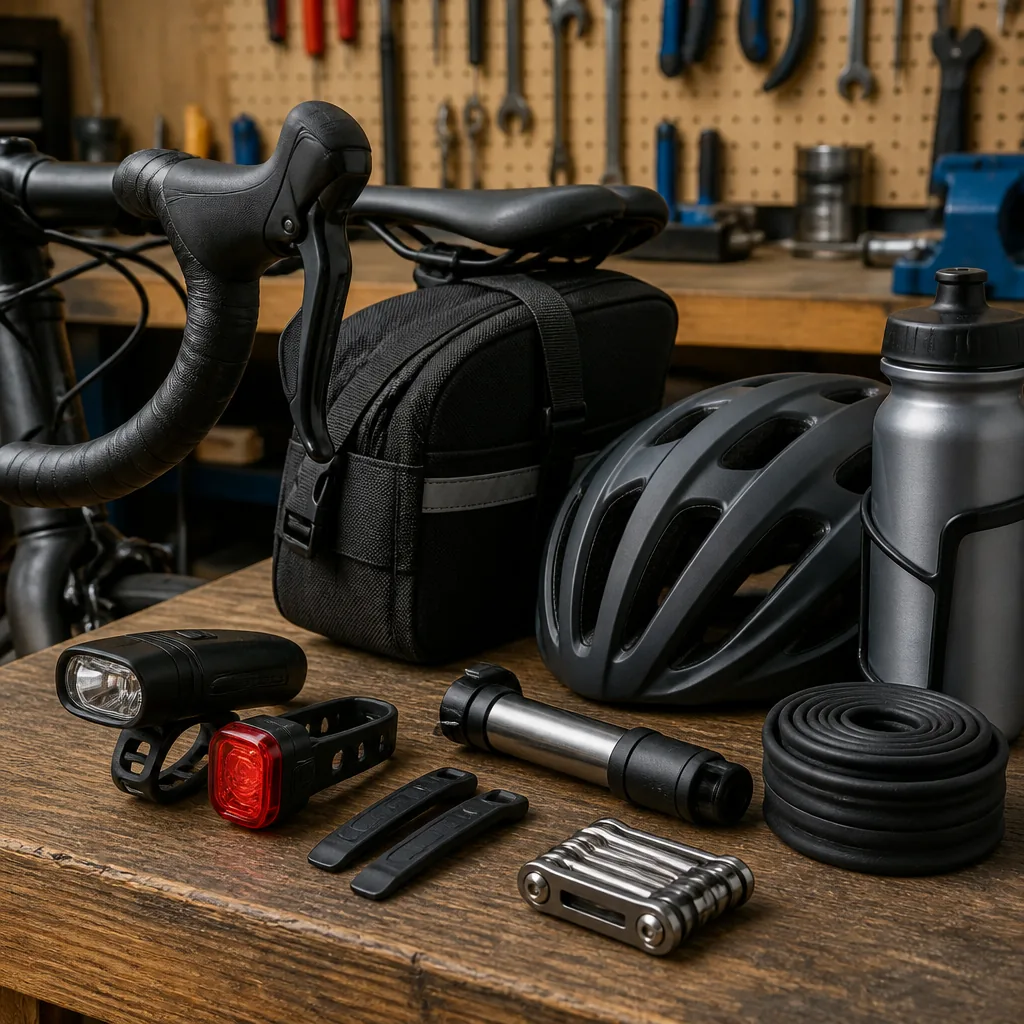
A helmet should sit level, fit securely and carry the relevant local safety certification. It may reduce the risk of some head injuries, but it cannot prevent every injury and does not replace visible riding, sensible route choices or attention to traffic.
A mini pump is usually more dependable than relying only on a cartridge, especially when a puncture happens farther from home. Learning to remove a tire, replace a tube and inflate it is more valuable than carrying a large tool kit you cannot use. Practise once at home before you need the skill beside a wet road.
| Priority | Examples and reason |
|---|---|
| Essential or conditionally essential | Properly fitted helmet where appropriate, lights for low light or darkness, lock, pump, tire levers, spare tube or tubeless repair kit, and charged phone. |
| Useful for a specific problem | Mudguards for wet commuting, rack or panniers for carrying loads, gloves for comfort, and a bell where appropriate. |
| Optional at first | Cycle computer, clipless pedals, premium clothing, aerodynamic accessories and power meter. Buy these only when a real riding need appears. |
Do not prioritize a cycling computer, clipless pedals, premium clothing or aerodynamic accessories before you have established a riding habit. Cycling does not require a costume change.
Plan your first rides for control, not distance
Choose a traffic-free area, quiet car park, cycle path or calm local road. Keep the first ride to roughly 20 to 40 minutes, with an easy return route and no combination of unfamiliar traffic, steep climbs and long distance. Testing the bike close to home is sensible; discovering a bad setup ten miles away is less educational.
- Start and stop smoothly.
- Brake progressively with both brakes.
- Change gear before a climb becomes difficult.
- Ride straight while looking ahead.
- Check over your shoulder without drifting.
- Signal only when it does not compromise control.
Ride at a pace where you can speak in short sentences. Beginners commonly start too hard, then mistake poor pacing for an inability to cycle. A short, repeatable ride is a better first target than an ambitious distance that leaves you sore and discouraged.
Build cycling fitness gradually
Two or three easy rides per week is a useful starting pattern, provided you allow recovery. Repeat a comfortable route, then add five to ten minutes when recovery is good. Increase time before chasing speed or steep hills, and take an easier week if fatigue accumulates. The cycling training routine guide covers more structured progression.
Mild general fatigue can be normal. Sharp or worsening pain, dizziness, unusual breathlessness or chest symptoms are reasons to stop and seek appropriate medical advice. Allow recovery, drink when thirsty and eat ordinary meals that support your activity; cycling is not a guaranteed weight-loss formula.
Ride safely and make the habit practical
Preview junctions, use quieter roads where available, check the weather and allow more time than a car journey. Road positioning and lighting requirements depend on local law, so follow the guidance where you live rather than copying advice from another country.
For commuting, lock the frame and a wheel to a solid object where possible, carry work clothes or use a change of clothes, and keep a backup plan for mechanical and weather problems. See the commuter bike guide for clothing, luggage and security detail.
Store the bike somewhere dry. Keep tires within the recommended pressure range, clean and lubricate the chain when needed, and check the brakes, wheels and fasteners. Stop riding if the frame or fork is damaged, a wheel is loose, the brakes are unreliable or you develop severe pain. Chest pain, faintness or serious breathing difficulty require medical attention.
A realistic first-month plan
- Week one: Set up the bike and complete two short skills rides.
- Week two: Complete two or three easy, familiar rides.
- Week three: Add a slightly longer route or gentle commute if comfortable.
- Week four: Repeat the pattern you can sustain around work, family and weather.
Before each ride, check the tires, brakes, chain, wheel security, lights, phone, repair kit and weather. Record time, route and comfort rather than obsessing over speed. Do not upgrade until a repeated problem identifies a specific need, such as punctures, wet commuting, luggage or rough surfaces. Consistency beats heroic weekend mileage.
Frequently asked questions
What is the best bike for someone just starting cycling?
For most beginners riding roads, cycle paths and light trails, choose a correctly sized hybrid with flat bars, reliable gears and a rigid fork.
How far should a beginner cycle?
Start with around 20 to 40 minutes at an easy pace, then increase time gradually when recovery is comfortable.
What cycling gear do I need as a beginner?
Start with a properly fitted helmet where appropriate, suitable lights, a lock, pump, puncture repair equipment, a charged phone and clothing you can move comfortably in.
Do I need padded shorts or clipless pedals?
No. Comfortable ordinary clothing and flat pedals are sensible defaults until a specific riding problem gives you a reason to change.
Is cycling difficult when you are unfit?
It can feel demanding, but short, easy rides are manageable for many people. Build gradually and seek appropriate medical advice if you have health concerns or concerning symptoms.
Should I buy a new or used bike?
A good used bike can offer excellent value. Buy from a reputable source or arrange an inspection before paying.
How often should a beginner cycle?
Two or three easy rides per week is a useful starting pattern, provided you allow recovery and adjust the plan for your health, fitness and schedule.
Start with the bike you can control, the route you can repeat and the equipment that solves real problems. Ride consistently for a month before spending on upgrades.

I’ve spent way more time in the bike trade than anyone should reasonably want to. In that time I’ve wanted to make cycling jargon and marketing easier to cut through to help people get the bike of their dreams.
When I’m not writing about bikes, I can be seen out bikepacking on single speed bikes or teaching kids how to ride.
![How To Convert From Quill To Modern Threadless Stem [With A Quill Stem Adapter]](/wp/wp-content/uploads/jch-optimize/ng/wp_wp-content_uploads_2023_05_Fitting-A-Quill-Stem-Adapter-min-500x300.webp "How To Convert From Quill To Modern Threadless Stem [With A Quill Stem Adapter]")

