Ordering a custom cycling jersey sounds simple until fabric names, fit charts, artwork fees, minimum quantities and delivery dates all mean slightly different things. The cheapest quote can become less cheap once you add sampling, shipping, tax, mixed-size charges and fees for names or numbers.
Custom jerseys make good sense for cycling clubs, race teams, charity rides, businesses, family groups and events where matching kit is part of the point. They can give a group a clear identity and make riders easier to recognise. They do not, by themselves, make you faster, cooler or better fitting. A printed panel has never rescued a poor size chart.
The ordering process below is for individuals, clubs, teams and events. It assumes you already know the general jersey style you want; it is not a graphic-design course or a full kit comparison. Settle the use case first, then compare the garment, supplier and total landed cost before approving artwork.
Is a custom cycling jersey worth ordering?
A custom jersey is easiest to justify when several people need the same design. Clubs and teams benefit from a shared appearance, while charity rides and business events may need names, sponsors or a recognisable colour scheme. For a one-off personal jersey, the case is weaker unless the design matters enough to accept higher cost and more ordering risk.
There are three broad choices. A fully custom jersey gives you the most control over colours, panels, logos and sponsor placement. A semi-custom team jersey starts with an existing pattern and adds selected colours, logos or names in fixed areas. A ready-made jersey is the simplest option when you need one garment quickly or are not yet certain about fit.
For most individual buyers, and for small groups still figuring out their sizing, a low-minimum supplier or semi-custom teamwear is the safer starting point. Beginners often overbuy premium fabrics, aggressive aero cuts and large quantities when a decent short-sleeve club jersey would do the job with much less financial risk.
Do not compare suppliers using the headline price alone. Check whether the quote includes artwork or setup, a physical sample, names and numbers, premium fabric choices, shipping, tax and small-order fees. A low unit price can be mostly decorative until all the compulsory extras arrive.
The other important tradeoff is flexibility. Fully custom production can create a distinctive design, but changing a rider’s size or adding one replacement jersey may be awkward. A semi-custom range may look less original, yet offer simpler reorders and a more predictable fit. If the group expects new riders to join later, ask about repeat orders before committing to the first batch.
Choose the jersey type before designing it
Start with the garment, not the artwork. A perfect logo layout cannot fix a jersey that is too short, too loose at the hem or uncomfortable when you are bent over the handlebars.
For most summer club orders, a short-sleeve performance jersey is the safest default. It works across ordinary group rides, training and many events, and gives suppliers their widest range of proven patterns. A race-fit version normally has a closer torso, tighter sleeves and a more stable hem. It can sit neatly at speed, but may feel restrictive when standing or when riders are between sizes.
A club or relaxed-fit jersey allows more room through the chest and waist and is easier to layer over a base layer. The tradeoff is that excess fabric can flap, ride up or catch air. It is usually the better choice for mixed-ability groups and leisure riding, not automatically a lower-quality one.
Long-sleeve and thermal jerseys make sense for a defined cooler-season use case. They add coverage and layering options, but may not be useful for riders who mainly want summer kit. Sleeveless jerseys suit hot-weather riding or indoor use, while a short-sleeve jersey remains more versatile for a first order.
- Collar: a higher collar can feel more covered and tidy, while a lower one may suit hot conditions.
- Sleeves: length and circumference affect comfort and how firmly the fabric stays in place.
- Zipper: a full-length zipper is useful for ventilation and easier changes; confirm its construction.
- Rear pockets: check the number, depth and reinforcement, especially if riders carry food, phones or tools.
- Hem gripper: silicone can help prevent the jersey riding up, but its width and feel vary.
Before ordering a full run, get one sample or a size set whenever the supplier or fit is unfamiliar. A digital mockup can show where the graphics go; it cannot show whether the sleeves pinch, whether the pockets sag or whether the jersey stays in place on the bike. That sampling cost is usually cheaper than explaining a wrong-size team order to everyone who paid for it.
Fabric and construction: what you are actually paying for
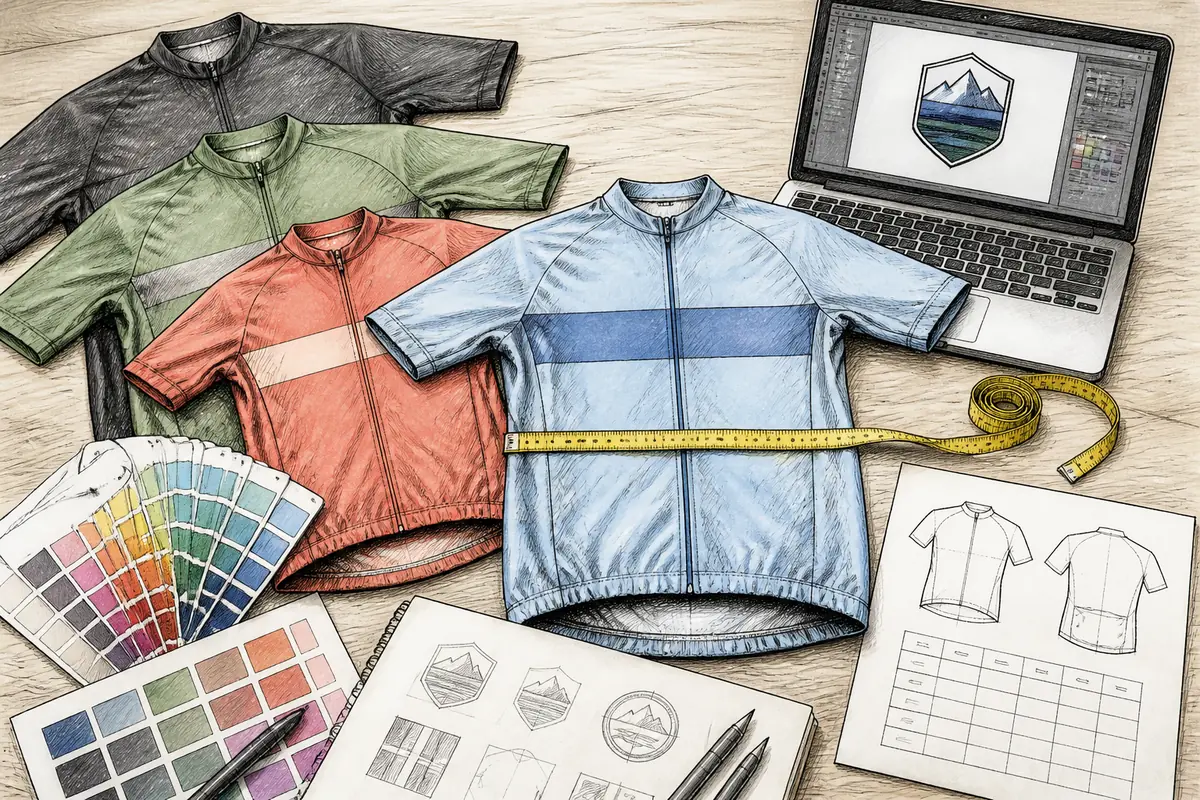
Most custom cycling jerseys use polyester, but that description covers everything from thin, highly ventilated material to denser fabric intended for cooler conditions.
Lightweight fabrics can feel more comfortable in hot weather, especially when combined with mesh panels in high-sweat areas. The tradeoff is that very open mesh can be more transparent, less resistant to snagging and harder to print consistently. A denser fabric may provide better coverage and durability, but it can feel warmer when the pace rises.
Moisture-wicking claims need skepticism. A fabric can help spread sweat across its surface so it evaporates more readily, but it cannot guarantee a dry jersey in humid weather or during a hard climb. Ask for the fabric composition, care instructions and, if supplied, fabric weight and construction details.
Stretch and recovery matter more than a fashionable fabric name. The material needs enough stretch to sit smoothly over your torso without restricting movement, then recover rather than becoming baggy after repeated use. Look at the less glamorous parts too: zipper quality, reinforced pocket seams, sleeve construction and the hem gripper often affect daily use more than dramatic fabric branding.
If sun protection matters, ask for a specific UPF rating and the basis for that claim. Do not assume that any printed polyester jersey provides dependable protection simply because it has long sleeves.
Designing a custom cycling jersey that works on the road
Design for the position in which the jersey will actually be seen: seated on a bicycle, moving past people and often viewed from behind. The front, back, sleeves, collar and pocket area each behave differently when the fabric stretches or folds.
Use strong contrast for rider names, numbers and sponsor marks. Small text that looks acceptable on a laptop may disappear on a moving rider, particularly against a busy graphic or dark fabric. Logos need clear space around them, and the back is usually the most valuable area for club identity and sponsor visibility.
Colour previews on a screen are not a final colour reference. Printed fabric can look different from the artwork, especially with very dark, fluorescent or highly saturated colours. Ask how the supplier handles brand colours and whether a physical swatch or sample is available.
Sublimation is a sensible default for many all-over polyester designs. The graphic is transferred into the fabric rather than applied as a thick surface layer, which generally suits stretch garments and complex patterns. That label does not remove the need for quality control: colour consistency, artwork preparation and the supplier’s production process still matter.
Provide vector logo files where possible, along with correct brand colours and separate sponsor assets. Low-resolution screenshots, logos with unwanted backgrounds and text copied from an email can all turn a clean design into a production problem.
- Front: check logo scale, zipper alignment and readability when the jersey is partly open.
- Back: reserve enough clear space for the club name, rider name or number and sponsor marks.
- Sleeves: confirm whether logos remain readable when the sleeve stretches around the arm.
- Collar: check whether text will be hidden by the rider’s neck or zipper.
- Pockets: avoid placing important artwork where it will be folded or distorted.
- Rider details: confirm spelling, number format and whether names will change between orders.
A crowded jersey is not automatically a successful jersey. More logos rarely create more prestige; they usually create visual soup. Prioritise the marks people need to recognise and make the rest earn its space.
Minimum order quantities and pricing
A supplier’s minimum order quantity, or MOQ, is not always as simple as “ten jerseys.” It may apply per design, garment type, colour, size or production run. Ask exactly what the minimum means before you collect money from a club.
One-off custom production, low-MOQ team orders, bulk club runs and online team stores spread costs differently. A single jersey may carry artwork setup, pattern preparation, sampling, fulfilment and shipping charges that would be shared across a larger order. That can make a ready-made or semi-custom jersey the more sensible purchase.
Request a fully landed quote covering:
- the jersey itself and exact garment model;
- artwork or setup fees;
- sample or size-set charges;
- names, numbers and mixed-size fees;
- shipping, tax, import charges and payment fees;
- replacement jerseys and future reorder pricing.
The lowest advertised unit price is not the best value until those compulsory charges are included. Also ask whether sizes can be mixed freely and whether different names, numbers or garment cuts create extra charges.
A supplier who can hold the artwork, fabric, pattern and colour references for repeat orders may be more useful than one offering the lowest first-batch price.
The ordering process from brief to delivery
Keep the process in this order: define the use case, set the budget, choose the jersey type, gather the logos, shortlist suppliers, request specifications, create the artwork, order a sample or size set, approve the proof, confirm quantities, pay the deposit and track production.
Your supplier brief should include rider count, size range, intended season, preferred fit, delivery date, logo files, colour references and whether names or numbers vary by rider. Being vague at this stage usually creates a vague quote, followed by a surprisingly specific invoice.
A digital mockup checks layout. It can show whether a logo sits on the front or back, but it cannot confirm fabric feel, opacity, fit, zipper quality or exact printed colour. If the supplier or sizing is unfamiliar, do not approve a bulk order from the mockup alone.
Before paying the final balance, ensure the production proof identifies the exact garment model and includes every panel, logo, name, number and colour. Written approval creates a clear record of what was agreed.
Ask for production time after proof approval, shipping time, blackout periods and the supplier’s policy if the order misses your event date. Build in a delivery buffer. Custom manufacturing is not a vending machine, despite what the checkout page may imply.
Fit, sizing and sample orders
Size labels are not consistent between suppliers. Treat a familiar “medium” as a suggestion, not a measurement. Use the supplier’s garment chart and compare it with a jersey that already fits the rider in the intended riding position.
Useful measurements usually include chest, waist, torso length, sleeve circumference and hem. Body measurements describe the rider; garment measurements describe the finished item. Do not mix the two systems without checking how the supplier tells you to measure.
A race fit may feel restrictive when you stand upright but sit correctly once you are bent over the bars. A relaxed club fit gives more room and is often easier to size across a mixed group, but it may flap or ride up at speed. For most clubs, a short-sleeve performance jersey with a known fit and a physical sample is the safest starting choice.
Try the sample in the position you will use on the bike, not only while standing in front of a mirror. Custom clothing often uses standard size blocks; individual tailoring can increase cost and minimums.
Proofing, quality control and supplier questions
Before production, confirm the exact garment model, fabric, fit, pocket count, zipper, gripper, artwork version, colour references, size chart, quantities, total price and delivery date. These details are more valuable than a polished sales presentation.
| Question to ask | Why it matters |
|---|---|
| What is the MOQ, and can sizes be mixed? | Shows whether the supplier’s minimum works for your actual group. |
| What are the fabric composition and fit block? | Lets you compare garments rather than vague fabric names. |
| Can I order a sample or size set? | Reduces fit, opacity, construction and sizing risk. |
| Are artwork, names, numbers and setup included? | Prevents a low headline price becoming an expensive final quote. |
| What print method and colour approval process do you use? | Clarifies how the artwork will translate to fabric. |
| What are the production and shipping times after proof approval? | Helps you plan around an event deadline. |
| How are misprints, wrong sizes, damage or late delivery handled? | Personalised garments often have limited ordinary return rights. |
| Can you repeat the same fabric, pattern and colours later? | Important when new riders or replacement jerseys are likely. |
Ask how the supplier handles misprints, incorrect sizes, missing names, damaged garments, colour variation and late delivery. Find out whether repeat orders use the same fabric, pattern and colour process. A later batch may not match the first unless the supplier records those specifications and agrees to maintain them.
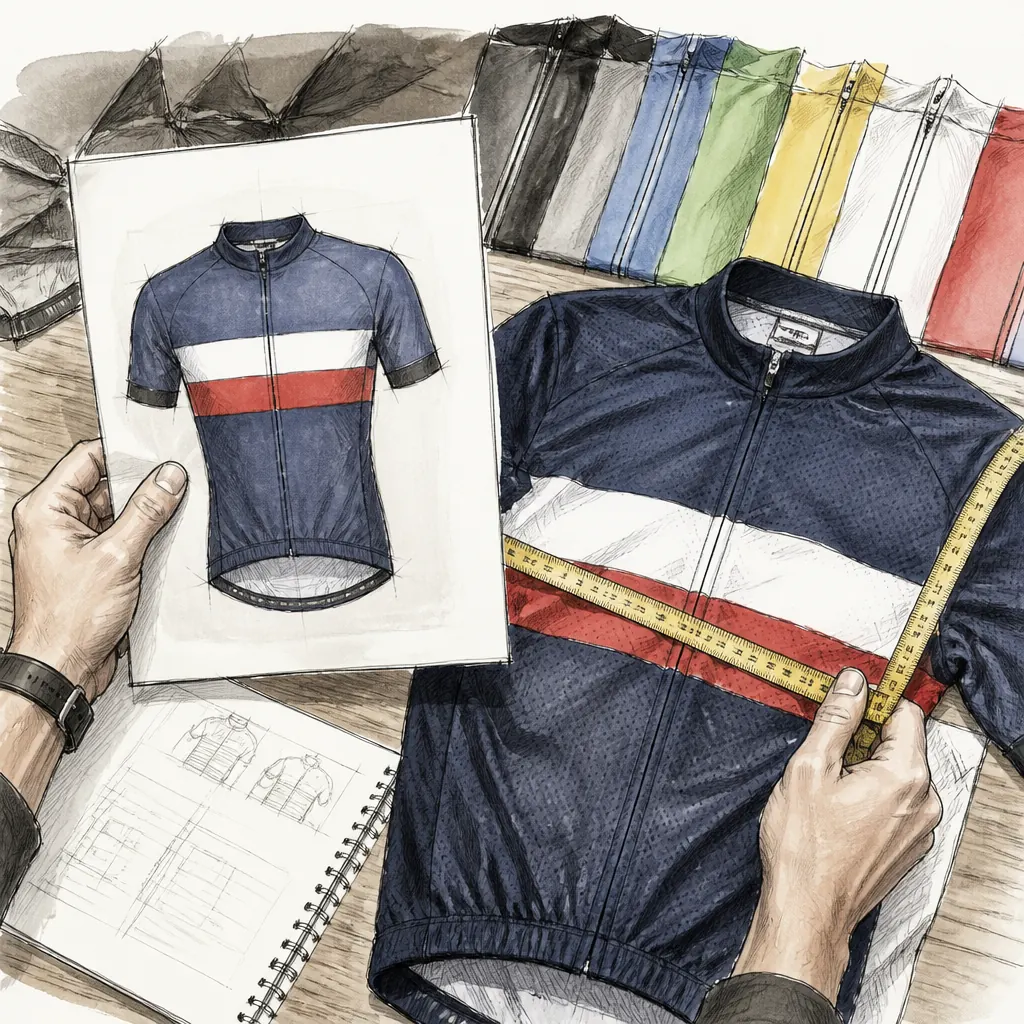
Keep the approved proof, quote, size list and correspondence. Pay using a method that provides a clear transaction record, especially when ordering from a supplier you have not used before.
When to buy custom, semi-custom or ready-made
Choose fully custom when the team identity, sponsor layout or distinctive artwork is central and the group can meet the supplier’s minimums. It offers the most freedom, but also creates the most responsibility for artwork, sizing and approval.
Choose semi-custom teamwear when you want a known pattern and simpler ordering, with your colours, logos and names added in defined locations. This is often the better compromise for a club that wants matching kit without taking on every risk of a completely original garment.
Choose ready-made when you need one jersey quickly, are uncertain about sizing or value straightforward exchanges. One-off buyers should be especially wary of paying for premium fabrics, aggressive aero cuts or large quantities they do not need.
| Option | Best fit | Main advantage | Main risk |
|---|---|---|---|
| Fully custom | Teams with a defined identity, sponsors and enough riders to justify sampling and minimums. | Maximum design freedom. | More sizing, proofing and reorder responsibility. |
| Semi-custom | Clubs wanting matching colours and logos with a known pattern. | Simpler ordering and more predictable fit. | Less freedom over panel and logo placement. |
| Ready-made | Individual riders who need a jersey quickly. | Lowest ordering and sizing risk. | Little or no group-specific identity. |
FAQs
Can I order just one custom cycling jersey?
Sometimes. One-off orders are available from some suppliers, but they usually cost more per jersey and may include artwork, setup or shipping charges that bulk orders spread across the group.
How many custom cycling jerseys should I order?
Order the confirmed rider count plus only a small number of spares if sizes are settled. Check whether the supplier allows mixed sizes and whether replacements or later reorders are practical before adding extras.
Should I approve a digital mockup without buying a sample?
Only when the supplier, fit and fabric are already known. A digital proof checks artwork placement, not garment fit, fabric feel, opacity, zipper quality or exact printed colour.
For most groups, the sensible path is straightforward: choose the fit first, obtain a fully landed quote and approve a detailed written proof before production. That process costs a little time, but it is considerably cheaper than discovering the team ordered thirty excellent-looking wrong sizes. Confirm race vs club vs relaxed cut using how a cycling jersey should fit, then prepare artwork with how to design your own cycling jersey.

I’ve spent way more time in the bike trade than anyone should reasonably want to. In that time I’ve wanted to make cycling jargon and marketing easier to cut through to help people get the bike of their dreams.
When I’m not writing about bikes, I can be seen out bikepacking on single speed bikes or teaching kids how to ride.