Finding the right women’s padded cycling shorts is less about choosing the thickest chamois and more about getting the fit, shape and intended use right. Shorts that stay put can make a long ride noticeably easier; shorts that bunch, roll or press in the wrong places will be uncomfortable before the first coffee stop.
Assumes your bike is correctly sized and set up. Padded shorts can reduce friction and improve comfort, but they are not a substitute for professional medical advice about persistent saddle pain or numbness.
What makes women’s padded cycling shorts different?
Women’s-specific cycling shorts usually use a different pattern and chamois shape rather than simply shrinking a men’s design. The pad may be wider through the rear, shaped differently from front to back, and positioned to suit a generally more upright or different pelvic position on the bike.
That is a useful starting point, not a guarantee. Bodies vary considerably, and your riding position, saddle and personal preferences matter just as much as the label. A women’s-specific short that does not sit correctly is still the wrong short.
Your main priorities are straightforward:
- The shorts should stay in place while you pedal.
- The chamois should remain under your sit bones without bunching.
- The leg openings should not dig in or ride up.
- The fabric should manage moisture without becoming transparent when stretched.
Fit matters more than pad thickness. A huge, soft-looking chamois can create bulk, retain more moisture and move around as you ride. More foam is not automatically more comfort; sometimes it is simply more material for your anatomy to argue with.
How women’s padded cycling shorts should fit
Cycling shorts should feel snug when you put them on. The fabric needs enough tension to hold the chamois and leg panels against your body, but it should not restrict breathing, pinch at the waist or create painful pressure at the leg openings.
Check the shorts in a riding posture, not only while standing in front of a mirror. Bend forward as if holding the handlebars and see whether the chamois remains under your sit bones. If it shifts significantly, folds or feels as though it is sitting between you and the saddle rather than against you, the cut or size is probably wrong.
Look at the front, rear and leg openings. Gaping suggests the short is too large or does not match your shape. Rolling, digging and obvious bulges at the leg openings suggest the opposite. If the fabric becomes transparent when you move into position, it is overstretched and unlikely to be durable.
Do not size up simply because close-fitting cycling clothing feels unfamiliar. Size up when the smaller size causes pressure, restricts movement or stretches the fabric excessively. Loose shorts tend to move, and movement is one of the quickest routes to chafing.
Use the manufacturer’s waist, hip and inseam measurements rather than assuming your usual clothing size. Brand sizing is not consistent; the size guides from Pearl Izumi and Castelli, for example, are useful reminders that cycling clothing uses its own measurements and fit language. Check the exact brand guide before ordering.
If a retailer permits it, try shorts on with underwear only, and check the return policy before removing tags. Close-fitting clothing is not the place to gamble on an optimistic guess.
Choosing the chamois for your rides
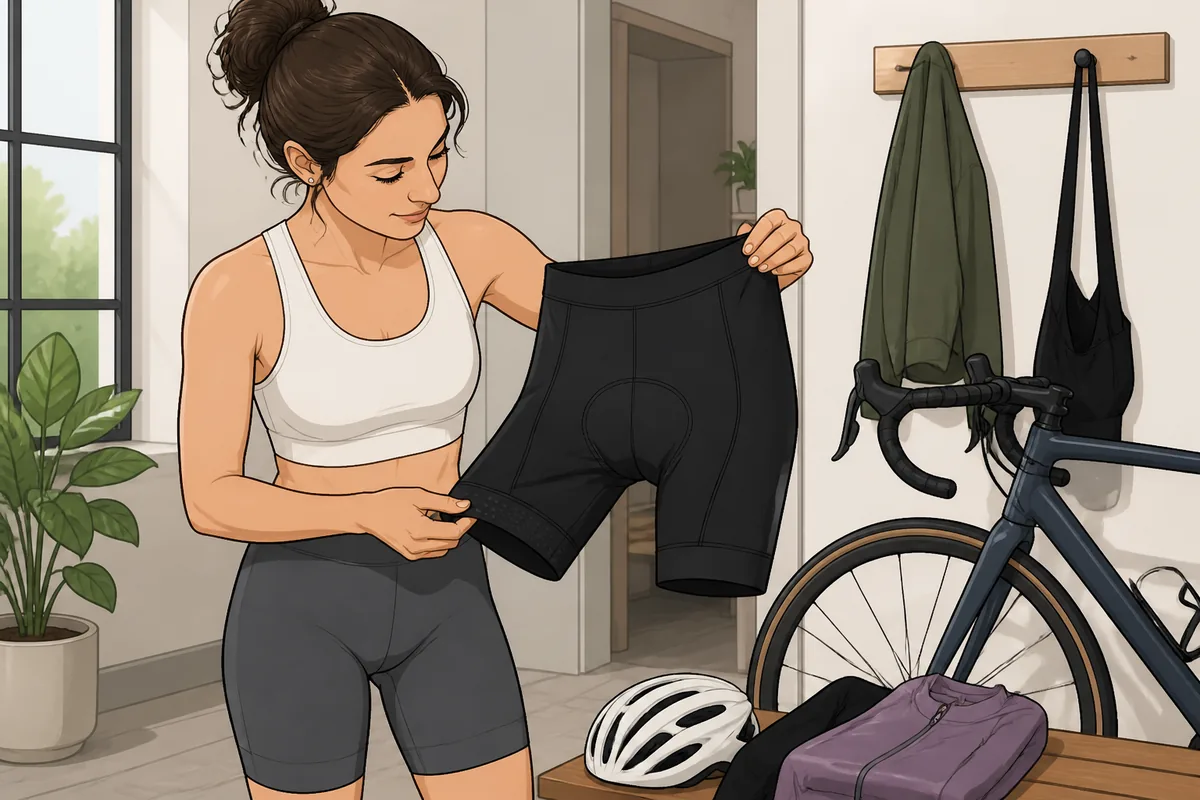
The chamois is the padded, moisture-managing panel sewn into the shorts. It reduces skin-to-fabric friction and provides a more comfortable interface with the saddle. It should not be treated as a replacement for saddle adjustment, appropriate bike fit or taking breaks on longer rides.
A thinner, lower-profile pad usually suits short rides, commuting, indoor training and riders who dislike a bulky feel. A thicker or multi-density pad may be more comfortable for longer, steady rides, particularly when you remain seated for extended periods.
For most riders, a moderate-density, well-shaped chamois is the safest starting choice. Maximum padding is usually an overbuy unless you have a specific reason to prefer it. A thick pad that shifts is less useful than a thinner pad that remains correctly positioned.
Pay attention to construction rather than thickness alone. The pad should offer suitable rear width and front coverage without excess material folding at the edges. Different foam densities, smooth edge transitions and a stable surface can make more difference than headline thickness. The chamois should remain close to your body as you change position and dry reasonably quickly after a sweaty ride.
A product such as Pearl Izumi Women’s Quest shorts, Baleaf padded shorts or a pair of bib shorts may use different pad constructions and cuts, so the product name alone does not tell you which will suit you. Compare the measurements and return terms, then judge the design against your riding rather than shopping by foam thickness.
Waistbands, leg grippers and fabrics that matter
A wide waistband spreads pressure over a larger area and can feel more comfortable than a narrow elastic strip. Higher-rise designs can also provide better coverage when you lean forward. However, a high waistband can still roll if the shorts are too large, too small or simply cut poorly for your torso.
Leg grippers prevent the shorts from riding up as your thighs move. Basic elastic grippers can work perfectly well. Wider silicone-backed bands often provide more even hold, but they should not feel excessively tight. Strong indentation, itching or numbness means the gripper is too aggressive, the size is wrong or the cut does not suit you.
Nylon and polyester blends provide stretch and durability, while elastane supplies much of the close fit and recovery after repeated use. Mesh or breathable panels can improve ventilation, which matters most for indoor training and hot-weather riding. They are useful features, but a breathable panel cannot rescue shorts with a badly positioned chamois.
UPF ratings, reflective details and compression can be worthwhile in the right situation, but they are secondary priorities for most buyers. A comfortable waistband, stable leg opening and durable fabric are construction upgrades worth paying for; decorative panels and aggressive compression are not automatic improvements.
Bibs, waist shorts or padded liner shorts?
Standard waist shorts are the simplest option. They are usually cheaper, easy to put on and remove, and much less awkward during bathroom stops. The tradeoff is that the waistband can roll or press into your stomach, particularly when you ride in a low position.
Bib shorts use shoulder straps to hold the shorts up. That removes most waistband pressure and generally keeps the chamois and leg panels stable on longer rides. The straps can feel more comfortable once you are riding, but bathroom access is less convenient and the initial cost is often higher.
Padded liner shorts are designed to sit under loose mountain-bike, gravel or casual cycling clothing. They make sense when you do not want the appearance of close-fitting road shorts. The compromise is that a liner can move more, and the outer shorts may introduce additional seams or fabric around the saddle area.
| Shorts type | Best fit for |
|---|---|
| Waist shorts | Simple everyday riding, commuting, indoor training and riders who want lower cost with easy bathroom access. |
| Bib shorts | Longer rides and riders who dislike waistband pressure or want the most stable fit. |
| Padded liner shorts | Loose-fitting mountain-bike, gravel or casual clothing where appearance and clothing compatibility matter. |
The practical default is waist shorts for simplicity and budget, bibs for stable long-ride comfort, and liners when loose outer clothing makes them useful. Bibs are not automatically better for every rider; straps, toilet stops and personal tolerance for waistbands still count.
Buying and caring for women’s padded cycling shorts
For your first purchase, buy one reputable pair with a clear size chart and a workable return policy. Do not commit to a complete clothing system before you know which waistband, chamois shape and leg finish suit you. Better sizing and construction are usually a smarter spend than the highest price tag.
Wash shorts promptly according to the care label, particularly after sweaty indoor sessions. Avoid fabric softener, which can affect technical fibers and moisture management, and air-dry the shorts when recommended. High heat can shorten the life of elastane and elastic grippers.
Replace a pair when the pad remains damp, the fabric has lost opacity or stretch, seams begin irritating your skin, or the chamois has compressed and shifted. If the shorts still fit well and the fabric is sound, there is no need to replace them merely because a newer color has appeared.
Common questions about women’s padded cycling shorts
Should women’s cycling shorts feel tight?
They should feel close-fitting in both standing and riding positions, because loose fabric lets the chamois move. However, tightness is not the goal by itself: pressure, restricted breathing, numbness, gaping or transparent overstretching indicates a poor size or cut. Check the shorts while bent over as if you are riding rather than judging them only in front of a mirror.
Start with womens padded cycling shorts in a moderate-density chamois, check the fit in a riding position, and buy from somewhere that publishes proper measurements and accepts returns. If the shorts stay put without pressure or bunching, you have solved the important part; the logo can take care of itself.

I’ve spent way more time in the bike trade than anyone should reasonably want to. In that time I’ve wanted to make cycling jargon and marketing easier to cut through to help people get the bike of their dreams.
When I’m not writing about bikes, I can be seen out bikepacking on single speed bikes or teaching kids how to ride.