This is one of those decisions that sounds technical, but ends up being very practical once you are out on the road.
Do you stick with inner tubes, which have worked for decades, or switch to tubeless, which promises fewer punctures and better ride quality?
Both systems work. Both have clear advantages. The difference shows up in how you ride, how much time you want to spend maintaining things, and how much you care about performance gains that are not always obvious straight away.
The easiest way to think about it is this.
Tubes are simple and predictable.
Tubeless is more capable, but asks a bit more from you.
What are we actually comparing?
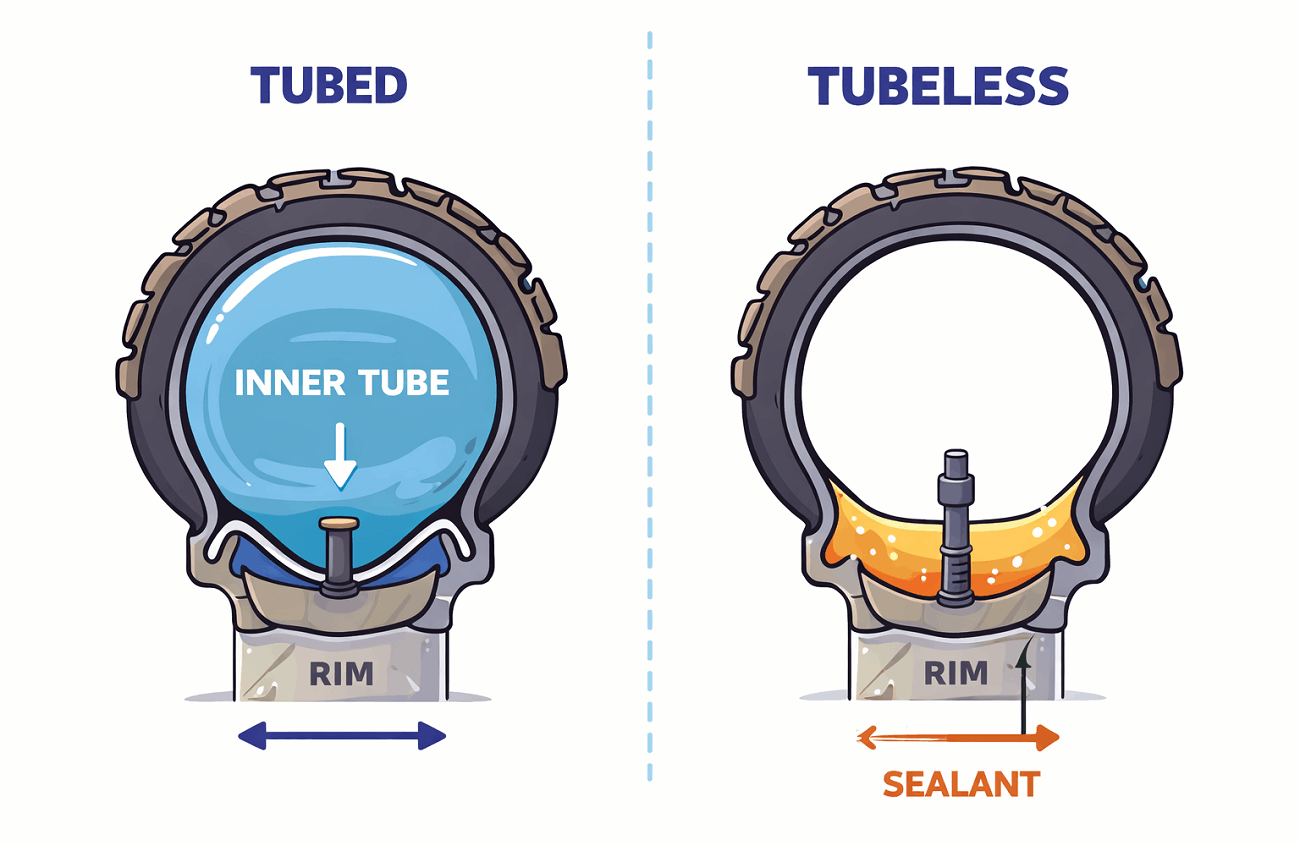
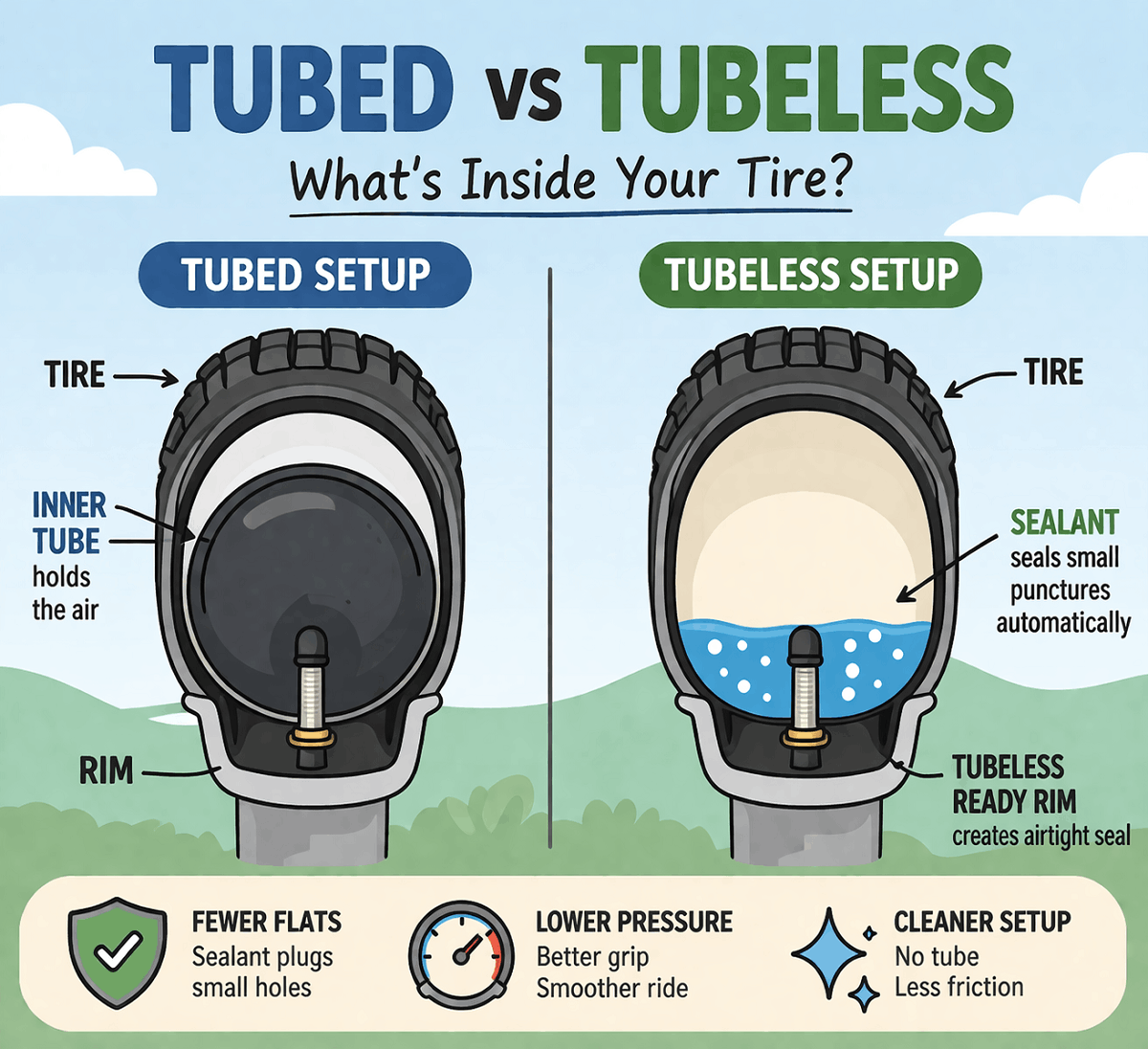
The difference is in how the tire holds air.
- Tubed setup: tire + inner tube inside it
- Tubeless setup: no tube, tire seals directly to the rim using sealant
That one change affects punctures, pressure, comfort, and maintenance.
What riding with tubes feels like
Tubes are what most riders start with.
You install them, inflate them, and ride. There is very little to think about.
On the road, they feel:
- Firm and direct
- Predictable at higher pressures
- Easy to manage if something goes wrong
If you get a puncture, you stop, swap the tube, and carry on.
There are no surprises, and no setup quirks.
This is why tubes still make sense for a lot of riders.
What riding tubeless feels like
Tubeless changes the feel of the bike more than most people expect.
The biggest difference comes from running lower pressures.
On the road, that translates to:
- More grip, especially in corners
- Less harshness over rough surfaces
- A smoother, more planted ride
You do not feel it as “soft.”
You feel it as less vibration and more control.
On rough tarmac or long rides, this becomes noticeable quite quickly.
Punctures and how they actually play out
This is where tubeless usually wins, but it is worth understanding why.
With tubes:
- Sharp objects cause immediate punctures
- You stop and fix it
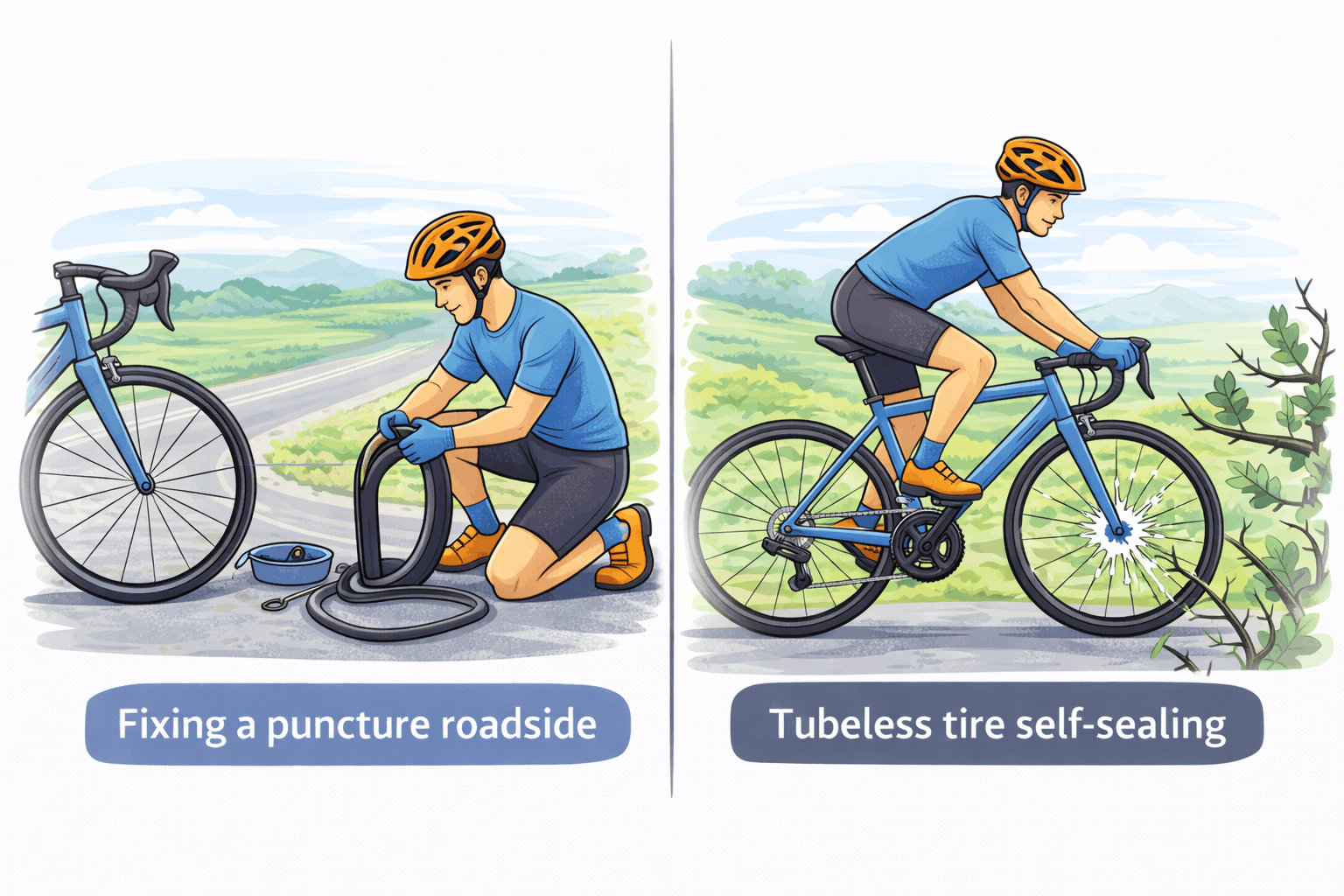
With tubeless:
- Small punctures often seal automatically
- You may not even notice it happened
This is the main advantage.
Most small punctures do not turn into stops at the side of the road.
However, not everything seals.
Larger cuts can still leave you stranded, and at that point, you are either plugging the tire or fitting a tube anyway.
Rolling resistance and speed
Tubeless setups generally have lower rolling resistance.
There is no inner tube rubbing inside the tire, which reduces friction.
Combined with lower pressures, this can make the bike feel faster, especially on imperfect road surfaces.
The difference is not dramatic, but it is there.
Over longer rides, it adds up.
Setup and maintenance
This is where the decision often gets made.
Tubes
- Quick to install
- Minimal maintenance
- Easy roadside fixes
Tubeless
- More effort to set up initially
- Requires sealant top-ups every few months
- Can be messy when things go wrong
Setting up tubeless for the first time can take a bit of patience.
Seating the tire, getting the seal right, and dealing with sealant is not difficult, but it is not as quick as installing a tube.
After that, maintenance is fairly light, but it is still there.
Pressure and comfort
This is one of the biggest practical differences.
With tubes, you tend to run higher pressures to avoid pinch flats.
With tubeless, you can safely run lower pressures.
The result is:
- Better comfort on rough roads
- More grip in corners
- Less fatigue over longer rides
This is one of the main reasons more road riders are switching to tubeless.
Weight differences
This is less important than people expect.
Tubeless setups remove the inner tube but add sealant and often slightly heavier tires.
In practice, the weight difference is small enough that it rarely matters on the road.
Where each setup starts to struggle
Tubes struggle when:
- roads are rough or debris-filled
- you get frequent punctures
Tubeless struggles when:
- you want zero maintenance
- you prefer simple roadside fixes
- setup issues become frustrating
Neither system is perfect. They just fail in different ways.
Who should stick with tubes?
- Riders who value simplicity
- Commuters and casual cyclists
- Anyone who wants easy, predictable maintenance
If you want something that just works without much thought, tubes are still a very solid choice.
Who should go tubeless?
- Riders doing longer distances
- Those riding rough or mixed-quality roads
- Anyone wanting better comfort and fewer puncture stops
If you are riding regularly and want fewer interruptions, tubeless starts to make a lot of sense.
Useful gear and setup tools
If you are still deciding on your setup, it is also worth reading tubular vs clincher vs tubeless tires and how long road bike tires last.
Our verdict
Tubes are simple, reliable, and easy to deal with.
Tubeless offers better comfort, fewer punctures, and a more refined ride.
If you ride occasionally or prefer simplicity, tubes are still the easier option.
If you ride regularly and want fewer interruptions and more comfort, tubeless is worth the switch.
The best choice comes down to how much you value convenience versus performance.

I’ve spent way more time in the bike trade than anyone should reasonably want to. In that time I’ve wanted to make cycling jargon and marketing easier to cut through to help people get the bike of their dreams.
When I’m not writing about bikes, I can be seen out bikepacking on single speed bikes or teaching kids how to ride.