
Keeping your chain running smoothly is one of the easiest ways to improve how your bike feels. Shift quality, drivetrain wear, noise, even how clean your bike stays, it all comes back to how you look after your chain.
That is where the choice between chain lube and chain wax comes in. Both do the same job on paper. Reduce friction and protect the drivetrain. In practice, they behave very differently.
Chain lube is simple and quick.
Chain wax is cleaner and more efficient.
The better option depends on how you ride, and how much effort you want to put into maintenance.
What is chain lube?
Chain lube is the traditional way of lubricating a bike chain.
You apply it directly to the chain, wipe off the excess, and you are ready to ride.
There are different types, but they all work in a similar way.
- Wet lube: better for rain and harsh conditions
- Dry lube: cleaner, better for dry weather
It is quick, accessible, and works in almost any situation.
What is chain wax?
Chain wax replaces traditional oil-based lubrication with a wax coating.
This can be done in two ways:
- Drip-on wax (applied like lube)
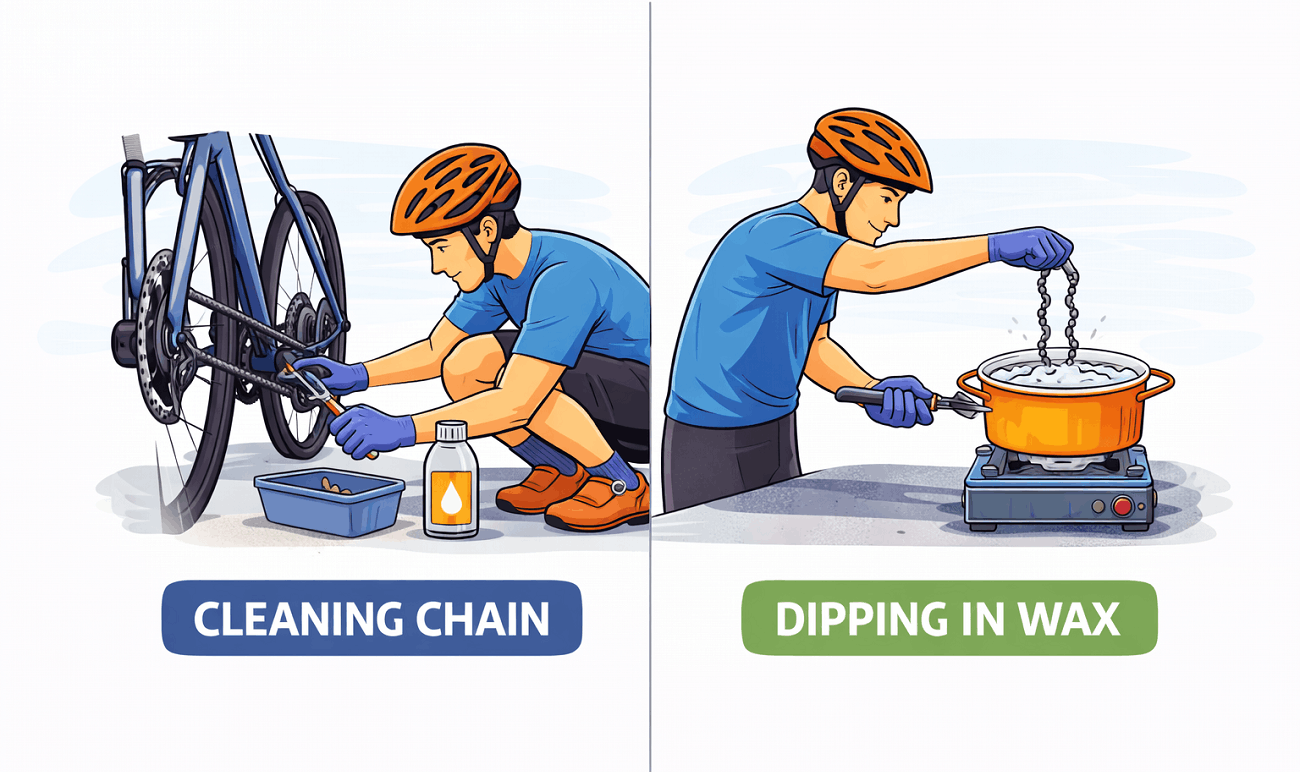
- Hot melt wax (chain is removed and dipped in melted wax)
The idea is to create a dry, clean layer that reduces friction without attracting dirt.
It takes more effort to set up, but the result is very different.
What you notice when riding
This is where the difference becomes clear.
With chain lube:
- The drivetrain feels smooth
- There is a slight oily feel to everything
- Dirt gradually builds up over time
With chain wax:
- The drivetrain feels dry and very quiet
- Shifting can feel slightly crisper
- The chain stays noticeably cleaner
On longer rides, wax tends to feel more consistent.
Lube can start clean but gradually picks up dirt, which changes how the drivetrain feels.
Cleanliness and maintenance
This is the biggest difference for most riders.
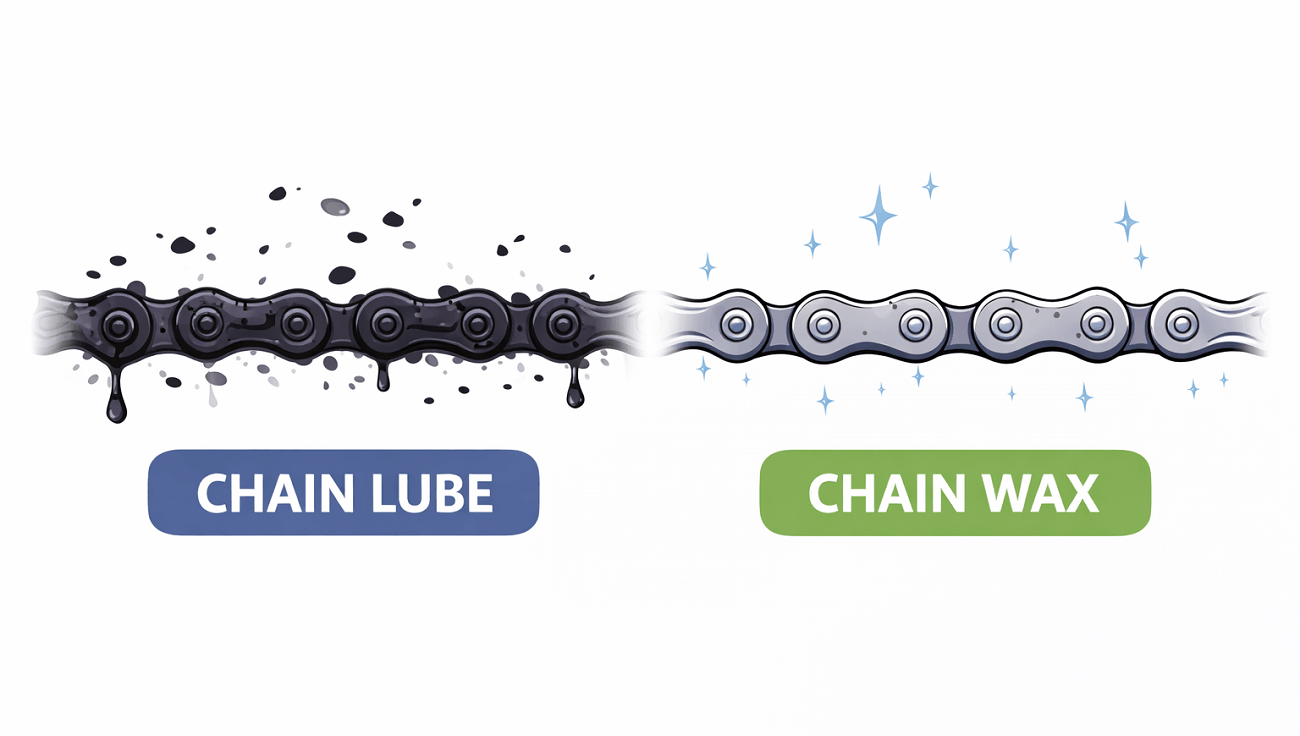
Chain lube attracts dirt.
That dirt mixes with oil and creates a black paste that builds up on your chain, cassette, and chainrings.
You end up cleaning your drivetrain more often.
Chain wax does the opposite.
It stays dry, so dirt does not stick in the same way.
The chain stays cleaner, and so does everything around it.
If you have ever ended up with black grease on your legs or hands, this is where wax makes a noticeable difference.
Longevity and wear
A cleaner drivetrain usually lasts longer.
With lube, dirt acts like a grinding paste over time, increasing wear on the chain and cassette.
With wax, there is less contamination, which can reduce wear.
This is one of the main reasons more performance-focused riders switch to wax.
It is not just about cleanliness. It is about keeping components in better condition.
Effort and setup
This is where chain lube still has a clear advantage.
Chain lube
- Quick to apply
- No special setup
- Easy to top up before a ride
Chain wax
- Requires a deep clean before first use
- Hot wax involves removing the chain
- Takes more time initially
The first wax setup is the hardest part.
You need to completely strip old grease from the chain, or the wax will not work properly.
After that, maintenance becomes easier and cleaner.
Performance differences
Chain wax generally has lower friction than traditional lube.
That means slightly better efficiency.
The difference is small, but over time it adds up, especially if you ride longer distances.
More importantly, wax maintains that performance longer because it does not get contaminated as quickly.
Weather and conditions
This is where lube still has an advantage.
Wet lube performs better in heavy rain and harsh conditions.
Wax can wear off faster in wet conditions, especially if not reapplied regularly.
If you ride in all weather, lube is often the more practical option.
If you ride mostly in dry conditions, wax works very well.
Where each system struggles
Chain lube struggles when:
- You want a clean drivetrain
- You ride in dusty or dirty conditions
- You want minimal long-term maintenance
Chain wax struggles when:
- You want a quick and simple solution
- You ride frequently in wet conditions
- You do not want to deal with initial setup
Both systems work. They just ask for different trade-offs.
Who should use chain lube?
- Riders who want simplicity
- Commuters and everyday cyclists
- Those riding in wet or unpredictable conditions
If you want something quick and reliable, lube is still hard to beat.
Who should use chain wax?
- Riders who want a cleaner drivetrain
- Those riding mostly in dry conditions
- Anyone willing to invest a bit more time upfront
If you care about cleanliness and long-term efficiency, wax is worth the effort.
Useful products
You can also check how often you should lube your chain and how to clean a bike chain to get the most out of either setup.
Our verdict
Chain lube is simple, flexible, and works in all conditions.
Chain wax is cleaner, more efficient, and better for long-term drivetrain health.
If you want convenience, go with lube.
If you want a cleaner, quieter, and more efficient system, wax is the better option.
The right choice depends on how much effort you want to put in, not just how you ride.

I’ve spent way more time in the bike trade than anyone should reasonably want to. In that time I’ve wanted to make cycling jargon and marketing easier to cut through to help people get the bike of their dreams.
When I’m not writing about bikes, I can be seen out bikepacking on single speed bikes or teaching kids how to ride.