Choosing road cycling shoes is less about finding the stiffest sole or the most expensive closure and more about getting a shoe that holds your foot securely for the kind of riding you actually do. The right pair should improve your connection to the pedals without creating numb toes, heel movement or a daily battle with the fastening system.
For most riders, a comfortable mid-priced shoe with moderate stiffness, dependable adjustment and the correct cleat interface is the safest starting point. Race-level carbon soles and multiple dials can be useful, but they are easy features to overbuy. Fit, pedal compatibility and walkability matter sooner and more often.
Assumes you can already balance and pedal. Covers cycling-specific footwear rather than learning to ride or diagnosing persistent foot, knee or ankle pain. If a shoe or cleat setup causes ongoing pain, get help from a qualified bike fitter or healthcare professional rather than trying to out-stubborn your feet.
What road cycling shoes are designed to do
Road cycling shoes give your feet a more secure and consistent platform than ordinary trainers. Their uppers hold the heel and midfoot in place, while the sole spreads pressure across the foot and supports the connection between you, the cleat and the pedal.
That interface matters most when you are pedaling for a long time, riding hard, or using clipless pedals that mechanically retain the shoe. A trainer has a flexible sole designed for walking. That is useful in a shop or cafe, but it allows more foot movement and flexes under the pedal. Road shoes trade some walking comfort for a stable position on the bike.
A stiff sole does not automatically make you faster. It can reduce the amount your foot bends, make hard efforts feel more direct and keep your foot position more consistent, but the difference becomes less important if you are riding gently, using flat pedals or still working out your basic setup. A very stiff shoe cannot rescue poor fit. It can, however, make every pressure point more obvious.
The central choice is therefore performance versus everyday usefulness. Race-focused shoes are usually light, close-fitting and stiff, but they tend to be less pleasant to walk in and more expensive to replace. Training and sportive shoes normally give up some weight and maximum stiffness for a more forgiving upper, easier adjustment and better comfort over several hours.
For most cyclists, the sensible default is a moderately stiff, well-ventilated shoe with a reliable closure and a compatible three-bolt cleat. If you commute, tour, ride mixed surfaces or spend much of the day walking, a recessed two-bolt shoe is usually the better choice; classic road shoes are awkward on foot and their exposed cleats wear quickly on hard surfaces.
Start with the fit: the most important specification
Fit is the specification that matters most. A correctly sized mid-priced shoe is a better buy than an expensive model that lets your heel lift or squeezes your forefoot. The shoe should hold your heel and midfoot firmly while allowing your toes to rest naturally rather than forcing them into a cramped, race-style point.
Start with length. Your toes should not hit the front of the shoe when you are standing or pedaling, and they should not be pressed together by the toe box. You need enough room for normal foot swelling during a longer ride, but not so much space that your foot slides forward when you apply force.
Width and shape are just as important. Some shoes suit narrow feet, while others are available in standard, wide or high-volume versions. A wide shoe is not simply a larger shoe in every direction; it may give your forefoot more room while retaining the correct length. Look at the brand’s size chart, but treat it as a starting point. Sizing varies between brands and even between models from the same brand.
Try shoes on in the socks you expect to ride in, preferably later in the day when your feet may be slightly larger. Fasten the shoes as you would on the bike, then check three things: your heel should not lift excessively, your midfoot should feel secure, and your toes should still have room to move slightly. A locked-down shoe is useful. A foot-shaped clamp is not.
Closure tension should spread pressure rather than create one tight spot. A strap, lace or dial should secure the shoe without crushing the top of your foot. If loosening the closure immediately improves numbness, the shoe may be too narrow or poorly shaped rather than simply insufficiently adjusted.
Some initial stiffness is normal, particularly with a firm sole or structured upper. Persistent hot spots, pressure, tingling or numbness are not features you need to break in. They usually point to a poor fit, excessive tightening or a cleat and foot position that needs adjustment. Do not buy a smaller size because it looks more professional in the mirror; your feet have no interest in podium aesthetics.
Finally, check the retailer’s return policy before buying online. Cleat mounting can mark or complicate a return, so establish the basic fit indoors before installing anything. If the heel moves or the forefoot feels compressed from the first few minutes, choose a different size, width or model rather than hoping several rides will negotiate a peace treaty.
Road cleat systems and pedal compatibility
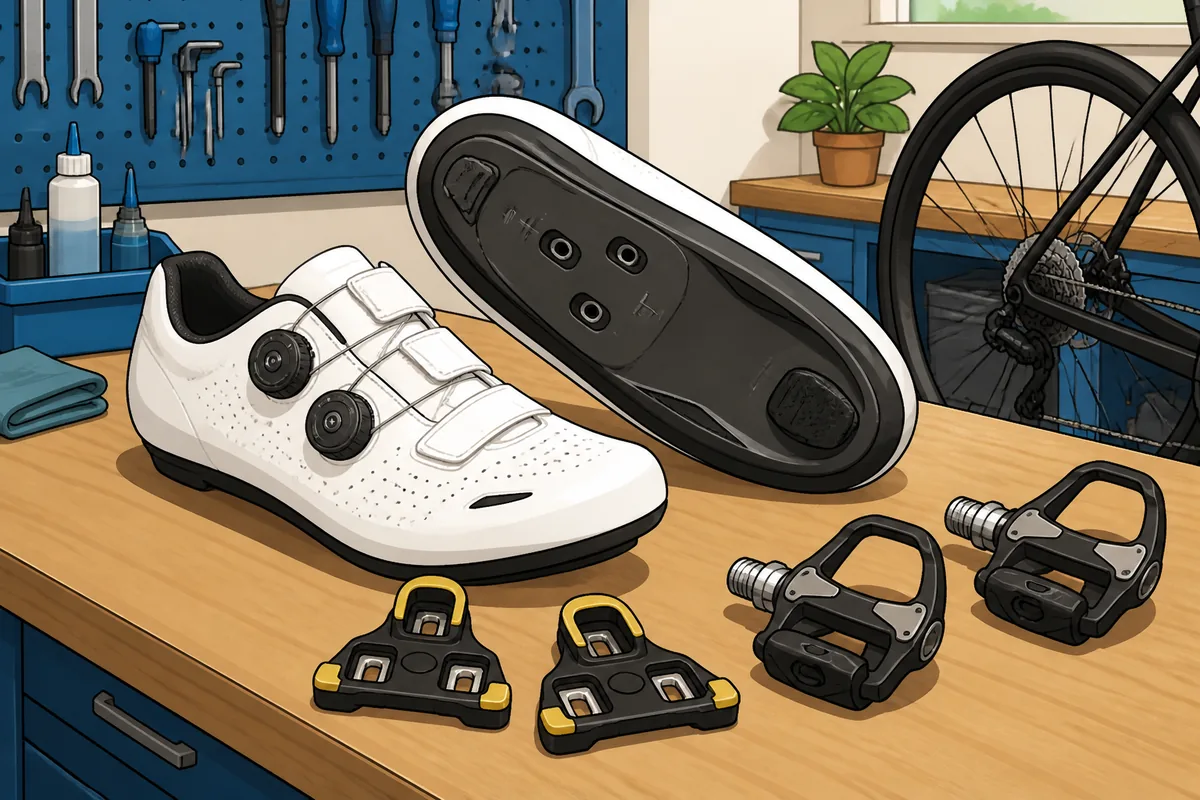
The cleat must match the pedal system, not simply the shoe brand. Many road shoes use a three-bolt mounting pattern, but that does not make every three-bolt cleat interchangeable. Shimano SPD-SL and Look Keo are separate systems, while Wahoo Speedplay uses its own pedal-and-cleat interface and may require a specific mounting arrangement.
Three-bolt road cleats generally offer a broad connection with the pedal and suit riders who spend most of their time riding rather than walking. The drawback is practical: the cleat sits exposed beneath the shoe, making hard-surface walking awkward and accelerating cleat wear.
Two-bolt SPD-style shoes use a smaller recessed cleat. They are normally easier to walk in and are common for commuting, touring, indoor riding and mixed-surface use. The shoe and pedal combination may feel less road-specific, but that is a poor reason to reject it if your journey includes stairs, errands or rougher paths.
Float is the small amount of rotational movement allowed while the cleat remains engaged. Floating cleats can feel less restrictive, while fixed cleats hold the foot more rigidly. Float is a positioning preference, not an automatic solution to discomfort. Cleat placement should suit your natural foot angle and the shoe’s shape.
If a cleat setup causes persistent discomfort, make small changes and seek help from a qualified fitter or healthcare professional rather than making large adjustments at random. Your pedal system also determines which replacement cleats you need, and cleats are commonly sold separately.
| System type | Practical tradeoff |
|---|---|
| Shimano SPD-SL, three-bolt road | Broad road-pedal platform and common shoe compatibility; cleat float varies by cleat version, while the exposed cleat is awkward to walk on. |
| Look Keo, three-bolt road | Road-focused interface with cleat options offering different float levels; confirm that the exact Keo cleat matches the pedal model. |
| Wahoo Speedplay | Distinct pedal-and-cleat system with adjustment possibilities; check the shoe mounting arrangement and follow the manufacturer’s installation guidance. |
| Two-bolt SPD-style | Recessed cleat and much better walkability, usually with a less road-focused platform and different shoe compatibility from three-bolt systems. |
Sole stiffness: what you gain and what you do not
Entry-level road shoes commonly use nylon or composite soles. More expensive models may add carbon reinforcement or use a full-carbon sole. These materials affect stiffness, weight and manufacturing cost, but the material name alone does not tell you whether the shoe is right for your riding.
A stiffer sole bends less under force. You may notice a more direct pedal feel during sprints, climbs or high-power efforts, and some riders prefer the support it gives over a long ride. The gains are less obvious for easy training, casual riding or indoor sessions where comfort and ventilation are more important.
Very stiff soles also make walking less forgiving and can expose poor fit or cleat alignment more clearly. Most training and sportive riders should start with moderate stiffness. Higher stiffness makes sense when you race, sprint regularly or specifically value a firm, direct connection to the pedal.
Maximum stiffness is not automatically better. Choose a sole that supports your riding while remaining comfortable enough that you keep using the shoes. A superbike-level sole attached to an unwearable upper is still a bad purchase.
Closures, ventilation and weather protection
BOA-style dials offer quick, even adjustment and are useful when you want to fine-tune tension during a ride. They can add cost and may be expensive to replace, so check whether the dial and cable are serviceable. Hook-and-loop straps are simple, light and easy to replace, while laces give a familiar fit but are less convenient to adjust once you are moving. Many shoes combine a dial with a strap or lace section.
The best closure is the one that holds your foot without creating pressure points. More dials do not automatically mean a better fit; they simply give you more adjustment. Beginners often pay for closure complexity when they would benefit more from a wider or better-shaped shoe.
Mesh and open synthetic uppers suit hot-weather riding and indoor training, where ventilation is valuable. More enclosed synthetic leather or knit uppers are usually more versatile in cool conditions, although no ordinary road shoe is a substitute for proper wet-weather protection.
For seasonal use, overshoes or toe covers are often more sensible than buying heavily insulated road shoes. They let you keep a ventilated shoe for warm weather while adding protection when temperatures fall. Look for replaceable dials, straps and heel pads if long-term serviceability matters.
Road shoe types for different riders
Race shoes are light, stiff and closely fitted, but they are usually poor companions for cafe stops, train platforms and any surface designed by someone who dislikes cyclists. Choose them when racing or hard efforts are a genuine priority, not because the label sounds impressive.
Endurance and sportive shoes are the safer default for most road riders. They generally combine a supportive sole with a more forgiving upper, useful adjustment and enough comfort for several hours in the saddle.
Entry-level road shoes also make sense for a first clipless setup, provided the fit is right. You do not need a premium carbon sole to learn how to clip in, unclip and pedal smoothly. An uncomplicated shoe can be preferable while you are still developing that muscle memory.
For indoor riding, ventilation and easy adjustment matter more than weather protection or aerodynamic detailing. A highly ventilated upper can be useful when the room is warm and there is no road-speed airflow to cool you. There is little value in paying extra for features that will spend their entire life beside a fan.
Commuters and touring riders should look closely at recessed-cleat shoes with durable walking soles. If you regularly walk in your cycling shoes, two-bolt SPD-compatible shoes are usually the practical choice. See our MTB shoes vs road shoes comparison for the broader distinction between road-focused and walkable designs.
| Rider or use case | Best starting specification |
|---|---|
| First clipless setup | Comfortable entry-level shoe, moderate stiffness, simple adjustable closure and cleat pattern matching the pedals already fitted. |
| Everyday road training | Supportive endurance shoe with secure heel retention, useful ventilation and replaceable closure or heel components. |
| Long-distance sportives | Roomier toe box, forgiving upper, moderate-to-firm sole and enough adjustment to manage changing foot volume over several hours. |
| Racing and frequent hard efforts | Stiffer, lighter shoe with a close but not cramped fit and a closure that allows precise tension changes. |
| Indoor riding | Highly ventilated upper, easy adjustment and compatibility with the trainer’s pedal system; weather protection is largely wasted. |
| Mixed riding and frequent walking | Two-bolt SPD-compatible shoe with recessed cleats, durable tread and a sole that remains manageable off the bike. |
How much should you spend on road cycling shoes?
Spend first on fit, not the model number. A correctly sized mid-priced shoe with good heel retention is a better buy than an expensive shoe that squeezes your forefoot or leaves your heel moving on every hard pedal stroke.
As prices rise, you may get a lighter shoe, a more sophisticated closure, a stiffer sole, better finishing and more replaceable parts. Those improvements can be worthwhile for racers or riders who are particularly sensitive to foot support. They are not automatically worthwhile for casual training, occasional sportives or a few weekly sessions on an indoor bike.
Beginners commonly overbuy race-level stiffness, ultra-light uppers and multiple BOA-style dials. Very cheap shoes can have the opposite problem: weak heel retention, rough uppers, fragile straps and soles that flex noticeably under harder efforts. Models such as Shimano RC-series shoes and Specialized Torch road shoes are worth comparing by fit and intended use, without assuming the more expensive version is automatically the sensible one.
The value-first order is simple: correct width and length, secure closure, compatible cleat interface, adequate ventilation, then sole material and weight. If the shoe meets those needs, you can stop upgrading. A carbon sole is not a loyalty test.
Buying checklist and first setup
- What will you do most often: road training, racing, commuting, indoor riding or mixed-surface trips?
- Which pedal system is already on the bike?
- Does the shoe come in a suitable width and volume?
- Is there room for your toes without allowing the foot to slide?
- Does the heel stay secure without excessive tightening?
- Can the closure make useful small adjustments?
- Is the sole stiff enough for your use without making walking needlessly awkward?
- Does the ventilation suit your climate and indoor or outdoor riding?
- Are the cleats included, or must you buy a compatible set separately?
- Does the retailer offer a sensible return policy?
Install cleats carefully and tighten them to the shoe or cleat manufacturer’s stated specification. Start with a neutral position, make small changes and record what you moved. Moving the cleat, saddle and handlebar all at once is an excellent way to create a mystery and then blame the shoes.
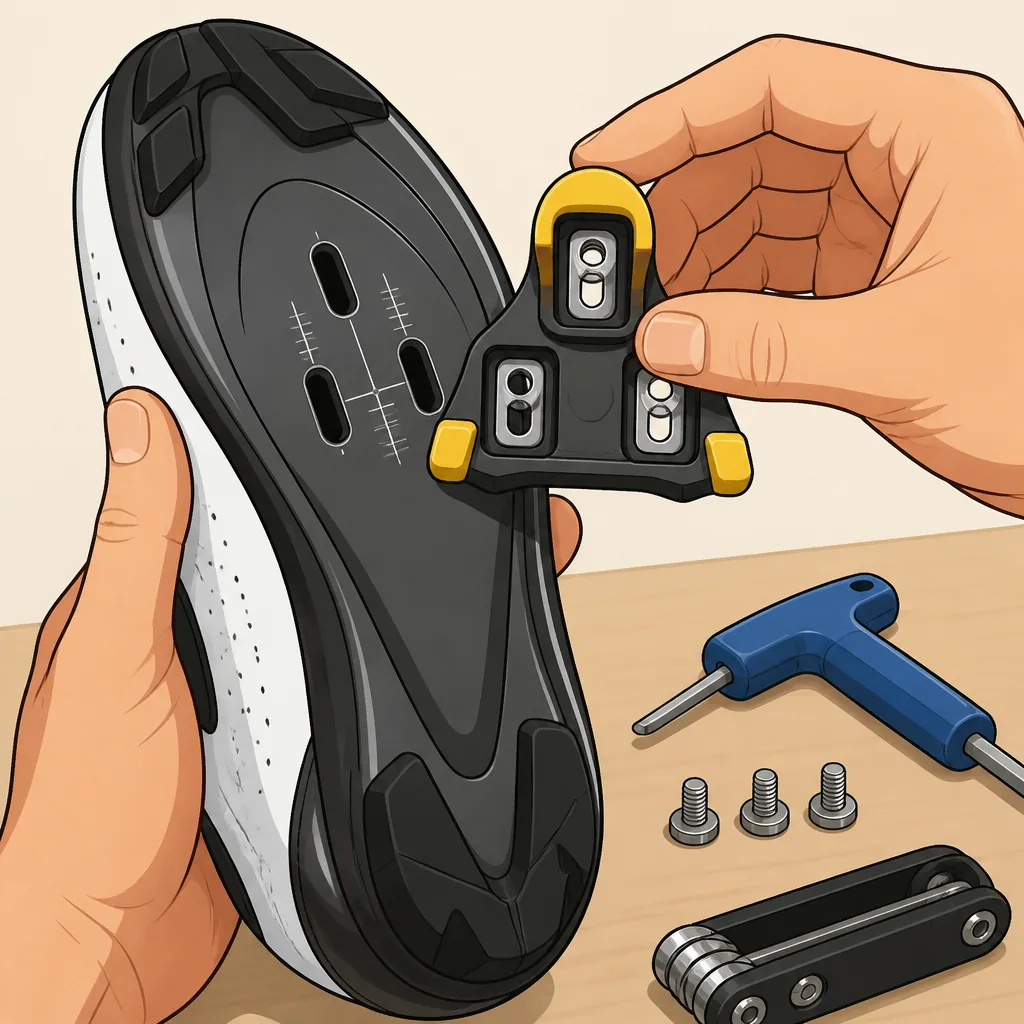
Test the shoes indoors before committing to a long ride. Check that you can engage and release the pedals cleanly, that the heel remains stable and that no pressure builds under the toes or ball of the foot. Persistent pain, numbness or a problem that does not settle with sensible adjustment deserves help from a qualified bike fitter or healthcare professional.
After riding, loosen the closures, remove excess dirt and let the shoes dry naturally. Avoid radiators and other intense heat, which can damage adhesives and materials. Replace worn cleats and heel pads before engagement becomes unreliable or the shoe becomes unstable when walking.
Frequently asked questions
Do road cycling shoes come with cleats?
Usually not. Check the product listing and buy cleats that match your pedals and the shoe’s mounting pattern. A three-bolt shoe does not tell you whether you need Shimano SPD-SL, Look Keo or another system.
Can you walk in road cycling shoes?
You can, but exposed three-bolt cleats are awkward and wear quickly on hard surfaces. If walking is part of the normal journey rather than an occasional cafe stop, recessed-cleat shoes are usually the better purchase.
Are carbon-soled road cycling shoes worth it?
They can make sense for racers and riders who value low weight and a direct pedal feel, but fit and cleat setup matter more for most cyclists. Do not pay for a carbon sole if a more comfortable shoe is the one you will actually use.
The sensible starting point
For most buyers, choose a comfortable mid-priced road shoe with moderate stiffness, reliable adjustment and the cleat pattern that matches the pedals already on your bike. Get the width and toe room right, confirm the return policy, and spend extra only when a specific feature solves a real problem in your riding. That approach is faster, cheaper and considerably less painful than upgrading your way out of the wrong fit.

I’ve spent way more time in the bike trade than anyone should reasonably want to. In that time I’ve wanted to make cycling jargon and marketing easier to cut through to help people get the bike of their dreams.
When I’m not writing about bikes, I can be seen out bikepacking on single speed bikes or teaching kids how to ride.