Yes, you can usually ride an electric bike without the battery. The motor stops providing assistance, but the pedals, chain and drivetrain can still turn the rear wheel. In practice, you are riding a heavy bicycle rather than a lightweight conventional bike.
That makes battery-free riding useful as a backup for a short, flat trip or a dead-battery emergency. It is not a way to turn a cargo e-bike into a nimble commuter. Most of the motor, frame reinforcement and other e-bike hardware remain attached.
Covers riding with the battery removed or depleted – not repairing a damaged battery or converting an e-bike.
Yes, You Can Usually Ride an E-Bike Without the Battery
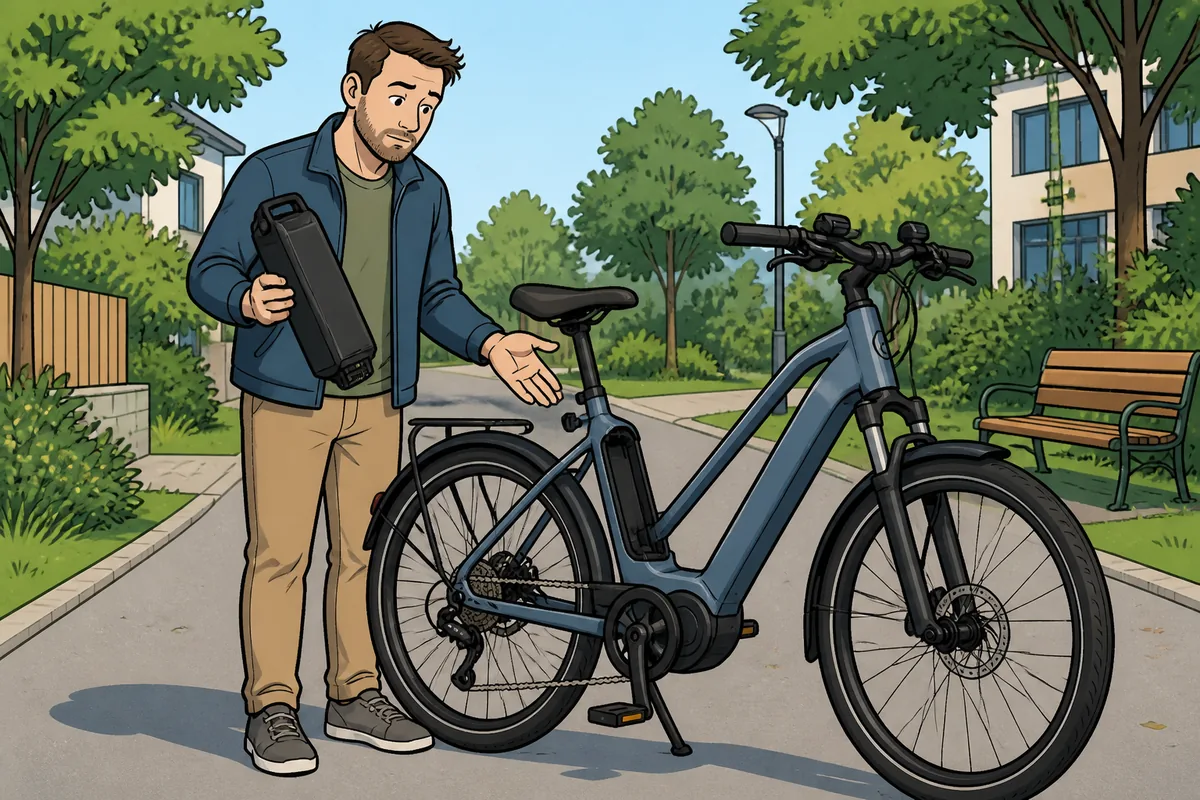
On most e-bikes, removing the battery does not disconnect the mechanical parts that drive the rear wheel. You can still turn the cranks, move the chain and propel the bike. If the battery has simply run flat, the assistance cuts out but the bicycle remains rideable.
There are two different situations:
- Dead battery: the battery remains mounted, so the bike keeps its normal weight and balance. The display and motor may shut down, but the mechanical drivetrain continues to work.
- Battery removed: you lose the battery’s weight, but the motor, wiring, controller, reinforced frame and e-bike wheels stay on the bike.
The safest starting answer is yes, provided the bike is mechanically sound and the system is designed to allow it. Follow the owner’s manual if your bike has an unusual electrical interlock or a system-specific removal procedure. Do not bypass a safety feature.
Never ride with exposed, damaged or unsecured electrical connectors. If removing the battery leaves a mount, cover or latch vulnerable to water and debris, use the manufacturer’s supplied protection or avoid riding until the compartment is secured.
What Changes When the Battery Is Off the Bike?
Removing the battery makes the e-bike lighter, but usually not light. A battery may weigh roughly 2-4 kg, depending on its capacity and design. That is useful when lifting the bike onto a rack or carrying it upstairs, but the motor, stronger frame, larger wheels, suspension components and wide tires remain.
The handling may change slightly, particularly on a bike with a rear-rack battery, because the weight distribution becomes less rear-heavy. It will not turn a 25 kg commuter into a lightweight road bike.
Gearing matters more
When the motor is helping, you can sometimes get away with using a less-than-ideal gear. Without assistance, every climb and acceleration depends on your legs. A genuinely low climbing gear matters more than a large number printed in the specification sheet.
A wide-range cassette or derailleur setup makes starting, hills and headwinds more manageable. Select an easier gear before stopping, too. Starting in a high gear puts unnecessary strain on your knees, chain and patience.
Motor drag varies by design
Some e-bike motors allow the drivetrain to turn with little extra resistance when unpowered. Others create noticeable drag. The exact feel depends on the motor design, internal gearing and whether the motor or hub uses a freewheel mechanism.
Hub motors and mid-drive motors do not behave identically. A hub motor sits in the wheel, while a mid-drive motor sits around the crank area and can affect how the drivetrain feels when you pedal. Some systems freewheel smoothly; others make you aware that you are turning more hardware than on a standard bicycle.
Expect more effort than the battery weight alone suggests. A short flat ride may be reasonable, while a long, hilly journey can become unpleasant quickly.
| Situation | Practical expectation |
|---|---|
| Battery is completely dead | The bike will usually pedal as a heavy bicycle, but there is no motor assistance. |
| Battery is physically removed | The bike is slightly lighter, but the motor and most e-bike hardware remain. |
| Short, flat route | Often manageable with sensible gearing and a rider comfortable with the bike’s weight. |
| Steep or long route | Expect substantially more effort, especially when starting and climbing. |
| Heavy cargo or fat-tire e-bike | Battery-free riding can become tiring quickly because of weight and tire drag. |
When Riding Without the Battery Makes Sense
Battery-free riding is a useful fallback in a few specific situations:
- A short flat journey: You may need to get home while the battery charges or may have left it at home.
- Transporting the bike: Removing the battery reduces lifting weight and keeps an expensive pack separate from knocks and awkward loading angles.
- A battery running out during a ride: If the bike is otherwise working correctly, you can continue under your own power.
- Occasional conventional cycling: Riders with suitable gearing and routes can use an e-bike without assistance from time to time.
The firm default is to treat this as a backup option, not as a reason to buy a bike with a poorly matched motor or battery. If you expect to ride without assistance regularly, choose manageable weight, useful low gearing and a motor system that pedals acceptably when unpowered.
When You Should Not Plan to Ride It Without the Battery
Do not make battery-free riding your regular plan for steep, long or heavily loaded routes unless you have already confirmed that the bike is comfortable to pedal unassisted.
Cargo e-bikes are the obvious example. They are built around stability and carrying capacity rather than low weight. Add children, shopping or work equipment and the effort rises quickly. Fat-tire e-bikes and heavy full-suspension models are also poor choices for routine unassisted riding.
If ordinary cycling already causes pain, unusual breathlessness or chest symptoms, do not push through a difficult ride. Stop and seek appropriate medical advice. A dead battery is inconvenient; it is not a fitness test.
Also separate a flat battery from a damaged one. A battery that is swollen, cracked, wet, unusually hot or otherwise damaged should not be used or transported casually. Do not open it or attempt to diagnose the cells yourself. The CPSC’s micromobility battery safety guidance covers precautions around damaged batteries, charging and storage.
How to Ride and Store the E-Bike Safely Without Its Battery
Switch the system off before removing the battery. Follow the removal instructions for your particular bike and motor. Bosch eBike Systems, for example, provides model-specific information through its manuals and safety information. A Shimano STEPS battery or Bosch PowerPack may use a different mount, lock or cover.
If the manufacturer supplies a protective cover or plug for the empty battery mount, fit it. Keep the mount and electrical contacts clean and dry, and do not spray water directly into the compartment. Make sure the latch, cover and remaining connectors are secure before riding.
When transporting the bike, secure the battery separately so it cannot bounce around or fall. Store and charge it with the manufacturer’s instructions and an appropriate charger.
For an unassisted ride, start in an easy gear, accelerate gently and avoid forcing a high gear up a climb. Try a short, flat route first. That tells you more about the bike’s weight, gearing and motor resistance than a specification sheet can.
Frequently Asked Questions
Can you ride an electric bike without the battery?
Usually yes. The bike can be pedaled like a heavy bicycle, but the motor will not assist and some systems may add noticeable resistance.
Is it better to remove the e-bike battery when riding?
Only when you need to reduce carrying weight or protect the battery during transport. Removing it does not remove the motor or most of the bike’s extra weight.
Will riding an e-bike without the battery damage the motor?
Normal unpowered pedaling should not damage a properly designed system. Follow the bike and motor manufacturer’s instructions, and do not ride with damaged electrical parts or exposed connectors.
Is an e-bike harder to pedal with the battery removed?
Usually yes. The motor and reinforced components remain, and the effect depends on total weight, gearing, motor design and terrain.
Can you ride an e-bike with a completely dead battery?
Generally yes, provided the bike is mechanically sound. Expect no assistance and more effort on hills and during starts.
Use battery-free riding for short, suitable trips, transport and emergencies. For long, steep or loaded rides, use the battery and assistance system the bike was built around.

I’ve spent way more time in the bike trade than anyone should reasonably want to. In that time I’ve wanted to make cycling jargon and marketing easier to cut through to help people get the bike of their dreams.
When I’m not writing about bikes, I can be seen out bikepacking on single speed bikes or teaching kids how to ride.