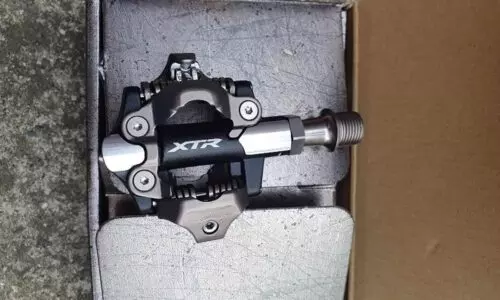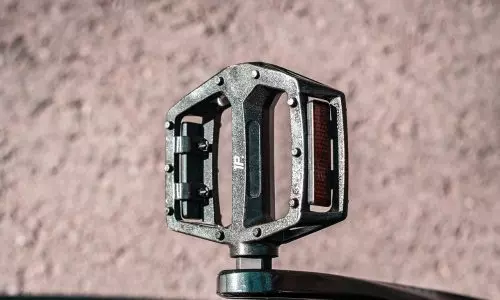
Pick the cleat that matches your pedals and how much you walk – not the “best” brand overall:
- Shimano SPD – MTB, gravel, commute, touring; two-bolt and usually walkable.
- Shimano SPD-SL – road training and racing; three-bolt, poor for walking.
- Look KEO (or Look Delta if that is what your pedals use) – road-focused three-bolt; do not mix KEO and Delta.
A Shimano SPD cleat will not clip into an SPD-SL pedal. Identify the pedal system first, decide how much walking you will do, then buy matching shoes and cleats. For platform, toe-clip and clipless pedals more broadly, see types of pedals.
Quick chooser: main cleat types compared
The systems below are the names most riders will encounter. They overlap in purpose, but they do not overlap reliably in compatibility. Treat the name printed on the pedal or cleat as a specification, not as a general category.
| Cleat system | Best suited to |
|---|---|
| Shimano SPD Two-bolt; generally walkable |
Mountain biking, gravel, commuting, touring and mixed-surface riding. Compact metal cleats work with recessed shoe soles and are usually manageable on foot. The exact cleat variant must still match the pedal. |
| Shimano SPD-SL Three-bolt; poor for walking |
Paved-road training and racing. The broad plastic cleat gives a stable road interface, but repeated walking causes rapid wear and the shoes are awkward away from the bike. |
| Look KEO Three-bolt; poor for walking |
Road riding where the bike already uses Look KEO pedals. Available with different float options, but KEO cleats are not automatically compatible with Look Delta pedals. |
| Look Delta Three-bolt; poor for walking |
Bikes fitted with the Delta standard. It is a separate compatibility category from KEO, so match the cleat to the exact pedal model rather than buying by appearance or price. |
| Speedplay-compatible Four-bolt, or three-bolt adapter; poor for walking |
Road riders who value dual-sided entry on compatible pedals and adjustable float. The cleat mechanism needs accurate installation and protection from dirt. |
| Crankbrothers Usually two-bolt; walkability depends on the shoe |
Riders using Eggbeater, Candy, Mallet and related pedals. The proprietary cleat offers specific release-angle and float choices, but it is not interchangeable with every other two-bolt system. |
What a cycling cleat does
A cleat is the small fitting bolted to the sole of a cycling shoe. It locks into a matching pedal mechanism, holding your foot in a consistent position while you pedal. When you twist your heel far enough, the cleat releases from the pedal so you can put your foot down.
That connection gives you repeatable foot placement and retention. You are less likely to slide off a pedal over rough ground or during a hard effort, and the relationship between your shoe and pedal stays much more consistent than with a flat pedal. It does not automatically make you faster, though. The main benefit for most riders is control and consistency, not free watts from the cycling gods.
The important word is matching. Cleats are not universal, even when they look similar. The pedal body, cleat shape, release mechanism and the way the cleat bolts to the shoe all need to agree. Shimano SPD and Shimano SPD-SL are separate systems. Look KEO and Look Delta are separate systems. A two-bolt shoe is not compatible with every two-bolt cleat, either.
Most cycling shoes use one of two common mounting arrangements:
- Two-bolt mounting: usually found on mountain-bike, gravel, touring and commuting shoes. The cleat is commonly recessed into the sole, making it easier to walk.
- Three-bolt mounting: common on road shoes. The larger cleat sits on the outside of the sole and provides a broad, stable interface, but walking is clumsy and wears the cleat quickly.
Some systems use four-bolt mounting or an adapter. Speedplay-compatible cleats are the obvious example, while certain shoes can accept more than one standard. Do not assume that visible bolt holes tell the whole story: the pedal manufacturer still decides which cleat shape and mechanism are compatible.
Clipless pedals also introduce a learning curve. You need to practice twisting your heel to release before you are forced to do it at a junction, on a cambered road or when stopping unexpectedly. The safest buying default is to choose the pedal system first, then buy shoes that accept its cleat pattern. If your bike already has pedals fitted, replacing only the matching cleats is usually much cheaper than changing the entire pedal, shoe and cleat setup.
Shimano SPD is the usual starting point when walking matters. The recessed two-bolt arrangement suits a walkable mountain-bike or gravel shoe, and the small metal cleat is less vulnerable to ordinary foot traffic than a large road cleat. Mud clearance and entry feel still vary with the pedal design, so “SPD” does not make every pedal identical.
Shimano SPD-SL and Look KEO are road-focused three-bolt systems. They make most sense when you spend nearly all of your ride on paved roads and do not need to walk far. Shimano’s yellow, blue and red SPD-SL cleats differ in float and pivot behavior; Look also uses color coding for its float options. Those colors are manufacturer-specific. A yellow cleat from one brand does not carry a universal amount of float.

Look Delta deserves particular caution because it is often confused with KEO. The names may appear beside similar-looking road pedals, but they are separate standards. If your bike has Look pedals, check the exact model and buy the matching cleat. Saving a few pounds on a visually similar replacement can leave you with a decorative paperweight.
Speedplay-compatible cleats use a four-bolt shoe interface, although an adapter can allow installation on some three-bolt road shoes. Their appeal is the pedal’s dual-sided entry on many models and the ability to adjust float. Crankbrothers cleats are commonly used with two-bolt shoes and pedals such as Eggbeater, Candy and Mallet, but their shape and release behavior are proprietary.
These systems can be excellent choices when their particular entry or float characteristics matter. They are less sensible as impulse purchases if replacement cleats are difficult to find locally or you are not prepared to check the exact pedal model. Compatibility should win over brand loyalty, claimed efficiency or a small difference on the scales.
Shimano SPD cleats: the practical two-bolt option
Shimano SPD cleats use a recessed two-bolt mounting pattern. The cleat sits inside the tread of a compatible mountain-bike, gravel, touring or commuting shoe, so you can walk with something resembling a normal stride. That is the main reason SPD remains the sensible default for many riders.
The small metal cleat is generally durable and copes better with occasional contact with the ground than a large plastic road cleat. It also sheds mud reasonably well, although the actual clearance depends on the shoe sole and pedal design.
Shimano offers different SPD cleat behaviors. Single-release cleats are intended to release through the usual outward heel movement. Multi-release versions can release through more than one movement, depending on the pedal and the force applied. Check the exact pedal documentation rather than assuming that every SPD pedal treats every SPD cleat identically.
Release tension is adjusted at the pedal. For a new rider, starting with lower tension usually makes learning easier. You should still practice unclipping deliberately before riding in traffic, and increase tension later only if the cleat is releasing accidentally.
Our default judgment: Shimano SPD with a walkable two-bolt shoe is usually the safest starting point for beginners, commuters, touring riders and cyclists who mix pavement with gravel or rough paths.
An SPD shoe will not fit an SPD-SL pedal simply because both products carry Shimano branding. SPD and SPD-SL are separate systems with different cleats, shoe patterns and pedal mechanisms.
Shimano SPD-SL cleats: the road-focused three-bolt choice
SPD-SL uses a broad three-bolt road cleat. The larger interface gives the shoe a stable connection with the pedal, while the road shoe usually has a stiff sole and little provision for comfortable walking. This setup makes sense when most of your time is spent riding paved roads rather than crossing cafes, stations and muddy car parks.
Shimano’s common SPD-SL cleats are color coded. Yellow cleats, such as Shimano SM-SH11, allow more float than blue or red alternatives. Float is the controlled angular movement of your foot while the cleat remains engaged. The different versions also alter how the cleat pivots and releases.
Those colors are not universal industry standards. A yellow cleat from another brand does not automatically provide the same float as a yellow Shimano cleat. Always check the current manufacturer’s specifications before ordering a replacement.
The broad plastic cleat can feel secure and stable on the road, but it is not designed for repeated walking. Contact with asphalt wears the engagement edges and can make clipping in or releasing less predictable. Cleat covers reduce some of that damage, but they do not turn road shoes into sensible walking shoes.
Choose SPD-SL when you already have SPD-SL pedals, ride mainly on the road and rarely need to walk any distance in your cycling shoes. Replacement cleats are widely available, but you still need the correct cleat family and the correct three-bolt shoe arrangement.
Look KEO and Look Delta cleats
Look KEO is a current road-oriented system using a three-bolt shoe interface. Its cleats are available with different float options, and the exact color meaning depends on the Look cleat range. More float allows more angular movement before the release point, but it cannot compensate for a cleat that is badly positioned or a shoe that does not fit your foot.
Look Delta is a separate compatibility category. It may look broadly similar to other three-bolt road cleats, but Look Delta and Look KEO should not be treated as interchangeable. A KEO cleat is not a safe substitute for a Delta cleat merely because both are made by Look.
Both systems are road focused and poor for walking. Their broad plastic cleats can become slippery on hard floors, and repeated walking wears the contact surfaces. If the bike already has Look pedals, buy the exact matching Look standard for that pedal model.
Before ordering, check the pedal model, the cleat name and the manufacturer’s current compatibility information. Model-year naming and retailer listings can be confusing, while replacement availability varies by region.
Speedplay and Crankbrothers cleat systems
Speedplay-compatible cleats use a four-bolt road system. They can mount directly to shoes designed for four bolts or through an adapter on many three-bolt road shoes. Depending on the pedal model, engagement can be possible from either side, which appeals to riders who value quick entry at junctions or during repeated starts.
Speedplay’s appeal also includes adjustable float and a compact pedal interface. The tradeoff is that the cleat mechanism needs careful installation and regular attention to cleanliness. Dirt, incorrect hardware or poor adjustment can make engagement and release feel worse than the system deserves.
Crankbrothers cleats are proprietary and work with pedals such as Eggbeater, Candy and Mallet models. They commonly use a two-bolt shoe pattern, but that does not make them interchangeable with Shimano SPD cleats. The cleat shape and pedal mechanism are different.
Crankbrothers offers different release-angle and float behaviors through its cleat options. Sole clearance also matters: the shoe tread must not prevent the cleat from engaging fully, particularly with shoes that have deep or aggressive lugs. Check both the pedal model and the shoe’s compatibility guidance.
These systems are worth choosing when their specific benefits matter to you, such as dual-sided entry, a particular release angle or a preferred float arrangement. They are a poor impulse purchase if replacement cleats are hard to find locally or you want the simplest possible setup.
Cleat compatibility: check these four things before buying
Compatibility is more important than brand loyalty, a small weight difference or a product photograph that makes two cleats look nearly identical. Check these points before ordering:
- Identify the exact pedal model. “Road pedal” or “mountain-bike pedal” is not enough. Find the brand and model printed on the pedal, packaging or manufacturer’s documentation.
- Match the named cleat system. SPD, SPD-SL, KEO, Delta, Speedplay and Crankbrothers are system names, not generic descriptions of a clipless cleat.
- Check the shoe mounting pattern. Two-bolt, three-bolt and four-bolt shoes are different. Use an adapter only when the shoe or cleat manufacturer specifies one.
- Check sole clearance. The cleat must sit far enough away from the tread to engage the pedal without the sole blocking it. A technically correct bolt pattern does not guarantee usable clearance.

Buy cleats as a matching pair and use the supplied washers and suitable bolts. Replace damaged or rounded fasteners rather than forcing an Allen key into them. Torque values vary, so follow the cleat or shoe manufacturer’s instructions.
Pedal compatibility is only the first check. A compatible cleat can still be badly positioned, installed too tightly, set at an unsuitable angle or paired with a shoe that does not support your foot properly. If you are replacing only worn cleats, matching the existing system is usually cheaper and less disruptive than replacing the whole pedal and shoe setup.
A quick pre-purchase checklist
- What exact pedals are fitted to the bike?
- Which cleat standard do those pedals require?
- Does the shoe accept two, three or four bolts?
- Is an adapter required and manufacturer-approved?
- Will the shoe tread leave enough clearance?
- Can you easily obtain replacement cleats and hardware?
For a more detailed look at pedal categories, see our guide to types of pedals. If you are setting up a Shimano system and want help with alignment, the Ergon TP1 pedal cleat tool is an alignment aid, not a substitute for checking the correct cleat standard.
Float, release angle and cleat position
Float is the controlled angular movement available while your cleat remains engaged. Release angle is the angle at which the cleat disengages from the pedal. They are related to how the system feels, but they are not the same adjustment.
More float can make the foot feel less fixed to one exact angle. That may suit riders who naturally move their heels or who dislike a rigid-feeling connection. It does not correct a poorly positioned cleat, and it is not a guaranteed solution for knee, hip or foot pain.
Start by copying your natural foot angle rather than forcing both feet to point perfectly straight ahead. Make small changes to fore-aft position, lateral position and rotation. Mark the original outline or bolt position before adjusting, so you have a known reference if the change makes things worse.
Cleat position changes more than the angle of your foot. Moving the cleat fore or aft can alter your effective reach and the relationship between your foot, saddle and handlebars. Large changes can make the bike feel different enough that you may wrongly blame the pedal system.
Tighten the bolts to the shoe or cleat manufacturer’s specification and recheck them after the first few rides. If pain persists or worsens, do not keep changing float at random. Seek appropriate medical advice or consult a qualified clinician or bike fitter rather than treating a cleat setting as a diagnosis.
Which cleat type should you choose?
Use your walking needs and the pedals already fitted to the bike as the starting point. A cleat system is not a badge of seriousness, and road-style hardware is not automatically faster for every rider.
| Your priority | Most sensible starting point |
|---|---|
| Commuting, touring or frequent walking | Shimano SPD with a recessed two-bolt shoe |
| Gravel and mixed surfaces | Two-bolt SPD or a compatible Crankbrothers setup, depending on the pedals already fitted |
| Mountain biking | Two-bolt SPD or Crankbrothers with suitable tread and mud clearance |
| Paved-road training | SPD-SL or Look KEO if the existing pedals and shoes match |
| Road racing | SPD-SL, Look KEO or Speedplay based on the complete existing system and your preferred release feel |
| Frequent cafe stops or limited walking ability | A recessed two-bolt system; road cleats are usually the wrong compromise |
For most beginners and mixed-use riders, start with two-bolt SPD pedals that offer release-tension adjustment and a walkable shoe. The recessed cleat is easier to live with away from the bike, and the setup leaves fewer opportunities for an awkward slip across a shop floor.
Dedicated road riders should choose SPD-SL or Look KEO based on the pedals already fitted and the exact cleat standard, not on vague claims about efficiency. If your bike already has compatible pedals, buy the matching cleats unless there is a clear reason to change the whole system.
Changing pedals, shoes and cleats together is unnecessary expense for many riders. Replace only the worn or incompatible part when the rest of the setup fits and works. Choose a proprietary system such as Speedplay or Crankbrothers when its entry, float or release characteristics genuinely matter, while checking that replacement parts are easy enough for you to obtain.
Installation, first rides and cleat maintenance
Clean the shoe and cleat contact areas before installation. Fit the cleat with the correct washers, lightly secure the bolts, align it with your marks and then tighten it to the manufacturer’s guidance. Do not guess at torque if the instructions provide a value.
Practice clipping in and out while supported or on a quiet, flat stretch. Learn the release movement on both sides before riding in traffic. Set release tension conservatively while learning, then increase it only if you are experiencing unwanted release.
Inspect cleats for rounded engagement edges, excessive movement, difficulty releasing, visible cracks or damaged bolts. Squeaking can come from contact between the cleat and pedal, but it can also indicate dirt, wear or a need for the manufacturer’s recommended lubrication. Keep the interface clean and check the pedal springs for grit.
Walking on road cleats accelerates wear. Covers can protect them during short walks, but remove the covers before engagement if the pedal system requires it. A worn cleat should generally be replaced rather than hidden with extra release tension or improvised hardware. New cleats are usually cheaper than dealing with unreliable engagement or a damaged pedal.
FAQs
Can I use SPD cleats with SPD-SL pedals?
No. SPD and SPD-SL are different Shimano systems with different cleat shapes, mounting patterns and pedal mechanisms.
Are Look KEO and Look Delta cleats interchangeable?
Do not assume they are. KEO and Delta are separate compatibility standards, so match the cleat to the exact pedal model.
Which cycling cleat type is easiest to walk in?
Two-bolt MTB-style systems such as Shimano SPD are generally easiest because the cleat sits inside a recessed shoe sole.
Can changing cleat float fix knee pain?
It may change foot movement, but pain should not be self-diagnosed as a cleat problem. Make small changes and seek qualified medical or bike-fit advice if symptoms persist.
The safest route is straightforward: identify the pedals on your bike, match the exact cleat standard, then choose shoes based on how much walking you actually do. For most riders starting from scratch, Shimano SPD and a walkable two-bolt shoe are the least troublesome choice. Dedicated road riders can then choose SPD-SL, Look KEO or Speedplay for the specific fit and release feel they want, without buying an entirely new system just for the label.

I’ve spent way more time in the bike trade than anyone should reasonably want to. In that time I’ve wanted to make cycling jargon and marketing easier to cut through to help people get the bike of their dreams.
When I’m not writing about bikes, I can be seen out bikepacking on single speed bikes or teaching kids how to ride.